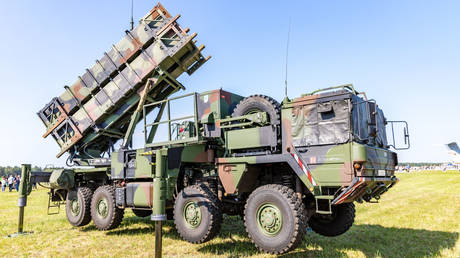
The mainstream defense press swallowed a convenient fiction whole. When reports surfaced that the White House pumped the brakes on a wider air campaign against Iran because Pentagon warehouses are running dry on Patriot interceptors, Washington analysts nodded sagely. They pointed to the exhaustion of multi-million-dollar interceptors, the strain on Central Command, and the logistical nightmare of a prolonged standoff.
It is a neat, comfortable story. It frames American military restraint as a simple matter of inventory math.
It is also completely wrong.
The Math Never Stopped a Superpower
To believe that a shortage of interceptor missiles forces a global hegemon to halt military operations is to fundamentally misunderstand how modern imperial logistics operate. The United States does not run out of ordnance; it runs out of political appetite.
When planners talk about depleted stockpiles, they are describing peacetime procurement caps and fiscal year budgeting bottlenecks, not absolute industrial incapacitation. If an existential strategic imperative arises, factories shift to multi-shift war footing, foreign military stockpiles are requisitioned, and production lines accelerate.
The idea that Joint Chiefs Chairman General Dan Caine looked at Donald Trump and said, "Sir, we cannot bomb Tehran because we are low on parts" treats the American military-industrial complex like a corner store with supply chain issues. That is not how statecraft works. The missile shortage story is not the primary cause of the pause. It is the diplomatic cover story.
The Real Constraint Is Escalation Dominance
The lazy consensus ignores the core structural reality of modern Middle Eastern deterrence. Every time an advanced air defense system fires a Patriot missile at an incoming Iranian drone or ballistic salvo, an asymmetric economic asymmetry plays out in real time.
Firing a four-million-dollar interceptor at a thirty-thousand-dollar drone is a losing balance sheet over the long term. But the United States has spent trillions on defense; money alone is never the immediate braking mechanism. The real barrier is escalation dominance—the terrifying realization that widening the campaign yields diminishing returns while exponentially multiplying systemic risk.
Look at what actually happened before the pause. Three American service members were killed in Jordan when a missile penetrated regional defenses. Consecutive nights of airstrikes failed to shatter Tehran's political cohesion or force a capitulation at the bargaining table. Instead, continuous bombing hardened domestic resolve inside Iran and pushed shipping lanes closer to systemic paralysis.
A wider bombing campaign targeting underground nuclear facilities like Pickaxe Mountain or deep logistics hubs does not guarantee a clean victory. It guarantees a wider regional conflagration that threatens partner economies in the Gulf, spikes global energy prices, and traps Washington in an open-ended quagmire.
The White House did not stop because the shelves were empty. The White House stopped because the strategy hit a brick wall.
The Washington Leak Machine At Work
Why blame the missiles then? Because public attribution of a material shortage serves multiple bureaucratic masters simultaneously.
- For the Pentagon: It highlights chronic under-investment and justifies massive future defense appropriations without admitting that current operational doctrines failed to achieve quick strategic coercion.
- For the White House: It provides a face-saving off-ramp. Pausing a campaign because of "logistical constraints" looks prudent and technical; pausing it because the adversary successfully absorbed two weeks of punishment without surrendering looks like strategic failure.
- For Regional Allies: It signals to Gulf partners that Washington is calculating risk soberly rather than careening blindly into a total regional war.
Imagine a scenario where the headlines read: White House Halts Strikes Because Iran Absorbed the Blow and Regional Deterrence Failed. That panics markets, alienates allies, and invites political vulnerability.
Instead, the leak machine manufactures a hardware excuse. The press corps dutifully transcribes the talking points about dwindling Patriot inventories, and the public accepts a technical limitation narrative that masks a complex geopolitical stalemate.
Stop Asking About Inventories
Analysts asking whether the Pentagon has enough interceptors left for a third week of bombing are asking the wrong question entirely. The question is whether kinetic air strikes remain an effective instrument of statecraft against a decentralized, deeply entrenched adversary that treats economic resilience as a primary weapon.
The answer is no.
When kinetic options stall, superpowers pivot to the negotiating table disguised as logistics managers. The temporary quiet over Tehran is not a symptom of empty warehouses. It is the sound of reality crashing into the limits of American air power.