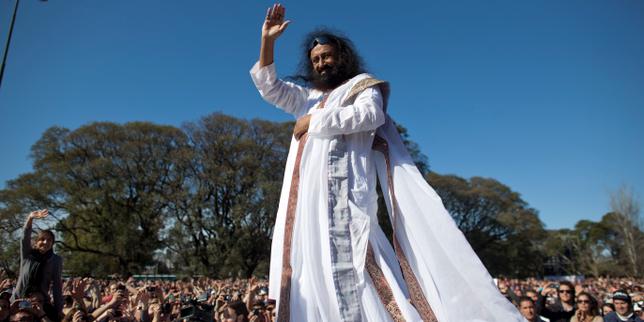
We love our gurus wrapped in benevolence. The media adores a character who sits cross-legged, spouts platitudes about inner breath, and allegedly holds the ear of presidents and prime ministers. The lazy consensus surrounding figures like Sri Sri Ravi Shankar treats spiritual diplomacy as a noble antidote to geopolitical friction. If only world leaders meditated enough, the argument goes, we would achieve global harmony.
It is a comforting, toothless lie.
I have watched diplomats waste millions of dollars and countless hours of bureaucratic bandwidth entertaining soft-power emissaries who offer zero operational accountability. Spiritual diplomacy is not a breakthrough in conflict resolution. It is a high-society networking play packaged as ancient wisdom, giving autocrats and fragile regimes a PR whitewashing machine while delivering precisely zero structural peace.
Let us dismantle the illusion.
The Myth of Neutral Transcendence
The core premise of the global peace guru is absolute neutrality. We are told these figures transcend politics, representing a pure, unblemished human consciousness that appeals across sectarian divides.
This is fantasy. True geopolitical leverage requires skin in the game, hard economic consequences, and structural coercion. Breathing exercises do not stop artillery fire. Smiling through a diplomatic summit does not alter the calculus of territorial sovereignty. When a spiritual organization inserts itself into zones of tension—whether in Latin America, the Middle East, or South Asia—it rarely acts as an objective mediator. Instead, it acts as an unregistered lobbying arm that flatters power, secures real estate concessions, and embeds its brand deeper into state machinery.
I have sat in back rooms where corporate sponsors and political handlers evaluate these spiritual tours. They do not measure success by peace treaties signed. They measure it by media impressions, VIP attendance lists, and favorable regulatory nods from host governments. The guru becomes a useful asset for politicians seeking a veneer of moral legitimacy while enacting domestic crackdowns or contentious policies.
The Economics of Inner Peace
Let us look at the financial mechanics. Spirituality at scale is an enterprise operation. The Art of Living and similar massive global movements run like multinational conglomerates, complete with proprietary training modules, tiered pricing for advanced courses, real estate portfolios, and merchandising.
Imagine a scenario where a corporate CEO demands total financial transparency from a charity receiving state favors, yet exempts their favorite spiritual foundation from the same scrutiny because the marketing materials feature smiling children and yoga mats.
We apply double standards to spiritual empires. When a pharmaceutical company or a defense contractor uses charm offensives to influence policy, we call it lobbying. When a movement with an identical global footprint does it under the banner of stress relief and breathing techniques, we call it enlightenment.
The product being sold is not liberation. It is emotional compliance. By framing systemic political oppression, economic inequality, or regional violence as mere deficiencies in personal mindfulness, these movements shift the burden of change from the state onto the individual victim. If your village is displaced or your rights are eroded, the problem is apparently that you are not breathing deeply enough.
Why World Leaders Actually Call Them
Why do prime ministers and foreign ministers take meetings with spiritual leaders? The lazy narrative is that politicians are genuinely seeking spiritual guidance to navigate the heavy burden of statecraft.
Hardly.
Politicians take those meetings for transactional optics. Aligning with a massive religious or spiritual constituency guarantees blocks of voters. Inviting a guru to a national stadium event signals to a domestic demographic that the administration respects traditional values, even if the movement itself operates more like a franchise than a temple. It is domestic electoral arbitrage.
Conversely, the guru gains state protection, tax exemptions, and institutional momentum. It is a mutually beneficial extraction of social capital. The politician gets the photo-op; the movement gets the institutional credibility required to expand its commercial footprint.
The Real Cost of Soft Power Tourism
When untrained spiritual actors attempt to mediate complex ethnic or political conflicts, they frequently do more harm than good. Real diplomacy requires deep historical literacy, intelligence assets, legal frameworks, and brutal realism. Parachuting in with a message of universal love ignores land disputes, historical atrocities, and immediate security threats.
Amateur mediation creates moral hazard. It offers bad-faith actors a diplomatic theater where they can pretend to negotiate while actually stalling for time. Worse, it crowds out professional diplomats who understand the mechanics of ceasefires and treaty enforcement.
We need to stop confusing high-net-worth spiritual tourism with statecraft.
If you want peace, fund institutional transparency, strengthen anti-corruption watchdogs, and support rigorous investigative journalism that holds power to account. Do not look for salvation in a conference center filled with ten thousand people paying hundreds of dollars to learn how to exhale.
The next time someone tells you that global conflicts can be solved if we simply breathe together, ask them who is paying for the venue and what tax exemptions they secured on the way in.
Stop buying the optimization of obedience.


