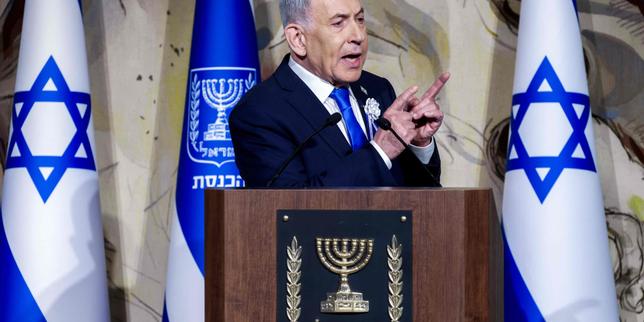
The inaugural session of Israel’s 26th Knesset on November 10, 2026, was not merely a ceremonial swearing-in marred by heckling; it was the opening salvo of an institutional capture strategy executed by a fragmented 67-seat opposition against a 53-seat outgoing right-wing bloc. Surface-level coverage of the event—focusing on the visual friction between caretaker Prime Minister Benjamin Netanyahu and opposition leader Gadi Eisenkot, or far-right Minister Itamar Ben Gvir’s verbal confrontation with an Arab lawmaker during the oath of office—misses the underlying structural mechanics. Beneath the plenary theatrics, the opposition executed a precise sequencing play: separating parliamentary control from executive coalition-building to strip the caretaker government of legislative immunity before a single ministry changed hands.
The Seat Distribution and the Blocking Minority Paradox
To understand why the November 10 session produced immediate institutional warfare, one must examine the exact mathematical output of the October 27, 2026 general election. Across 120 seats, the 3.25% electoral threshold yielded 11 distinct factions divided into three non-overlapping ideological clusters, none of which commands an organic 61-seat governing majority.
- The Outgoing Coalition Bloc (53 Seats): Comprising Likud (27 seats), Otzma Yehudit (7 seats), United Torah Judaism (7 seats), Shas (6 seats), and the Religious Zionist Party (6 seats). Despite outperforming pre-election polling expectations, this bloc suffered a net loss of 11 seats compared to the 25th Knesset, forfeiting its governing majority.
- The Zionist Opposition Bloc (48 Seats): Anchored by Gadi Eisenkot’s newly formed Yashar! party (21 seats), alongside Naftali Bennett’s Beyachad/Together (12 seats), Yair Golan’s The Democrats (8 seats), and Avigdor Lieberman’s Yisrael Beyteinu (7 seats).
- The Arab-Majority Lists (19 Seats): Split between The Joint List (11 seats) and Mansour Abbas’s Ra'am (8 seats), representing a combined net gain of nine seats driven by elevated voter turnout in Arab municipalities.
This 53–48–19 distribution creates a classic game-theoretic deadlock known as a coalitional veto triangle. Because key components of the 48-seat Zionist opposition—specifically Lieberman’s Yisrael Beyteinu and elements of Bennett’s Together—refuse to sit in a formal governing coalition reliant on non-Zionist Arab parties, Eisenkot cannot reach 61 seats through his natural ideological allies alone. Conversely, Netanyahu’s 53-seat bloc lacks the eight seats required to govern without defecting parties from the opposition.
President Isaac Herzog’s decision on November 7 to hand the initial 28-day coalition-building mandate to Eisenkot—following formal endorsements from both Arab-majority lists—placed the 66-year-old former IDF Chief of Staff in an asymmetric bind. He possessed a 67-seat parliamentary majority capable of passing procedural votes on the Knesset floor, yet lacked a 61-seat executive majority capable of passing a vote of confidence to swear in a cabinet.
Institutional Decoupling: Separating the Legislature from the Executive
Standard parliamentary transitions treat the election of the Knesset Speaker and the formation of a governing cabinet as a single synchronized transaction. When a cohesive coalition wins 61 or more seats, it installs its own Speaker to manage the legislative docket while simultaneously appointing ministers to run the executive branch.
During the November 10 inauguration, Eisenkot’s bloc deliberately decoupled these two mechanisms. Recognizing that executive coalition negotiations with ultra-Orthodox factions (Shas and United Torah Judaism) or conservative opposition partners would take weeks—and might ultimately fail—the opposition moved immediately to capture the legislative apparatus.
The Speaker as a Gatekeeping Bottleneck
In Israel’s unicameral system, the Speaker of the Knesset holds decisive agenda-setting power. Under the Knesset Rules of Procedure, the Speaker controls:
- Plenary Scheduling: Determining when private member bills and government-sponsored legislation reach the floor for preliminary, first, second, and third readings.
- Committee Assignments: Influencing the composition of the Arrangements Committee, which allocates chairmanships for the Finance, Foreign Affairs and Defense, and Constitution, Law and Justice committees.
- Legislative Immunity and Oversight: Managing the procedural timeline for bills that directly impact the legal or political standing of sitting officials.
By nominating Yashar! MK Matan Kahana for Speaker—a move that culminated in Kahana’s election with 66 votes on November 18—the opposition operationalized its 67-seat floor majority before resolving its executive divisions. Even if Eisenkot’s mandate expires without a new cabinet, leaving Netanyahu in place as caretaker prime minister, capturing the Speakership strips Likud of its procedural shield.
The October 7 State Commission of Inquiry Lever
The immediate tactical objective of this institutional decoupling became clear on opening day when Yashar! tabled legislation to establish a formal State Commission of Inquiry into the October 7, 2023 attacks. Under Israel’s Commissions of Inquiry Law of 1968, a State Commission is appointed by the President of the Supreme Court and possesses full subpoena powers and the authority to issue binding personal recommendations against political and military leaders.
Throughout the 25th Knesset, Netanyahu’s coalition successfully blocked the formation of a Supreme Court-appointed inquiry, arguing that such a body should wait until the conclusion of active military operations. By placing this bill on the docket on November 10—supported by a Speaker aligned with the opposition—Eisenkot transformed the Knesset plenum into an offensive weapon. Caretaker ministers now face a hostile legislative branch capable of advancing oversight bills, blocking emergency budget reallocations, and dismantling the coalition’s prior legislative agenda while government formation talks drag on.
The Mechanics of Plenary Friction and Rhetorical Escalation
Visual reports of the November 10 session emphasized the visible hostility inside the chamber and the heightened security posture of the Knesset Guard outside, where right-wing groups mobilized protests. Analysts who dismiss these confrontations as mere loss of decorum misread their strategic function. In a hung parliament, plenary disruption serves specific signaling purposes for each faction’s base.
Netanyahu’s Post-Oath Framing Strategy
During the ceremonial reception following the swearing-in, Netanyahu explicitly reiterated his campaign thesis: that Arab-majority political parties, representing roughly 20% of Israel’s citizenry, are illegitimate partners for national decision-making. This statement was not an off-the-cuff remark; it was a calculated wedge maneuver designed to fracture Eisenkot’s 67-seat floor alignment.
Netanyahu’s strategy relies on raising the political cost for right-leaning opposition figures—specifically Naftali Bennett (12 seats) and Avigdor Lieberman (7 seats)—of cooperating with The Joint List (11 seats) and Ra'am (8 seats). Every time Kahana or Eisenkot relies on the 19 Arab votes to pass a procedural motion or advance a committee appointment, Likud’s communications apparatus frames the opposition as dependent on anti-Zionist actors. This creates an internal friction loop: the more effectively Eisenkot uses his 67-seat floor majority to pressure Netanyahu, the harder it becomes for Eisenkot to keep Bennett and Lieberman inside a permanent governing coalition.
Ben Gvir’s Floor Disruption as Base Retention
Similarly, Otzma Yehudit leader Itamar Ben Gvir’s decision to heckle an Arab MK during the formal oath of office—accusing the legislator of loyalty to Hamas rather than the state—reflects the incentive structure of opposition-bound populists. Having increased his faction from six to seven seats in the October election, Ben Gvir operates on a zero-sum visibility model. With executive power slipping away, dramatic floor confrontations reinforce brand differentiation against Likud, signaling to far-right voters that Otzma Yehudit will not acquiesce to a centrist-led parliamentary order.
The Haredi Pivot and the Likud Boycott
The immediate consequence of Netanyahu’s exclusionary rhetoric was a rapid freeze in cross-bloc diplomacy. Following the Prime Minister’s post-oath speech targeting Arab legislators, Eisenkot canceled a scheduled November 12 negotiation session with Likud, declaring that the discourse disqualified Netanyahu from national unity talks.
Instead, Eisenkot shifted his strategic focus toward the two ultra-Orthodox (Haredi) parties: Shas (6 seats) and United Torah Judaism (7 seats). Historically, these 13 seats have formed the bedrock of Netanyahu’s right-religious bloc. However, their core utility function is transactional rather than ideological: securing state funding for religious educational institutions and codifying military draft exemptions for yeshiva students.
The Coalition Optimization Matrix: Three Scenarios and Their Failure Modes
With the 26th Knesset sworn in and the Speakership secured by Yashar!, Israel’s political system is locked into a multi-variable negotiation bounded by strict ideological constraints. Evaluating the three theoretical pathways to a 61-seat government reveals severe structural vulnerabilities in each.
1. The Center-Right Plus Haredi Coalition (61 Seats)
- Composition: Yashar! (21) + Together (12) + The Democrats (8) + Yisrael Beyteinu (7) + UTJ (7) + Shas (6) = 61 seats.
- Mechanism: Eisenkot peels the 13 ultra-Orthodox seats away from Netanyahu by offering guaranteed ministerial portfolios and budgetary protections, bypassing both Likud and the Arab parties.
- Primary Failure Mode: The conscription deadlock. Following two years of multi-front military strain after October 7, universal military service was a central pillar of the election campaigns for Eisenkot, Bennett, and Lieberman. Lieberman’s Yisrael Beyteinu explicitly campaigned on mandatory Haredi conscription and stripping financial subsidies from draft evaders. Simultaneously, UTJ and Shas cannot enter a government that fails to pass a statutory exemption bill. Bridging this binary policy conflict without losing either Lieberman’s seven seats or the Haredi 13 seats approaches mathematical impossibility.
2. The Zionist Minority Government with External Arab Support (48 + 19 Seats)
- Composition: Yashar! (21) + Together (12) + The Democrats (8) + Yisrael Beyteinu (7) = 48 cabinet seats, supported from outside the coalition via abstention or confidence-and-supply votes by Ra'am (8) and The Joint List (11).
- Mechanism: Modeled on the 2021–2022 Bennett-Lapid government, this configuration avoids formal ministerial appointments for Arab MKs while utilizing their floor votes to pass a state budget and swear in a cabinet.
- Primary Failure Mode: Intra-bloc vetoes and security escalation sensitivity. While Mansour Abbas’s Ra'am previously demonstrated willingness to join a coalition, The Joint List (11 seats) maintains strict ideological opposition to Zionist military policies. More critically, Bennett and Lieberman have repeatedly ruled out relying on The Joint List to form a government. Even if constructed, a 48-seat minority cabinet would collapse instantly during any military flare-up in Gaza, Lebanon, or the West Bank, as external Arab support would evaporate under domestic constituent pressure.
3. The Broad National Unity Rotation (48 + 27 Seats)
- Composition: Likud (27) + Yashar! (21) + Together (12) + Yisrael Beyteinu (7) = 67 seats (or a narrower Likud-Yashar!-Together core of 60 seats plus one minor partner).
- Mechanism: Netanyahu and Eisenkot agree to a prime ministerial rotation, neutralizing both the far-right (Ben Gvir, Smotrich) and the non-Zionist periphery.
- Primary Failure Mode: Legal and institutional irreconcilability. Eisenkot’s core political mandate rests on replacing Netanyahu and instituting a State Commission of Inquiry into October 7. Netanyahu, facing an ongoing corruption trial and potential personal culpability from a state inquiry, cannot surrender executive control without risking severe legal exposure. Neither leader possesses a credible commitment mechanism to guarantee that the other will honor a rotation agreement.
Strategic Forecast: Institutional Attrition Over Executive Resolution
The visual turbulence of the November 10 Knesset opening was a leading indicator of prolonged institutional paralysis rather than a prelude to swift coalition formation. Because every mathematically viable 61-seat coalition violates a core ideological red line of at least one pivotal veto player, the probability of Eisenkot forming a stable governing cabinet within his initial 28-day window—or Herzog subsequently succeeding with a secondary mandate to Netanyahu—remains structurally low.
Stakeholders, diplomatic observers, and market participants must model Israel’s governance trajectory over the next two quarters around asymmetric institutional attrition. Rather than a clean transfer of executive power, the 26th Knesset will operate as a bifurcated state apparatus: a caretaker right-wing cabinet controlling executive ministries and security appointments, counterbalanced by an opposition-controlled Knesset Speakership and committee structure systematically dismantling the outgoing coalition's legislative legacy.
To navigate this deadlock, political actors in the opposition block should abandon attempts to force an immediate, fragile 61-seat cabinet and instead maximize their legislative leverage. By keeping the Knesset plenum active under Speaker Matan Kahana, advancing the October 7 State Commission of Inquiry bill through committee stages, and blocking partisan budget transfers, Eisenkot’s bloc can erode Netanyahu’s caretaker advantage from within the legislature. When the statutory deadlines for government formation inevitably expire, forcing Israel toward a repeat election in 2027, the opposition will enter that campaign having already stripped Likud of its parliamentary shield and reshaped the institutional playing field.


