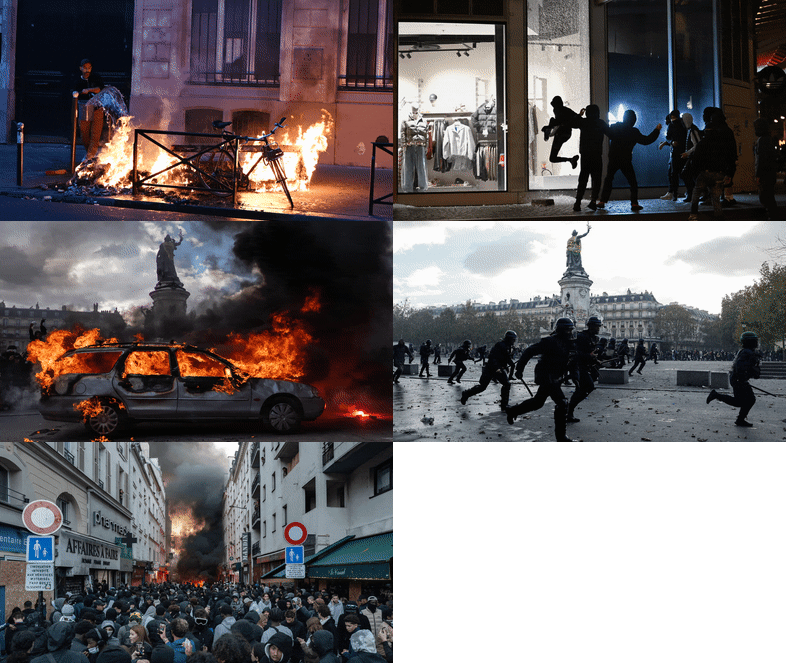
Glass shatters on the pavement. Sirens echo down empty boulevards. The morning after a night of riots in Paris always looks the same on television.
Burnt-out cars. Smashed storefront windows. Sidewalks littered with debris.
People watch the footage from comfort miles away and talk about property damage. They tally up insurance claims. They argue about politics on social media.
They completely miss the point.
When the smoke clears across the French capital, the real cost isn't measured in euros of broken glass. It is measured in the silent erosion of everyday life, the psychological weight carried by ordinary shopkeepers, and the deep fractures tearing communities apart from the inside.
Let's look past the sensational headlines. Let's talk about what happens after the cameras leave.
The Immediate Financial Reality For Small Businesses
Insurance companies love to talk about coverage. Policyholders know a different truth.
When a boutique in the Marais or a bakery in Belleville gets looted or vandalized, the owner faces a nightmare. Premiums skyrocket immediately. Many insurers refuse to cover businesses in high-risk riot zones altogether.
You spend your entire life building a business. You work seventy hours a week. You hire local staff. Then, a night of civil unrest wipes out your inventory because your shop happened to sit on a protest route.
Even if insurance eventually pays out, the downtime kills momentum. Cash flow stops. Landlords still expect rent. Suppliers still demand payment.
Some shopkeepers never reopen. They just lock the doors for good, walking away with debt and broken dreams. This isn't just an economic loss for one person. It transforms vibrant commercial streets into rows of boarded-up facades.
Trust Breaks Down Long Before Curfews Start
Cities rely on an invisible social contract. People walk down narrow streets, sit at crowded café terraces, and ride the Metro late at night because of a baseline assumption of safety.
Riots shatter that trust instantly.
When neighborhoods transform into zones of confrontation between protesters and police, residents retreat behind locked doors. Neighbors eye each other with suspicion. The young men standing on the corner become suspects in the eyes of local business owners, regardless of whether they participated in the unrest.
Polarization deepens. Political rhetoric hardens on all sides.
Instead of addressing root causes, public debate turns into a shouting match about law and order versus systemic injustice. Meanwhile, ordinary families stuck in the middle just want to send their kids to school without smelling tear gas.
The Tourism Economy Takes a Quiet Hit
Paris depends heavily on global tourism. Visitors book flights months in advance, dreaming of quiet strolls along the Seine and croissants at corner bistros.
Broadcasts showing burning barricades near famous landmarks terrify tourists.
Cancellations spike overnight. Hotels sit half-empty during peak seasons. Waiters, taxi drivers, museum workers, and hotel staff watch their tips and hours vanish.
The economic shockwave ripples far beyond the luxury boutiques on the Champs-Élysées. It hits the dishwasher who commutes two hours each way from the banlieues. It hits the family-run bistro that relies on summer crowds to survive the slow winter months.
Moving Past the Cycle of Rage
Riots don't happen in a vacuum. They erupt from real frustration, systemic economic inequality, and broken relationships between marginalized communities and state institutions.
Ignoring those underlying pressures guarantees another night of fire and sirens next month.
Fixing it requires more than heavy-handed police tactics or quick political soundbites. It demands genuine economic investment in neglected suburbs, real accountability, and spaces where frustrated youth feel heard instead of targeted.
Until society tackles those hard truths, Parisians will keep waking up to the sound of breaking glass, wondering when the cycle will finally break.