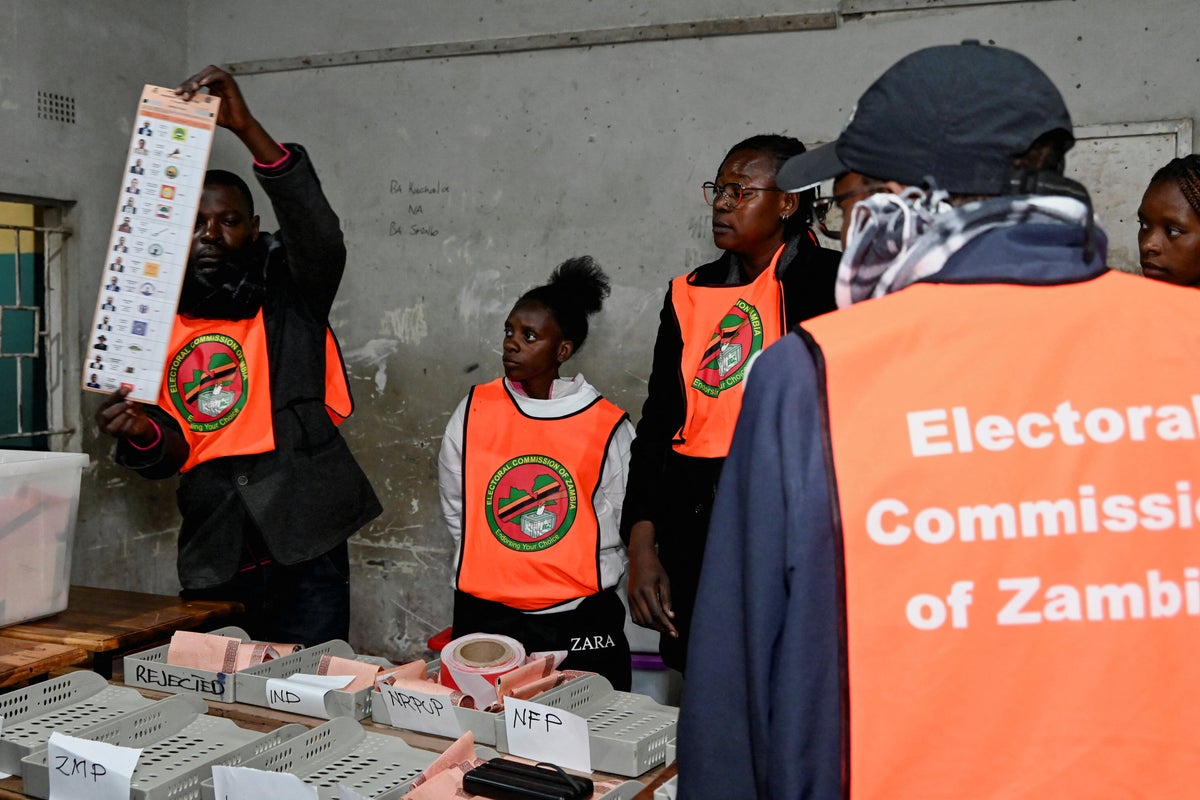
The headlines scream about chaos, violence, and stolen ballot boxes. Western wire services and anxious commentators look at the temporary halt in vote counting and immediately project an apocalyptic narrative of democratic collapse. They call it a crisis. They point to the friction between President Hakainde Hichilema's administration and opposition challengers like Brian Mundubile, warning that the copper-rich nation is sliding back into authoritarian anxiety.
They are completely missing the point.
What is happening right now in Lusaka and across the provinces is not a sign of institutional failure. It is the messy, loud, friction-heavy reality of a state applying emergency brakes precisely because its architecture is designed to survive pressure. When the Electoral Commission of Zambia suspended the count under Section 67 (3) of the Electoral Process Act, the lazy consensus interpreted it as a fatal stutter.
Let us look at the actual mechanics of political stability. True democratic resilience is not measured by the absence of conflict. It is measured by the legal capacity of institutions to freeze, assess, and reset when the physical security of poll workers is compromised.
The Myth of the Uninterrupted Count
For decades, foreign observers have fetishized speed over substance in emerging democracies. If an election result is tallied within forty-eight hours, it is praised as efficient and clean. If it stalls, alarms blare. This metric is fundamentally broken.
Imagine a scenario where a high-stakes corporate merger hits a sudden compliance red flag. Do leadership teams plow ahead to hit an arbitrary deadline, or do they pause transactions to audit the books? In any serious operational environment, you stop. You isolate the compromised nodes. You secure the perimeter.
That is precisely what happened when security forces and electoral administrators hit pause. Instead of weaponizing the delay into a panic about stolen mandates, analysts should look at the alternative: forcing exhausted, threatened polling staff to keep counting under physical intimidation. That is how you get actual manipulation. A pause is not an admission of defeat; it is a tactical defensive maneuver to protect the chain of custody.
The opposition alliance, led by figures like Mundubile, has capitalized on the vacuum to claim foul play, pointing to military presence and missing boxes. This is standard playbook politics. Every challenger in a tight race facing economic headwinds—such as Hichilema's austerity and debt restructuring reforms—will weaponize delay as a conspiracy. But trading on panic ignores the structural reality of how votes are physically guarded in Zambia.
Decentralized Trust Versus Centralized Anxiety
The panic merchants assume that a centralized tally center is the entire ecosystem of an election. They forget that African democracies with robust multiparty histories, dating back to 1991, rely on parallel local verification.
When ballot papers are threatened in isolated districts, the shockwaves hit the capital instantly. Yet, the physical paper trails at the polling station level remain anchored by local monitors, party agents, and independent observers. The security situation demanded a hard reset, and within hours, counting resumed under heavy guard.
Stop treating every administrative disruption in Africa as a constitutional cliff. The friction we are witnessing is the sound of a system refusing to let violence dictate its outcome.