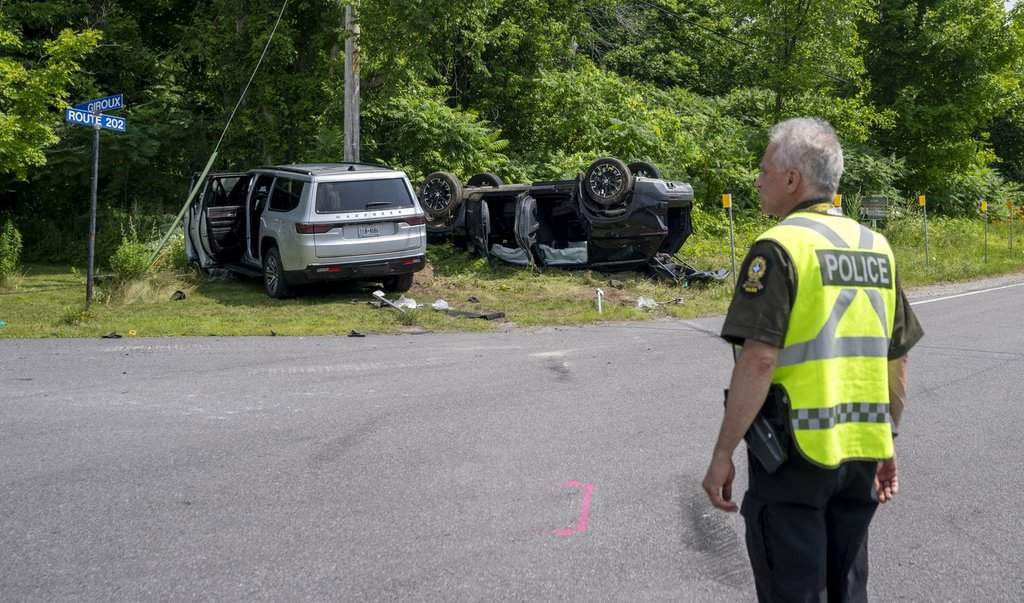
Quebec road safety bureaucrats are panicking over the wrong numbers again. The latest transport datasets reveal a predictable trend that has sent mainstream commentators into a tailspin: road fatalities fell, but total injuries ticked upward. The immediate, knee-jerk reaction from the self-appointed safety cartel was entirely scripted. They blamed speed. They demanded more photo radar. They begged for lower speed limits on arterial roads.
They got the entire narrative backward.
The rise in road injuries alongside a drop in fatalities is not proof that our roads are turning into lawless death traps. It is the mathematical proof that modern automotive engineering and trauma medicine are doing exactly what they were designed to do. When a human body survives a high-energy kinetic impact that would have killed them two decades ago, they do not magically walk away pristine. They become an injury statistic.
The hand-wringing over rising injury rates is a masterclass in data illiteracy. We are misdiagnosing the problem, misinterpreting the metrics, and implementing regressive policies that actively harm urban mobility while doing nothing to solve the actual root causes of traffic conflict.
The Mathematics of Survival
To understand why the competitor press got this wrong, you have to look at basic Newtonian physics and the history of passive vehicle safety.
Consider a standard offset head-on collision at 70 kilometers per hour. In 1995, the energy of that impact would bypass the brittle cabin structure of a standard sedan. The steering column would intrude into the driver’s chest cavity. The lack of curtain airbags would mean catastrophic skull fractures against the B-pillar. The outcome was clear, clean, and grim: a fatality. Dead people do not register in the injury column. They go straight to the morgue, keeping the injury metrics deceptively low.
Fast forward to the vehicles dominating the roads. Modern platforms are built around ultra-high-strength steel safety cages, dual-stage smart airbags, pre-tensioning seatbelts, and crumple zones engineered to sacrifice the vehicle to preserve the occupant.
When that same crash happens now, the car is obliterated. The kinetic energy is absorbed by the deformation of aluminum structures. The cabin remains intact, but the human inside experiences massive deceleration forces. The seatbelt bruises ribs. The airbag deployment breaks a nose or causes second-degree friction burns. The sudden deceleration results in severe whiplash.
The driver walks out of the wreckage shaken, bruised, and broken. They spend two nights in a hospital bed. In the provincial database, this registers as a serious injury.
By crying foul over increased injuries, activists are effectively complaining that people are surviving crashes. You cannot lower the death rate without inherently inflating the pool of people who survive with injuries. It is a classic manifestation of survivorship bias. If every fatal crash of the past is converted into a survival-with-injury crash today, the injury line on your chart goes up. That is a triumph of human ingenuity, not a systemic failure.
The Absurdity of the Blanket Injury Metric
The fundamental flaw in public policy debates around transit safety is the refusal to categorize data with nuance. The term "injury" in transport databases is a uselessly broad bucket. It aggregates life-altering spinal trauma with minor soft-tissue sprains that settle out of court six months later.
When activist groups lobby municipal governments for lower speed limits, they flash charts showing total injury spikes. What they do not tell you is that a significant percentage of these recorded injuries are minor escalations in reporting, driven by insurance requirements rather than medical emergencies.
In highly litigious or highly regulated insurance environments like Quebec’s public automobile insurance regime (SAAQ), filing an injury report for even minor neck discomfort is the baseline requirement to secure physical therapy coverage or wage compensation. As economic pressures mount, the incentive to report minor discomfort following a fender bender rises.
By treating a sore shoulder from an insurance claim the same way we treat an open femur fracture, the data becomes useless for actual engineering interventions. We end up altering the infrastructure of entire cities to prevent low-speed bumps that cause nothing more than paperwork and a week of ibuprofen.
The Peltzman Effect and the Illusion of Control
We also have to confront the psychological reality of modern driving: the safer we make the environment, the more risk drivers are willing to tolerate. This is risk homeostasis, famously articulated by economist Sam Peltzman.
When you insulate a driver from the external environment with double-paned acoustic glass, lane-keep assist, adaptive cruise control, and a high-command seating position in a modern crossover, you strip away the sensory cues of speed. Driving at 80 kilometers per hour in a 2025 model year sport utility vehicle feels identical to driving at 40 kilometers per hour in a 1980 economy hatchback.
Because the driver feels utterly insulated from danger, their brain reallocates its cognitive bandwidth. They look at their phone. They adjust the massive touchscreen infotainment system that manufacturers have substituted for physical buttons.
The policy response to this behavioral shift is always punitive. Governments deploy automated speed enforcement cameras on wide, straight industrial boulevards where the design speed of the road naturally encourages faster driving. It is a cash grab disguised as a public safety initiative.
A photo radar camera does not stop a distracted driver from drifting into a cycling lane. It simply sends them a bill two weeks after the event. It is a reactive, revenue-generating mechanism that penalizes drivers for responding naturally to the geometry of the road, while ignoring the real killers: cognitive distraction and structural design flaws.
The False Idol of Vision Zero
Every major urban center has bent the knee to the ideology of "Vision Zero"—the dogmatic belief that traffic fatalities and serious injuries can be reduced to absolute zero through enforcement and street narrowing.
Let us be brutally honest about the downside of this approach: Vision Zero as currently implemented is an economic suicide pact for urban transit efficiency.
To achieve absolute zero kinetic injuries in a world populated by flawed human beings, you would have to reduce the speed of all vehicular traffic to 15 kilometers per hour. You would need to turn every street into a pedestrian mall and halt the movement of commercial goods that sustain city economies.
The current implementation of Vision Zero does not fix infrastructure; it simply degrades the utility of the road network. Municipalities install plastic flexible bollards, paint lanes green, and call it a day. These are cheap cosmetic fixes that do nothing to separate conflicting modes of transport. They create artificial bottlenecks, increase idling times, drive up carbon emissions, and infuriate delivery networks, all while failing to address the fundamental problem of kinetic sorting.
How to Actually Fix the Infrastructure Deficit
If we want to stop playing numbers games with injuries and actually build a resilient transport network, we have to abandon the lazy consensus of enforcement and speed reduction. We must focus on absolute kinetic segregation.
1. Enforce Radical Kinetic Sorting
The physics of road safety are remarkably simple: you cannot mix high-mass, high-speed objects with low-mass, unprotected human bodies in the same spatial plane.
Putting a painted white line on asphalt and calling it a bicycle lane is an act of municipal negligence. It forces a 15-kilogram bicycle traveling at 20 kilometers per hour to share space with a 2,500-kilogram electric vehicle traveling at 50 kilometers per hour. When a collision happens, the cyclist is crushed, and the bureaucrat blames "speeding."
The fix is expensive, permanent, and non-negotiable: physical, grade-separated concrete barriers for all micro-mobility corridors. If you cannot afford to build a concrete wall between bikes and cars, you have no business building a bike lane.
2. Design Forgiving Roads, Not Trap Roads
Traffic engineers know how to make drivers slow down naturally without using signs or cameras. It is called intuitive design.
If a road is wide, clear, and features massive setbacks, a driver’s brain interprets it as safe for high speeds, regardless of what a speed limit sign says. If you want drivers to travel at 30 kilometers per hour in residential zones, you do not write "30" on the asphalt. You narrow the visual field. You plant trees close to the curb. You use cobblestone or textured paving textures that generate auditory and physical feedback inside the cabin. You install continuous sidewalks across intersections so drivers realize they are entering pedestrian territory.
We must stop building roads that look like drag strips and then acting surprised when people drive fast on them.
3. Ban Touchscreen Interfaces in Motion
We have spent decades regulating the blood alcohol limits of drivers while completely ignoring the fact that operating a modern vehicle requires navigating nested digital menus on an iPad glued to the dashboard.
Adjusting the fan speed or shifting side mirrors should never require taking eyes off the road to aim a finger at a glass surface devoid of haptic feedback. Regulators must mandate that all essential vehicle operations—climate control, audio volume, defrosting, and wiper speed—be mapped to physical, tactile knobs or tactile switches that can be operated purely by muscle memory.
The focus on speed cameras while allowing automotive manufacturers to turn cockpits into digital distraction centers is the ultimate proof of regulatory hypocrisy.
The Cold Reality of Mobility
Every choice in public policy involves a trade-off. A society that demands absolute zero risk on its roads is a society that chooses stagnation. We accept a baseline level of risk in aviation, in rail transport, in medicine, and in industrial manufacturing because the utility of those systems outweighs the statistical probability of failure.
The data from Quebec does not show a system in collapse. It shows a system undergoing a structural transition. Vehicles are getting heavier and safer for their occupants, which shifts the nature of accidents from fatal traumas to survivable orthopedic injuries.
If we want to continue lowering both lines on the graph, we need to stop treating drivers like a captive revenue stream for automated ticketing systems. We must stop pretending that lower speed limits on poorly designed roads constitute a safety strategy. It is time to invest in heavy concrete infrastructure, mandate tactile automotive interiors, and accept that the laws of physics cannot be regulated away by a municipal council decree.