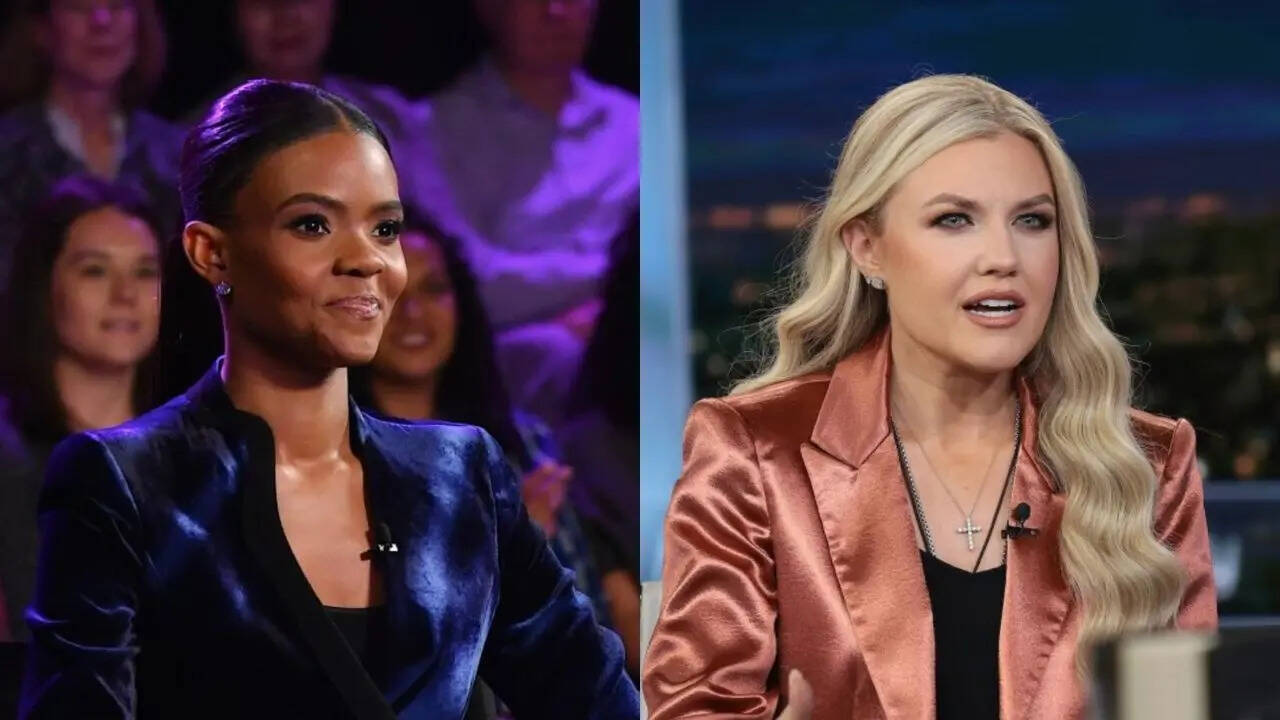
The internet spent forty-eight hours losing its collective mind over a single wedding photo. If you missed the digital cage match, here is the summary: Candace Owens posted a photo of Erika Kirk’s wedding. Some people saw a celebration. Others saw a racial betrayal. The comment sections became a toxic waste dump of "identity politics" and "trad-wife" posturing.
Most media outlets took the bait. They wrote "both sides" articles about how "fans are split" and "emotions are running high." They treated this like a genuine philosophical divide. For another view, read: this related article.
They are wrong.
This wasn't a debate about race, friendship, or the sanctity of marriage. It was a masterclass in manufactured outrage and audience capture. While the masses were arguing about who should be standing next to whom in a bridal party, they missed the cold, hard mechanics of the attention economy. Further analysis on this matter has been shared by BBC.
The Myth of the Accidental Backlash
The first lie you’re being fed is that this backlash was an "unfortunate" or "surprising" turn of events.
In the world of high-level political commentary, there are no accidents. Candace Owens is a professional provocateur. Erika Kirk is married to Charlie Kirk, the man who built an entire empire on triggering collegiate liberals. These are people who understand the value of a "ratio" on X better than you understand your own bank account.
When a photo like this drops, the backlash isn't a bug; it's a feature.
The "lazy consensus" says that public figures are victims of their audiences' fickle moods. The reality? They curate those moods. By posting content that exists at the exact intersection of race and conservative aesthetics, they force their followers into a loyalty test. You either defend the "colorblind" ideal of the wedding, or you lean into the racial grievances of the fringe. Either way, you’re engaging.
I’ve seen digital strategists burn through six-figure budgets trying to buy the kind of organic reach that a single "controversial" wedding photo generates for free. This wasn't a PR crisis. It was a high-ROI brand awareness campaign.
Why "Colorblindness" is a Marketing Tactic, Not a Philosophy
The competitor articles love to frame this as a clash between "traditional values" and "modern identity politics." They want you to believe there is a deep, intellectual struggle happening here.
There isn't.
What we’re seeing is the commodification of aesthetic defiance.
For the modern conservative influencer, "colorblindness" is the ultimate product. It’s a way to signal that they’ve transcended the "woke" obsession with race—while simultaneously using race to drive every single one of their engagement metrics.
Think about the logic:
- Post a photo that you know will trigger a specific segment of the population.
- Wait for the inevitable "problematic" comments to roll in.
- Screenshot the worst 1% of those comments.
- Use those screenshots to prove that "the left" is the real source of racism.
It’s a closed loop. It’s a perpetual motion machine of grievance. The wedding wasn't the point. The reaction to the wedding was the product. If everyone had just said, "Nice dress," the post would have been a failure in the eyes of the algorithm.
The Tragedy of Audience Capture
There is a darker side to this that nobody wants to admit: Audience Capture.
This is a term coined by various media theorists, but most notably discussed by Eric Weinstein and others in the "intellectual dark web" orbit. It describes a phenomenon where a creator starts out influencing their audience, but eventually, the audience begins to dictate the creator's every move.
Owens and Kirk have spent years cultivating a specific type of follower. They’ve built a base that thrives on conflict, purity tests, and the constant identification of enemies.
When that audience turns on them—when they start policing who Owens associates with or questioning Kirk’s "optics"—it isn't a sign of a healthy movement. It's a sign that the monster has escaped the lab. The influencers are now terrified of their own comment sections. They have to perform a very specific, narrow version of "authenticity" just to keep the lights on.
The "fans split online" headline is a polite way of saying the audience is now the one holding the leash.
The "Race Debate" is a Distraction from the Class Reality
While the internet argues about whether this wedding was a win for "integration" or a "betrayal of heritage," they are ignoring the massive elephant in the room: Class.
The people in that photo aren't like you. They don't live in your world. They are part of a hyper-wealthy, hyper-connected elite that uses cultural grievances to keep the bottom 90% of the population fighting over crumbs.
In the VIP section of the gala, nobody cares about the "racial optics" of the bridal party. They care about donor lists, speaking fees, and book deals. The "debate" is a simulation designed for the consumption of people who still believe that digital arguments change the world.
Imagine a scenario where the working class stopped caring about who Candace Owens had lunch with and started caring about why their own healthcare costs are skyrocketing while the people on their screens get richer by the minute. That is the one scenario the "industry insiders" are paid to prevent.
Stop Asking the Wrong Questions
People are asking: "Is Candace Owens a hypocrite?" or "Is Erika Kirk’s wedding a symbol of a post-racial future?"
Those are the wrong questions. They are low-resolution questions designed to keep you clicking.
The right questions are:
- Who benefits from me being angry about this photo?
- How much did the engagement from this "backlash" increase the ad rates for the next podcast episode?
- Why am I treating a stranger's wedding album like a piece of federal legislation?
The uncomfortable truth is that we are all complicit. Every time we "weigh in" on these manufactured controversies, we are providing the free labor that keeps the grift running. We are the "content" that these platforms sell to advertisers.
The Unconventional Advice You Won't Like
You want to "fix" the toxic culture of online debate? You want to actually disrupt the status quo?
Stop caring.
The most radical thing you can do when a celebrity wedding "sparks backlash" is to close the tab. Don't defend them. Don't attack them. Don't "analyze" the optics.
The industry relies on your passion. It feeds on your "take." When you provide a nuanced, balanced view, you’re still providing fuel. When you provide a fiery, contrarian view (like this one), you’re still in the game.
But the moment you realize that the entire "debate" is a staged play performed by people who are laughing all the way to the bank, the spell is broken.
The Owens-Kirk wedding isn't a cultural milestone. It isn't a tragedy. It’s a data point in a ledger. And as long as you keep arguing about it, their stock keeps going up.
Quit being the unpaid intern for people who wouldn't stop to give you directions in real life. Turn off the screen. Go to a wedding of someone you actually know. Buy them a blender. That’s a real life. Everything else is just a feed.