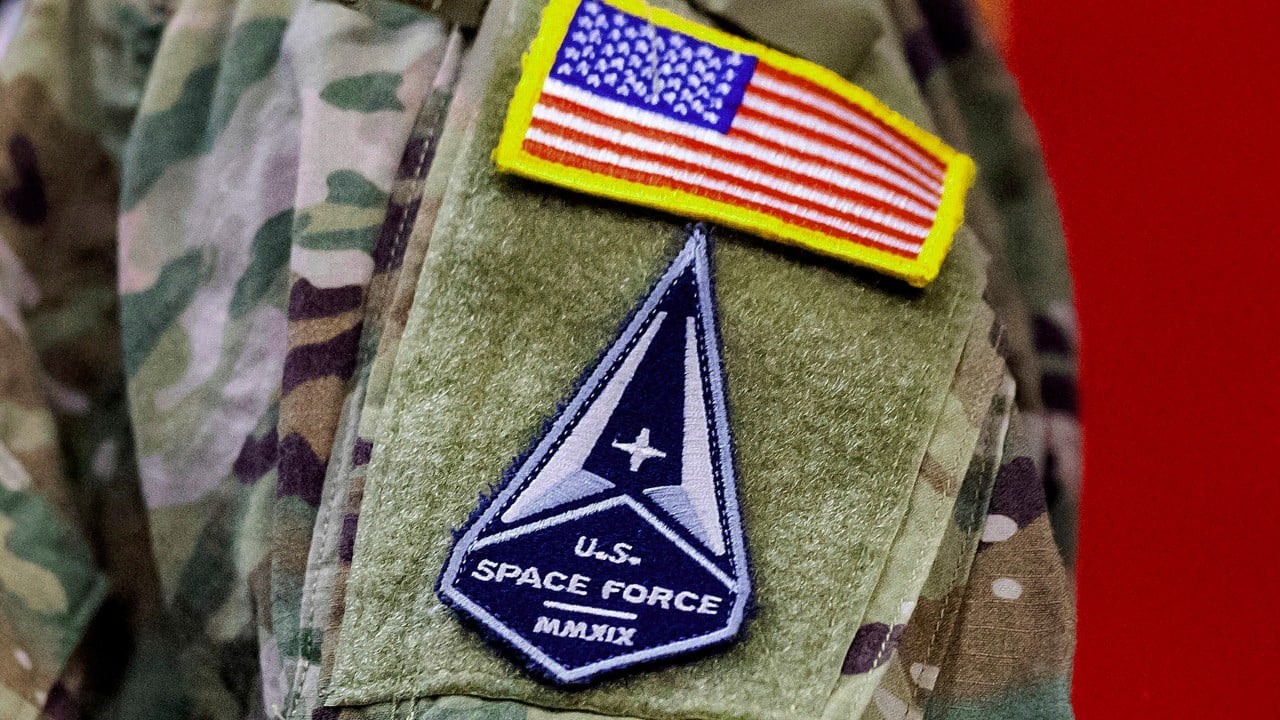
Low Earth orbit is getting crowded. That congestion used to be about communication satellites, commercial constellations, and scientific observation platforms. Today, the conversation in defense circles and international security forums has shifted toward something far more precarious. Governments are militarizing the final frontier, treating the vacuum above us as the next operational theater. Beijing recently voiced sharp warnings at an international security forum regarding American space capabilities, arguing that Washington has shattered a long-standing taboo against weaponizing orbit.
When a major power accuses another of breaking a taboo, it is rarely just about rhetoric. It signals a shift in doctrine. Decades of unwritten rules and diplomatic norms are eroding under the pressure of new technological realities. Satellites are no longer passive observers relaying weather data or television signals. They are increasingly viewed as strategic assets vulnerable to kinetic strikes, electronic jamming, and cyber interference. The public often imagines space warfare as a science fiction sequence involving laser beams and exploding starships. The reality is much quieter, far more technical, and potentially more destabilizing.
The Anatomy of Orbital Escalation
For half a century, the superpower competition played out on land, at sea, in the air, and eventually across digital networks. Space remained a sanctuary of sorts. Both Washington and Moscow recognized a mutual interest in keeping the heavens free from deployed weaponry. Anti-satellite missile tests occurred, but they were treated as demonstrations of capability rather than steps toward permanent deployment.
That boundary is blurring. Modern military architectures rely entirely on orbital assets for navigation, secure communications, reconnaissance, and early warning systems. If you blind a nation's eyes in space, you effectively blind its conventional military forces on Earth. This operational dependency makes orbital infrastructure an irresistible target during a crisis.
When analysts discuss the erosion of norms, they point to the proliferation of dual-use technology. A satellite designed to inspect or repair another spacecraft in orbit can easily double as a kinetic weapon capable of disabling a rival's hardware. This ambiguity makes deterrence exceptionally difficult. If a nation launches a spacecraft with an undisclosed maintenance arm, is it an orbital mechanic or an aggressive scout? Without transparent verification protocols, paranoia takes over. Every maneuver is interpreted as a hostile act.
The Logistics of a New Arms Race
An arms race in space operates under physics entirely different from an arms race on land. Gravity and orbital mechanics dictate that objects in low Earth orbit travel at roughly seventeen thousand five hundred miles per hour. At that velocity, even a small bolt or a cloud of shrapnel becomes a devastating projectile.
Creating debris fields in space is not like leaving wreckage on a battlefield. Debris remains in orbit for years, sometimes decades, threatening everything in its path regardless of nationality. A kinetic strike against a satellite does not just damage the adversary; it creates an expanding halo of high-speed shrapnel that can cascade into other satellites, civilian weather monitors, and scientific probes. This is the Kessler syndrome scenario, where orbital congestion triggers a chain reaction of collisions that renders entire bands of space unusable.
Military planners are well aware of this risk, yet the race continues. The calculus of modern defense dictates that a vulnerable asset cannot be left unprotected. Consequently, the United States, China, and other space-faring nations are pouring resources into counter-space capabilities. These include ground-based lasers designed to dazzle optical sensors, electronic warfare units capable of disrupting telemetry links, and nimble maneuvering satellites designed to dodge incoming threats.
Diplomatic Deadlocks and the Absence of Rules
International frameworks governing outer space were drafted during the Cold War, specifically the Outer Space Treaty of 1967. While that treaty explicitly bans the placement of weapons of mass destruction in orbit, it contains significant loopholes regarding conventional weapons, electronic warfare, and ground-based anti-satellite systems.
Efforts to update these treaties have repeatedly stalled at the United Nations and other diplomatic forums. Major powers have divergent interests. A nation with a dominant commercial space sector might advocate for strict rules protecting private infrastructure, while a nation seeking asymmetric advantage might prefer strategic ambiguity.
Beijing's recent assertions at security forums highlight these diplomatic fractures. Chinese officials argue that American programs—ranging from advanced space situational awareness tracking to secretive reusable spacecraft like the X-37B—represent a systematic effort to achieve space dominance. Washington counters that its programs are purely defensive and transparent responses to aggressive counter-space developments by both China and Russia.
Both narratives contain elements of truth, which is precisely why the situation is so intractable. Security dilemmas are driven by intentions that cannot be verified and capabilities that can be easily misinterpreted. When one nation upgrades its defensive posture, the rival perceives an offensive buildup, prompting a counter-response.
The Quiet Vulnerability Below
The irony of this high-tech competition is that modern terrestrial life depends utterly on the very systems being militarized. Financial transactions, global shipping logistics, agricultural monitoring, and emergency response networks all rely on timing and positioning data beamed down from orbit.
An escalation in space does not stay in space. If a conflict results in the systematic destruction of key communication or navigation nodes, the resulting economic shock would ripple through global markets within minutes. Stock exchanges would halt, cargo ships would lose navigation aids, and global communications would fracture.
Despite these catastrophic risks, military bureaucracies are programmed to prepare for worst-case scenarios. If a rival develops the capability to neutralize your orbital assets, doctrine demands that you develop countermeasures, retaliatory options, and preemptive strike capabilities.
The taboo has been cracked, and repairing it requires a level of geopolitical trust that currently does not exist between the major powers. As more hardware launches into the dark, the margin for error shrinks. The next major crisis may not begin with a shot fired across a border on Earth, but with a silent, invisible collision hundreds of miles above our heads.