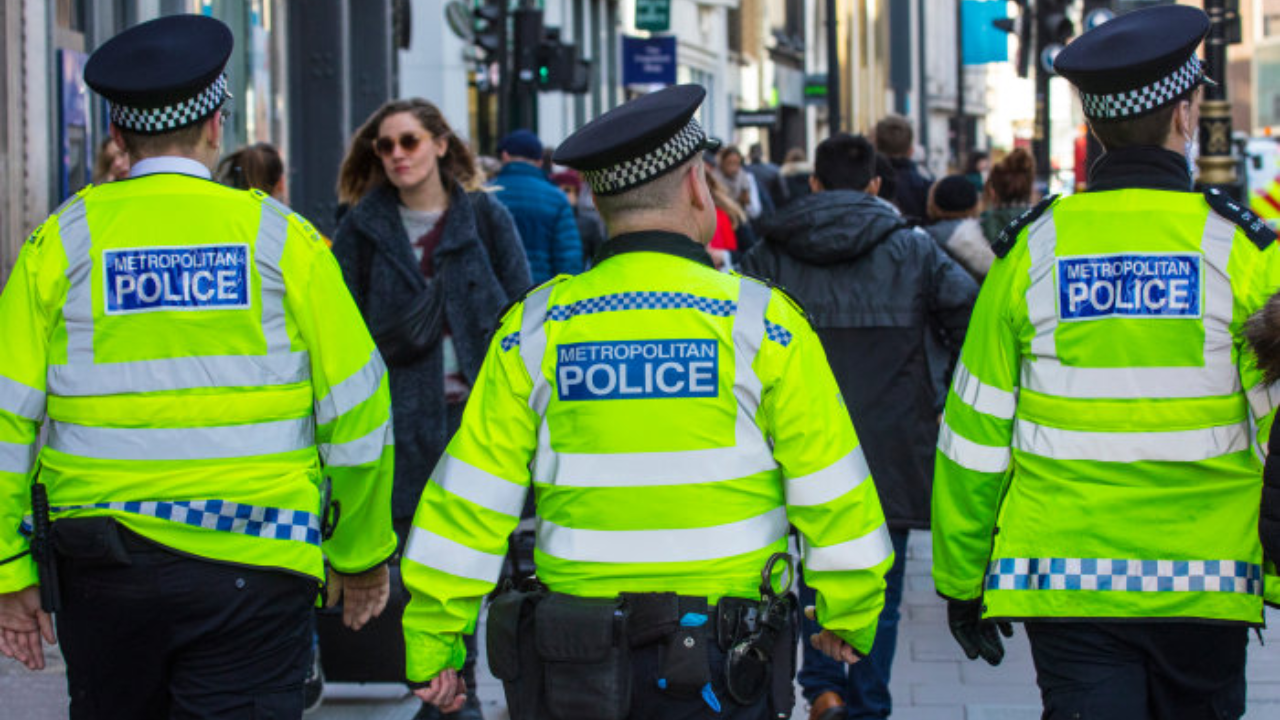
The mobilization of a dedicated 100-officer unit within the Metropolitan Police Service (MPS) represents a shift from generalized public order policing to a specialized protection model aimed at mitigating the surge in antisemitic incidents in London. This tactical realignment is not a mere increase in presence; it is a resource allocation strategy designed to address a specific risk profile characterized by high-frequency, low-level harassment interspersed with the potential for violent escalation.
The fundamental challenge in securing a diaspora community during periods of geopolitical friction is the "surface area" of the target. Unlike a fixed asset, a community is a decentralized network of residential areas, places of worship, educational institutions, and transport hubs. The 100-officer unit functions as a rapid-deployment force intended to shrink this surface area through visible deterrence and intelligence-led patrolling. Discover more on a connected topic: this related article.
The Tri-Pillar Model of Protective Policing
The effectiveness of this specific intervention can be dissected into three distinct operational pillars. If any pillar is underspecified, the unit reverts to being a passive observer rather than an active deterrent.
- Deterrence by Saturation: The physical presence of uniformed officers creates a psychological barrier for opportunistic offenders. In the context of antisemitic hate crimes, which often involve verbal abuse or vandalism, the visibility of law enforcement increases the "perceived cost of offense" to a level that discourages non-organized actors.
- Intellectual Synchronization: This unit does not operate in a vacuum. It relies on a feedback loop between the Community Security Trust (CST) and the MPS intelligence bureaus. By mapping historical incident data against current protest routes and community calendar events, the unit optimizes its "Time on Target."
- Legal Friction: A dedicated unit develops specialized expertise in the legal thresholds required for arrests under the Public Order Act and the Terrorism Act. This reduces the hesitation often seen in generalist officers when navigating the fine line between protected speech and criminal harassment.
The Resource Allocation Calculus
The decision to pull 100 officers from general duties suggests a prioritization of "High-Impact/Low-Frequency" risk over "Low-Impact/High-Frequency" baseline crime. This creates an internal trade-off within the MPS. When a police force designates a specialized unit, it accepts a "coverage deficit" in other sectors. More analysis by Associated Press explores similar views on this issue.
The logic supporting this trade-off is rooted in the prevention of social contagion. Antisemitic attacks, if left unchecked, often serve as lead indicators for broader civil unrest. By suppressing the initial spike in targeted hate crimes, the MPS is attempting to prevent a "broken windows" effect at a city-wide scale. The cost of maintaining a 100-officer unit is significant, but it is measured against the hypothetical cost of large-scale riots or a total breakdown in community trust, which would require thousands of officers to contain.
Defining the Surge Mechanics
To understand why a dedicated unit is necessary, we must define the mechanics of the current antisemitic surge. It is not a monolithic increase in crime but a multi-layered phenomenon:
- Geopolitical Proxy Conflict: Domestic actors utilize local Jewish populations as proxies for foreign states, leading to targeted harassment that tracks with international news cycles.
- Digital-to-Physical Transition: High volumes of online vitriol lower the social inhibitions of individuals, leading them to commit physical acts of vandalism or assault.
- Opportunistic Radicalization: Extremist groups leverage heightened emotions to recruit or incite "lone actor" incidents.
The 100-officer unit acts as a circuit breaker in this process. By providing a physical counterweight to the "digital-to-physical" transition, the police interrupt the momentum of radicalized individuals before their behavior escalates into life-threatening violence.
Strategic Constraints and Operational Friction
Despite the numerical strength of a 100-officer unit, several structural bottlenecks limit its ultimate efficacy. Acknowledging these constraints is vital for a realistic assessment of the strategy.
The first limitation is geographic dispersion. London’s Jewish community is concentrated in specific boroughs like Barnet and Hackney, but it is not a monolith. A unit of 100, when divided into shifts, may only have 25–30 officers on the ground at any given time. This creates a "dilution effect" where the perceived omnipresence of the police is actually a series of thin patrols.
The second limitation involves evidentiary hurdles. A rise in reported attacks does not always translate to a rise in convictions. The specialized unit must be equipped with high-grade mobile surveillance and body-worn video technology to ensure that the "intelligence" gathered on the street is admissible in court. Without a high conversion rate from arrest to charge, the deterrent effect of the unit will decay within weeks.
The Intelligence-Led Patrol Matrix
To maximize the 100-officer headcount, the MPS utilizes a matrix that prioritizes patrol zones based on two variables: Vulnerability and Volatility.
- High Vulnerability / Low Volatility: Schools and synagogues during prayer hours. These require static protection and reassurance.
- Low Vulnerability / High Volatility: Transport interchanges during political demonstrations. These require proactive, mobile squads capable of interceding in escalating confrontations.
By bifurcating the unit’s responsibilities, commanders can ensure that resources are not wasted on low-risk areas while high-risk flashpoints remain unguarded. This is a move toward "Precision Policing," where data dictates the beat rather than tradition.
Quantifying Success Beyond Arrest Rates
The success of this unit should not be measured solely by the number of handcuffs deployed. A more sophisticated set of metrics includes:
- Response Time Delta: The difference in response time to antisemitic calls compared to general priority calls. A dedicated unit should aim for a sub-five-minute response in designated "Red Zones."
- Community Confidence Index: Qualitative data gathered from community leaders regarding the perceived safety of residents. If the 100-officer unit exists but the community remains in self-imposed lockdown, the strategy has failed its primary objective.
- Incident Suppression Rate: Measuring whether the presence of the unit correlates with a downward trend in the severity of incidents, even if the total volume of reports remains high due to increased reporting confidence.
Tactical Integration with Local Authorities
The 100-officer unit does not function in isolation from local government. Effective protection requires the integration of police patrols with municipal assets such as CCTV networks and "Safe Haven" programs in local businesses.
The Metropolitan Police must coordinate with the London boroughs to ensure that physical security measures—such as improved street lighting and the removal of antisemitic graffiti—are synchronized with patrol schedules. This creates a "layered defense" where the police are the final, most visible layer of a much broader security infrastructure.
The Risk of Institutional Fatigue
Maintaining a 100-officer surge is a high-burn strategy. Over time, the internal pressure to return these officers to their "home" units for burglary investigations, domestic violence cases, and response driving will mount.
The sustainability of this unit depends on its ability to demonstrate a clear "Return on Effort." If the surge is perceived as a temporary political bandage rather than a long-term strategic shift, its impact on the ground will be fleeting. The MPS must institutionalize the lessons learned from this unit, potentially rotating officers through the task force to build a broader base of expertise across the entire force in handling identity-based hate crimes.
Optimization of the "Contact Point" Strategy
The final component of this masterclass in policing is the optimization of the "contact point." Every interaction between an officer from this unit and a member of the public—whether a victim, a bystander, or a potential offender—is a data point.
Officers must be trained in "Dynamic De-escalation," a technique where the goal is to lower the emotional temperature of an encounter before it requires physical intervention. In a highly charged atmosphere, the demeanor of the 100-officer unit is as important as its equipment. A calm, authoritative presence can prevent a minor dispute from turning into a viral video that further inflames community tensions.
The Metropolitan Police Service must now transition from a reactive posture to a predictive one. The 100-officer unit is a tactical beginning, but the long-term strategic play involves embedding these specialized capabilities into the fabric of neighborhood policing. This requires a permanent shift in how the force identifies, tracks, and neutralizes threats to minority communities, ensuring that the "cost of hate" remains prohibitively high for those who seek to disrupt the social order of the capital.