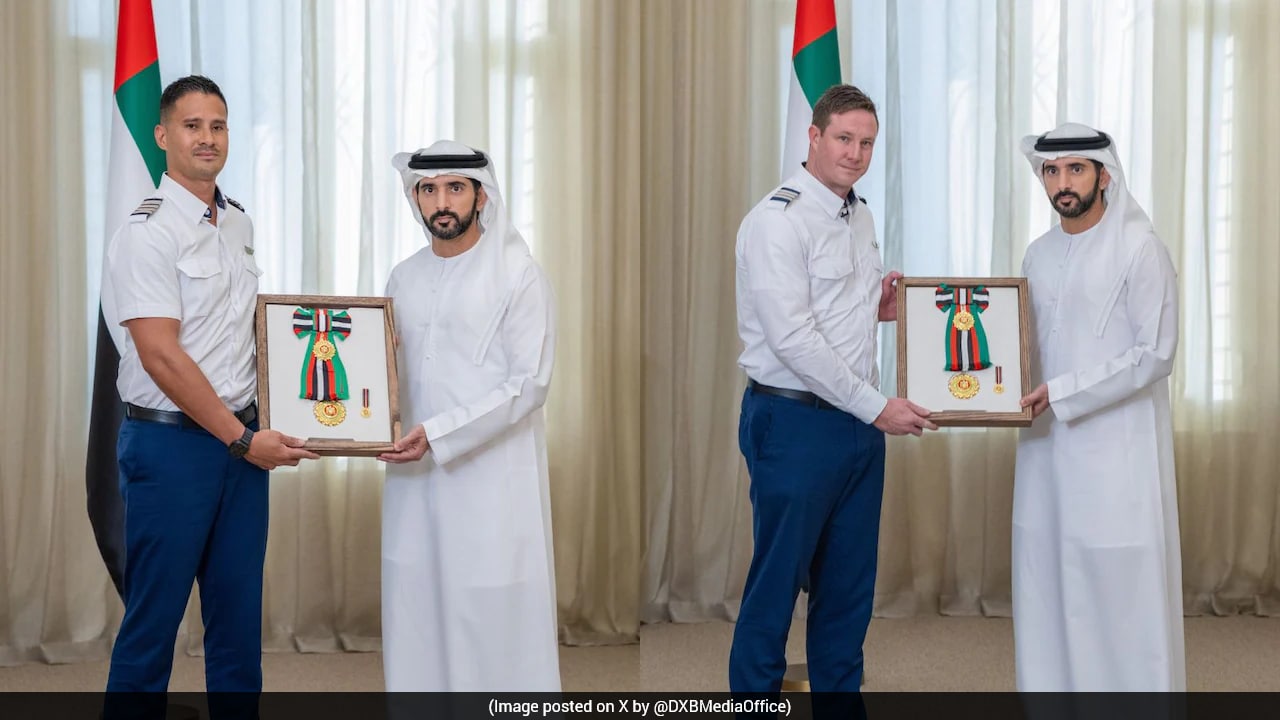
Media coverage of aviation incidents consistently exhibits a structural flaw: the prioritization of biographical trivia over operational mechanics. When a commercial aircraft experiences an anomaly or executes a critical landing, news desks frequently anchor their headlines to peripheral human-interest hooks—such as a flight crew member's familial connection to a former South African cricketer—rather than dissecting the cockpit resource management, aerodynamic variables, and regulatory frameworks that actually kept the hull intact. This narrative distortion obscures how commercial aviation safety functions, replacing technical accountability with celebrity adjacency.
The Mechanics of the Headline Distortion
To understand why a headline like "Ex-South African Cricketer's Son Among 2 Pilots Who Landed flydubai Plane" gains traction, one must examine the economics of digital news aggregation. Editors operate under a strict attention-capture mandate, where algorithmic distribution rewards cross-domain keyword intersection. By linking a routine or non-routine aviation event (flydubai) with a high-affinity regional demographic marker (South African cricket), publishers artificially expand the total addressable audience of a localized transport story.
However, this editorial choice introduces three distinct analytical distortions into the public record:
- Attribution Bias: Highlighting one pilot's lineage implies an asymmetrical distribution of agency in the flight deck. Modern commercial airliners are certified for two-pilot operations precisely because safety relies on redundant, interlocking verification protocols, not individual heroics.
- Causal Obfuscation: Focusing on who the pilot is related to displaces the explanation of what occurred mechanically or meteorologically. Readers learn a genealogical fact while remaining ignorant of the distinction between a standard diversion, an abnormal procedure, and a declared Mayday emergency.
- The Meritocratic Fallacy: Aviation licensing is governed by strict, standardized competency thresholds enforced by bodies such as the International Civil Aviation Organization (ICAO) and the General Civil Aviation Authority (GCAA). Lineage provides zero aerodynamic advantage during a crosswind flare or a hydraulic degradation event.
Deconstructing Flight Deck Operations and Command Authority
When a flydubai aircraft—typically a Boeing 737-800 or 737 MAX 8—executes a landing under scrutinized conditions, the outcome is dictated by a rigid operational hierarchy rather than personal background. The flight deck operates on a binary division of labor that remains constant regardless of the pilots' surnames.
- Pilot Flying (PF): Responsible for primary flight path control, energy management, and configuration changes (flaps, landing gear, speedbrakes). During an approach, the PF monitors airspeed, vertical speed, and localizer/glideslope alignment.
- Pilot Monitoring (PM): Responsible for radio communications, checklist execution, system state verification, and cross-checking the PF's inputs. If the PF deviates from stabilized approach criteria—such as exceeding a 1,000-feet-per-minute sink rate below 1,000 feet above ground level—the PM is mandated to call out the deviation or command a go-around.
The specific event involving the flydubai flight demonstrates the application of Crew Resource Management (CRM). CRM is a cognitive and interpersonal framework designed to eliminate authority gradients in the cockpit. Whether the First Officer or Captain holds a recognizable family name is functionally irrelevant; what matters is the adherence to Standard Operating Procedures (SOPs). In any abnormal landing scenario, the crew utilizes the Quick Reference Handbook (QRH) to isolate system faults, calculate updated landing distances based on runway condition codes, and brief the cabin crew on potential evacuation contingencies.
Separating Known Facts from Media-Generated Noise
Because the competitor reference provides only a headline without verifiable flight telemetry, flight numbers, or official GCAA preliminary incident reports, a rigorous analysis must separate established operational facts from speculative narrative framing.
Established Operational Realities:
- Carrier Profile: flydubai operates an all-Boeing 737 fleet out of Dubai International Airport (DXB), flying high-density short-to-medium-haul routes across the Middle East, Africa, Asia, and Europe.
- Qualification Standards: Every pilot occupying a right-hand (First Officer) or left-hand (Captain) seat on a commercial jet holds an Airline Transport Pilot License (ATPL) or a Multi-Crew Pilot License (MPL), alongside a specific Boeing 737 type rating. Achieving this requires passing rigorous simulator checks every six months (License Proficiency Checks and Operator Proficiency Checks) where crews are tested on engine failures at V1, windshear recovery, and degraded flight control laws.
- International Recruitment: Gulf carriers rely heavily on expatriate pilot pools, particularly from Commonwealth nations like South Africa, due to standardized English-language aviation training and transferable regulatory frameworks under the South African Civil Aviation Authority (SACAA).
Unverified or Missing Variables:
- Nature of the Event: Without an official incident log, it is impossible to verify whether the landing involved a mechanical malfunction (e.g., flap asymmetry, nose-gear steering fault), a medical diversion, severe weather, or simply a high-profile passenger load that drew media scrutiny to a standard operation.
- Seat Assignment and Role: The headline fails to specify whether the individual in question was the Pilot in Command (Captain) holding ultimate legal authority over the aircraft, or the First Officer executing monitoring or flying duties under supervision.
The Sociology of the South African Aviation Pipeline
The presence of a former South African cricketer's son in a Dubai flight deck is not a statistical anomaly; it is the predictable output of a well-established labor migration pipeline. Understanding this macro-trend provides far greater insight than treating the connection as a mere coincidence.
South Africa possesses one of the most developed general aviation infrastructures in the Southern Hemisphere, supported by favorable year-round flying weather and a historical emphasis on disciplined flight training. Simultaneously, the domestic commercial aviation sector in South Africa has experienced protracted economic contraction, including the restructuring and downsizing of state-owned South African Airways (SAA) and the liquidation of private carriers like Comair.
This creates a supply-demand imbalance:
- Supply Side: A high volume of experienced, English-speaking South African commercial pilots seeking long-term career stability and tax-free compensation packages.
- Demand Side: Rapid fleet expansion among Middle Eastern carriers—specifically Emirates, flydubai, Qatar Airways, and Etihad—which require continuous cohorts of type-rated pilots to staff expanding route networks.
Furthermore, the socioeconomic overlap between elite athletic families and commercial aviation in South Africa is substantial. Private flight training from zero hours to a frozen ATPL requires significant upfront capital expenditure, often exceeding $50,000 to $70,000 USD. Consequently, the children of established professional athletes frequently possess the financial backing necessary to fund private flight school tuition without relying on scarce airline cadetships. When these pilots subsequently migrate to hub carriers in the Persian Gulf, regional sports journalists inevitably rediscover them through the lens of their parents' athletic careers.
Evaluating Aviation Risk and Crew Performance Metrics
When assessing any commercial flight that attracts media attention for "landing safely," analysts must apply objective risk metrics rather than sensationalized relief. In commercial aviation, a safe landing is the baseline statistical expectation, occurring tens of thousands of times daily worldwide.
To evaluate whether a specific landing constituted an exceptional feat of airmanship or a routine execution of training, investigators examine four primary data points from the Flight Data Recorder (FDR) and Cockpit Voice Recorder (CVR):
- Touchdown Zone Precision: Did the main landing gear contact the runway within the designated touchdown zone (typically the first 1,000 to 3,000 feet of the runway threshold) at the target reference speed ($V_{ref}$)?
- Vertical Acceleration (G-Load): Was the touchdown executed within structural limits (typically below 1.8G to 2.0G for a standard landing, avoiding a hard-landing inspection trigger)?
- Directional Control: How effectively did the crew maintain runway centerline alignment using rudder, differential braking, and nose-wheel steering, particularly if asymmetric thrust or crosswinds were present?
- Deceleration Profile: Did the autobrake system, ground spoilers, and thrust reversers deploy synchronously to bring the aircraft to taxi speed within the calculated landing distance available (LDA)?
If all four metrics fall within normal operational envelopes, the event is classified as a standard line operation, regardless of who sits in the cockpit or what their family achieved on a cricket pitch decades prior. If an anomaly did occur—such as a dual-hydraulic failure or an uncontained engine shutdown—the crew's performance is measured strictly against their adherence to the non-normal checklist and their preservation of energy margins.
Limitations of Biographical Framing in Media Analysis
Relying on human-interest angles to report on technical industries carries inherent strategic liabilities for media outlets and readers alike. While celebrity-adjacent headlines generate short-term click-through rates, they degrade institutional trust among informed audiences and create false mental models of how complex systems operate.
First, biographical framing personalizes systemic safety. Commercial aviation achieved its ultra-low accident rate—measured in fractions of a fatal accident per million departures—by removing individual variance through automation, checklist discipline, and non-punitive safety reporting systems. Attributing a safe outcome to a pilot's pedigree subtly undermines the engineering and regulatory architecture that actually prevents hull losses.
Second, this approach creates an asymmetric reporting bias. If a pilot with a famous surname executes a routine landing, it becomes a feel-good headline. Conversely, if an incident results in an accident, media outlets frequently pivot to scapegoating the flight crew before black-box data is analyzed, ignoring upstream factors such as maintenance deferrals, air traffic control saturation, or manufacturer design flaws.
Strategic Framework for Consuming and Reporting Aviation News
To extract genuine signal from aviation coverage and eliminate biographical noise, readers, analysts, and editorial desks must enforce a strict verification protocol before assigning significance to a flight event:
- Verify the Regulatory Classification: Cross-reference any news report against official aviation databases (such as the Aviation Herald or national civil aviation authority bulletins) to determine if the flight actually declared an emergency (Squawk 7700), executed a priority landing, or suffered a documented mechanical failure.
- Separate Lineage from Licensing: Treat familial ties to sports or entertainment strictly as demographic context, never as a causal factor in cockpit performance. Evaluate flight crews solely through the lens of their seat position, aircraft type rating, and adherence to SOPs.
- Demand Telemetry Over Trivia: Prioritize reporting that specifies aircraft registration, flight phase, meteorological conditions (METAR/TAF data), and exact mechanical anomalies over articles that rely entirely on passenger anecdotes or crew biographies.