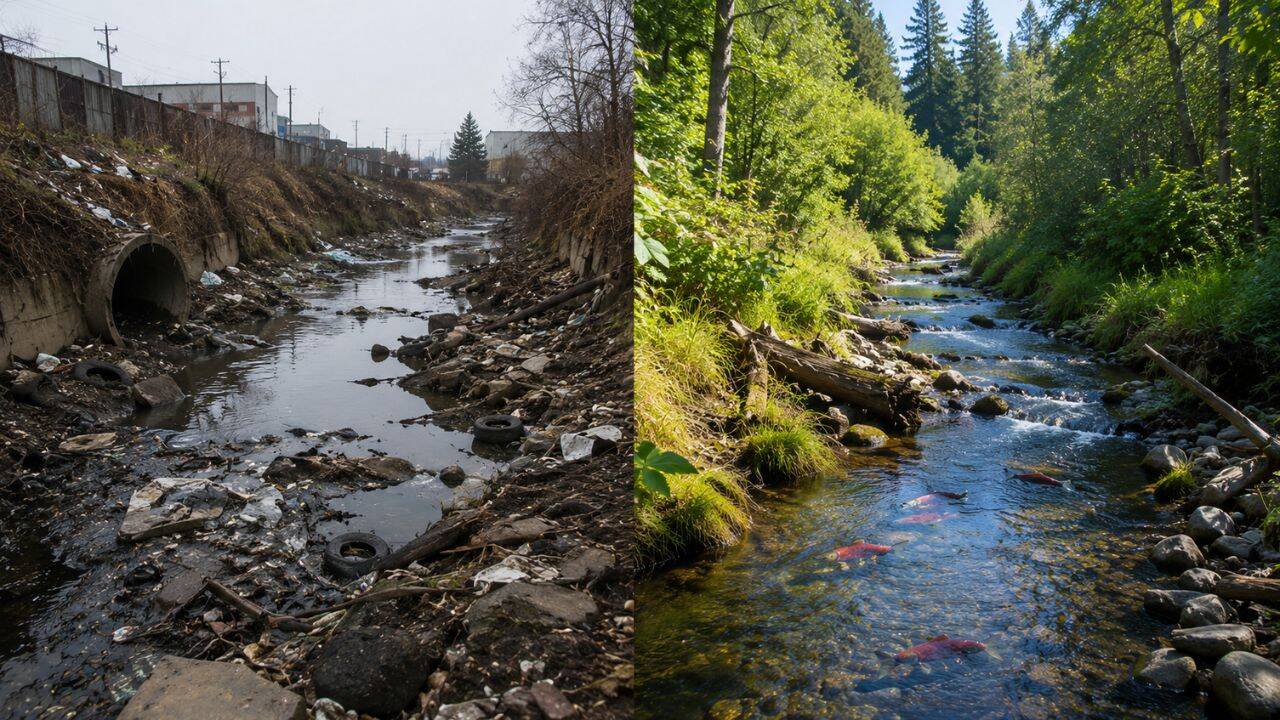
Doctors gave John Beal four months to live. Instead of folding, a Marine Corps veteran walked out to a forgotten, trash-choked ditch in South Seattle and started pulling out old tires, rusted cans, and an abandoned washing machine by hand. That ditch was Hamm Creek, a ruined tributary of the heavily industrialized Duwamish River. What started as a desperate way to spend his final months turned into a 27-year crusade that resurrected an entire urban ecosystem.
Most people assume fixing a ruined waterway takes a massive government grant or a team of elite environmental scientists. Beal had neither. He had a shovel, raw grit, and an obsession with bringing the salmon back.
The Brutal Reality of Urban Stream Destruction
You can't understand what Beal accomplished without looking at how badly humans broke Hamm Creek in the first place. Urban development treated the West Seattle tributary basin like a sewer. Decades of dumping turned the ravine into a garbage pit. Much of the creek was forced underground into narrow pipes.
This piping wrecked the water chemistry. It choked the flow, heated the water up to lethal levels for aquatic life, and completely blocked migrating salmon from reaching spawning grounds. A stream that should have teemed with life became a toxic dead zone.
Beal didn't wait for permission to fix it. He didn't file a committee report. He started right at his own feet.
The Hands-On Work of Daylighting a Creek
Fixing a buried, polluted stream is brutal physical labor. Beal spent decades doing the heavy lifting most people avoid.
- Pulling physical trash: Hauling hundreds of tires, shopping carts, and household appliances out of the mud by hand.
- Daylighting buried channels: Uncovering sections of the creek trapped in pipes, exposing the water back to the open air and sunlight.
- Planting native species: Introducing watercress, duckweed, and riparian trees to shade the water and stabilize eroding banks.
Beal faced constant pushback. Commercial interests and indifferent local officials frequently fought his efforts. But his relentless attitude—earned during his service in Vietnam—made him a formidable obstacle for anyone trying to ignore the health of the watershed. He founded the I'M A PAL foundation to organize volunteers and secure funding, slowly turning a solitary obsession into a community movement.
Bringing Back the Salmon and the Wildlife
Ecosystems bounce back fast if you give them half a chance. As Beal cleared the debris and lowered the water temperature, nature responded.
Salmon finally found a way back up into the creek. Today, the restored estuarine marsh supports returning salmon populations, busy beavers, river otters, and visiting herons and ospreys. Local school children began visiting the site to learn about wetland ecology and release juvenile salmon they raised in classrooms.
Beal's grassroots efforts helped shift local awareness entirely. His work contributed directly to the Lower Duwamish gaining federal superfund status in 2001, triggering a massive, ongoing regional cleanup.
You don't need formal credentials to change your local environment. You just need to stop waiting for someone else to pick up the first piece of trash. Start where you are, clear the blockage, and let nature do the rest.


