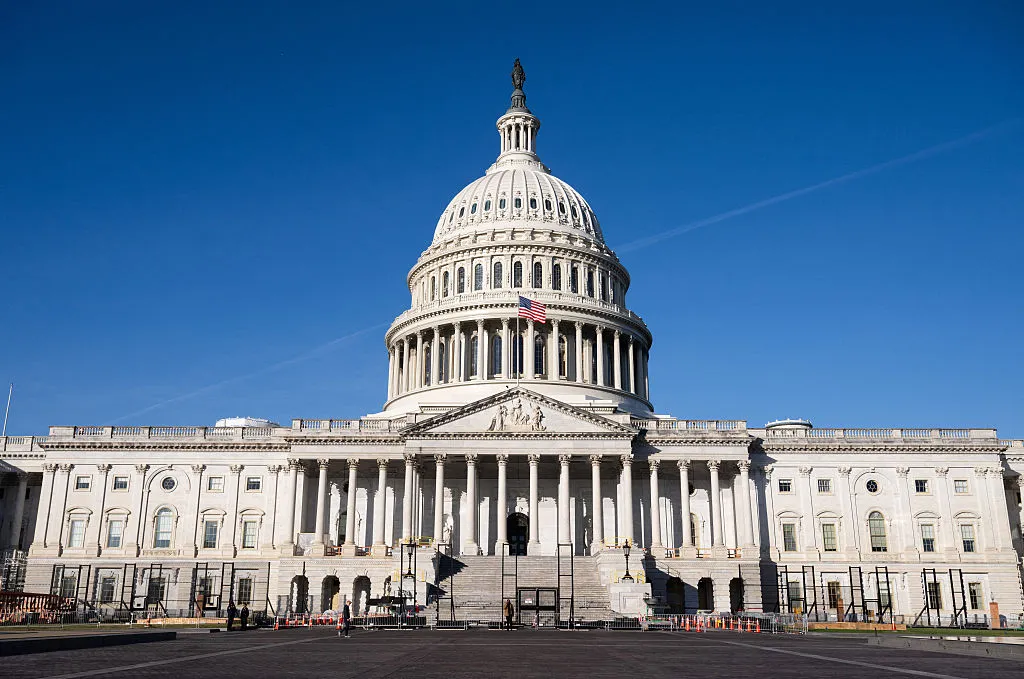
European leaders spent decades treating American political turbulence as a temporary storm, convinced that every four-year election cycle would eventually restore the dependable, Brussels-friendly Washington of the late twentieth century. That era is dead. Whether the Oval Office is occupied by a populist nationalist or a traditional institutionalist, the structural drivers of American foreign policy have permanently shifted away from underwriting European security and economic stability. Demographic changes, unsustainable federal debt, bipartisan domestic protectionism, and an overwhelming strategic fixation on the Indo-Pacific mean that the transatlantic safety net is unraveling for good. Europe cannot wait out the clock on Washington because the clock itself has been smashed.
For eighty years, the transatlantic alliance rested on a simple, unspoken bargain. Washington provided the nuclear umbrella, the naval dominance that kept global shipping lanes open, and an insatiable consumer market for European exports. In exchange, European capitals aligned their foreign policies with American interests and accepted a subordinate role in global grand strategy. It was a comfortable arrangement for Berlin, Paris, and London. It allowed European governments to divert billions of dollars away from heavy defense manufacturing and toward expansive domestic welfare states, high-speed rail, and regulatory frameworks.
The Structural Break in Washington
The fatal flaw in European strategic thinking today is the belief that American unpredictability is merely a personality quirk of specific leaders. Walk the halls of the Munich Security Conference or the European Parliament, and you will still hear quiet whispers about riding out the current administration until "normalcy" returns. This is a dangerous misreading of American domestic politics.
The generational cohort that built the post-1945 international order is gone. The lawmakers currently rising through both the Republican and Democratic ranks grew up after the fall of the Berlin Wall. Their formative political memories are not the Berlin Airlift or the Marshall Plan, but the costly quagmires of Iraq and Afghanistan, the 2008 financial crash, and the hollowing out of American industrial towns. To a voter in Ohio or Pennsylvania, defending the borders of Eastern Europe looks like an expensive luxury when domestic infrastructure is crumbling and fentanyl is pouring across their own southern border.
Economics reinforces this political shift. The United States national debt has surpassed thirty-five trillion dollars, and interest payments on that debt now rival the entire Pentagon budget. No American president—regardless of party—can indefinitely borrow money from global bond markets to subsidize the defense of wealthy European nations that refuse to maintain adequate munition stockpiles.
Furthermore, economic nationalism has become the sole point of genuine bipartisan consensus in Washington. When the Biden administration passed the Inflation Reduction Act, pouring hundreds of billions of dollars into domestic green energy subsidies, European leaders were stunned to realize that a Democratic White House was just as willing to poach European industrial capital as a Republican one. Free trade is no longer the default operating system of the United States. Subsidies, tariffs, and industrial reshoring are here to stay.
The Indo-Pacific Gravity Well
Even if Washington wanted to maintain its traditional footprint in Europe, geography and physics dictate otherwise. The American military was designed during the Cold War to fight two major regional wars simultaneously. Today, the Pentagon struggles to sustain the industrial capacity required to supply even one prolonged high-intensity conflict, as the war in Ukraine brutally exposed.
China represents a peer competitor with a manufacturing base that dwarfs the United States in shipbuilding, steel production, and critical mineral processing. Every aircraft carrier group stationed in the Mediterranean, every Patriot air defense battery deployed to Poland, and every artillery shell shipped across the Atlantic is an asset unavailable for a potential crisis in the Taiwan Strait or the South China Sea.
American defense planners operate under a cold, unforgiving math. If a conflict erupts in the Pacific, the United States will be forced to strip assets from the European theater within days. Washington is no longer subtly hinting that Europe must handle its own conventional defense; it is openly stating that American bandwidth is maxed out.
The Illusion of European Strategic Autonomy
For years, French presidents have preached the gospel of European strategic autonomy, arguing that the continent must develop the capacity to act independently in defense and technology. Yet in practice, the concept has remained mostly rhetorical vapor. When Russia launched its full-scale invasion of Ukraine in 2022, Europe did not rally around a unified European command structure. Instead, capitals from Warsaw to Stockholm immediately looked to Washington for leadership, intelligence, and heavy weaponry.
Consider the structural dependencies that still cripple European sovereignty:
- Intelligence and Reconnaissance Europe lacks the satellite constellations, high-altitude drones, and signals intelligence networks required to monitor a modern battlefield in real time without American data feeds.
- Strategic Enablers Heavy airlift, aerial refueling tankers, and suppression of enemy air defenses remain overwhelmingly American capabilities within NATO.
- Defense Industrial Fragmentation While the United States operates a single, standardized military-industrial complex, Europe maintains dozens of competing national defense champions, producing multiple incompatible versions of tanks, fighter jets, and artillery systems at inflated prices.
The Energy and Industrial Squeeze
The end of the old American order coincides with the collapse of Europe’s other foundational pillar—cheap Russian energy. For decades, German industrial might relied on a straightforward formula. Buy inexpensive pipeline gas from Moscow, process it into high-value chemicals, machinery, and automobiles, and sell those goods to the United States and China.
That model shattered when Russian gas stopped flowing. Forced to pivot rapidly to liquefied natural gas shipped primarily from the United States, European manufacturers now pay structurally higher energy costs than their American competitors. Energy-intensive industries—from aluminum smelting to fertilizer production—are quietly shuttering plants in the Ruhr Valley and relocating facilities to Texas and Louisiana, where natural gas is abundant and electricity is cheap.
At the same time, Europe’s third major economic pillar, the Chinese export market, has turned from a goldmine into a threat. China no longer wants to buy German luxury sedans or French industrial equipment; it wants to flood European ports with subsidized electric vehicles, solar panels, and wind turbines. Caught between American protectionism and Chinese overcapacity, Europe risks becoming an industrial museum—a wealthy, heavily regulated tourist destination that no longer manufactures the physical goods required to sustain its own geopolitical weight.
Why Bureaucracy Cannot Substitute for Hard Power
Brussels has historically viewed its regulatory power as its greatest geopolitical weapon. Known as the Brussels Effect, the ability of the European Union to set global standards on data privacy, chemical safety, and artificial intelligence forced multinational corporations to comply with European rules simply to access its lucrative single market.
Regulation works brilliantly in a peaceful, rules-based global economy. It is useless against ballistic missiles, subsea cable sabotage, and mercantilist trade wars. You cannot fine a hostile navy out of the Baltic Sea, and you cannot regulate an adversary into abandoning territorial conquest.
Yet the reflex in Brussels remains to draft legislation rather than build factories. European capitals spend months debating the precise bureaucratic rules governing joint defense procurement funds while ammunition plants sit under-funded due to strict environmental, social, and governance lending criteria that classify defense manufacturing alongside tobacco and gambling.
The Counter-Argument That Keeps Brussels Asleep
Defenders of the status quo argue that the transatlantic bond is too deeply institutionalized to fail. They point to massive bilateral trade volumes, intertwined financial markets, shared democratic values, and the sheer inertia of NATO’s integrated command structure. They contend that American isolationism has flared up before—in the 1920s, the 1970s, and the 1990s—only for Washington to inevitably return to global leadership when crises demanded it.
This historical analogy fails because the underlying fundamentals have reversed. In the twentieth century, the United States was a rising demographic and industrial titan with a relatively small government debt burden and no peer economic rival. Today, the United States is a mature superpower facing severe internal polarization, fiscal constraints, and a formidable challenger in Asia. American restraint is no longer an ideological choice made by isolationist politicians; it is an objective constraint imposed by economics and geopolitics.
What Real Survival Requires
If European leaders finally accept that the old America is gone, the required policy shifts will be politically painful and financially immense. Incremental increases in defense spending to two percent of gross domestic product—a target many NATO members struggled for a decade just to reach—will no longer suffice. Cold War levels of readiness require spending closer to three or four percent, a shift that forces direct trade-offs with pension systems, healthcare budgets, and green transition subsidies.
True independence requires collapsing national defense protectionism. European governments must stop treating defense contracts as regional jobs programs and consolidate their fragmented industries into continental-scale manufacturers capable of mass-producing standardized shells, drones, and air defense interceptors. A single unified market for defense procurement is not optional.
Capital markets must also be unshackled. Europe sits on trillions of euros in private household savings, much of which flows into American equity markets because European capital markets remain fractured across twenty-seven different national legal and tax regimes. Without a genuine Capital Markets Union to fund high-risk technological innovation and heavy industrial scaling, European startups will continue to cross the Atlantic the moment they need serious growth capital.
Finally, Europe must abandon the comforting delusion that moral authority carries weight without material backing. History shows little mercy to wealthy, divided powers that outsource their survival to distant allies whose priorities have moved on. The American security guarantee was never a permanent law of nature; it was a temporary historical anomaly born from the ashes of 1945, and Europe must either build the hard power to stand alone or prepare to be carved up by the empires that still understand how force works.