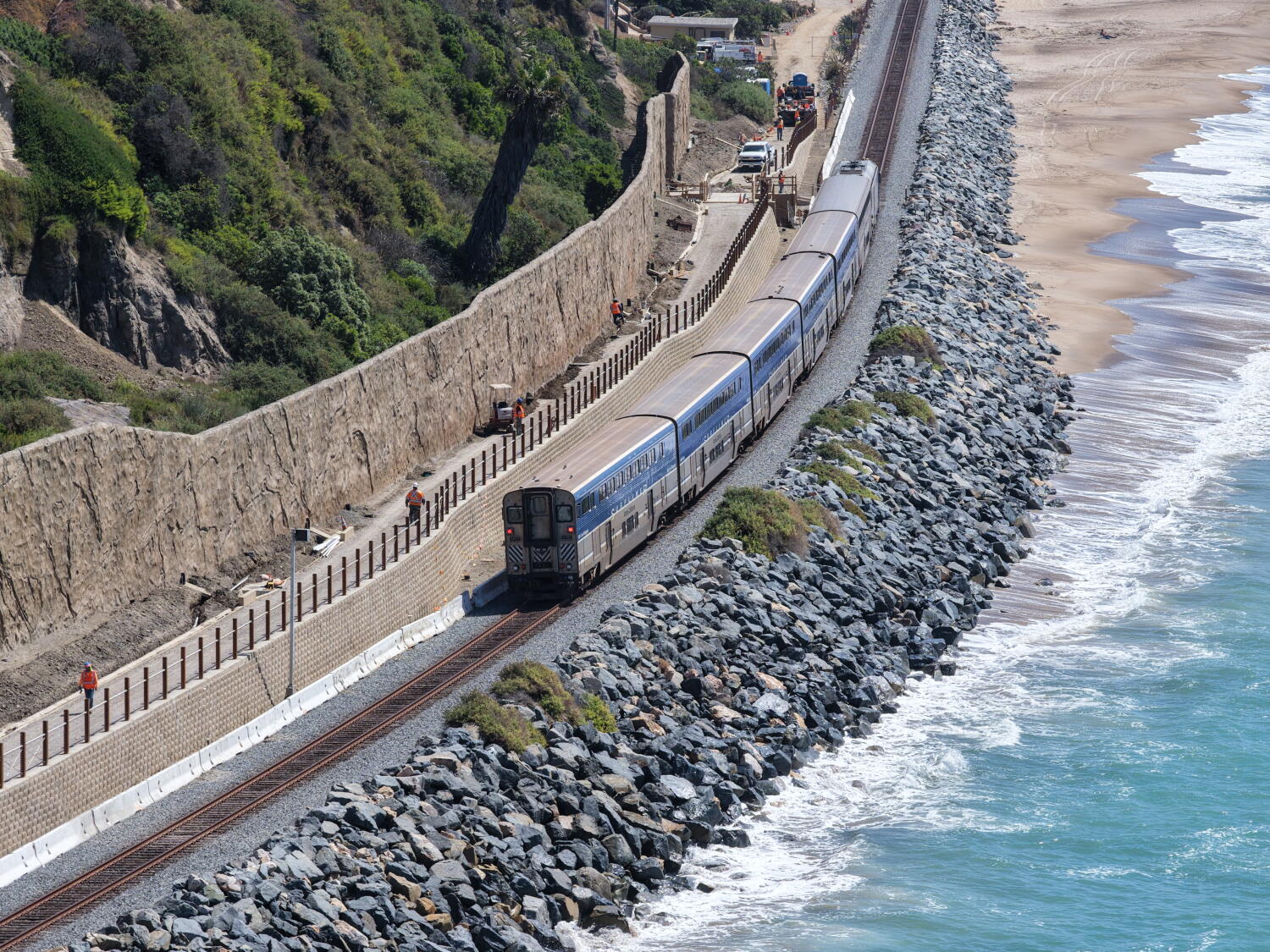
The coffee in the paper cup has gone stone cold, but nobody puts it down. Passengers stare through salt-filmed windows at a Pacific Ocean that looks entirely too close, too heavy, and too hungry. Outside, the steel rails of the Pacific Surfliner curve along the edge of a cliff in San Clemente, clinging to a strip of Southern California coastline where the land is losing an ancient, quiet war against the water.
For millions of commuters, surfers, and weekend wanderers, this train is not merely public transit. It is a moving living room. It connects San Luis Obispo, Santa Barbara, Los Angeles, and San Diego through a continuous ribbon of blue ocean and sun-baked bluffs. You board with the salt air still in your hair from a morning session in Ventura. You watch dolphins crest through the copper glare of a late afternoon sunset while typing out emails or sharing quiet conversations. In similar developments, take a look at: The Broken Metrics Behind the Global Tourism Boom and Where India Actually Stands.
Then El Niño arrives.
To meteorologists, El Niño is a warming of sea surface temperatures in the central and eastern tropical Pacific, altering atmospheric pressure and steering firehose-like atmospheric rivers straight at the California coast. To the Pacific Surfliner, El Niño is an existential wrecking ball. It brings torrential downpours that saturate fragile sandstone cliffs, followed immediately by relentless, high-energy winter swells that chew away at the beaches protecting the base of those same slopes. Condé Nast Traveler has analyzed this important subject in great detail.
Consider what happens next when these forces collide.
On a quiet Tuesday morning, a hillside in Orange County does not gently shift; it lets go. Millions of pounds of wet earth slide onto the tracks, dragging concrete retaining walls and signal wires down toward the surf. Service halts instantly. Commuters wake up to digital alerts canceling their journeys. Buses are brought in to bridge the gap, turning a breezy two-hour coastal glide into a grinding, multi-hour highway crawl.
This is the hidden vulnerability of our most romantic infrastructure. We built our railroads along the water in the nineteenth century because steam engines needed water and the shorelines offered flat, low-grade paths. We traded engineering challenges for breathtaking views. But the ocean always collects its debts.
Over the past few years, the tracks through San Clemente have been forced to close for months at a time. Not once, but repeatedly. Emergency stabilization projects have poured millions of dollars into drilling steel anchors deep into the hillsides and hauling thousands of tons of sand onto eroding beaches to act as a shock absorber against the waves. Yet every time a severe winter storm cycle spins up out of the Pacific, engineers hold their breath.
Imagine standing at the edge of the Mariposa Point slide zone during a gale. The wind whips sea spray over the ballast. The ground beneath your boots feels spongy, hesitant, ready to slide. Down below, waves slam against the newly constructed barrier walls with a concussive boom that vibrates straight through your chest.
Can the iconic train survive the winter?
The short answer is yes, but only if we change our definition of survival. Survival is no longer about keeping the trains running on an unbroken schedule every single day of the year without interruption. It is about a massive, expensive, agonizing adaptation. It requires billions of dollars in coastal resilience, long-term rail realignment studies, sand replenishment programs that widen beaches by hundreds of feet, and hard conversations about whether we can continue to hold the line against a rising sea using twenty-first-century duct tape on nineteenth-century paths.
The Pacific Surfliner remains resilient because the desire to move beside the ocean is woven into the identity of the coast. People refuse to let it die. When the tracks reopen after a months-long closure, the first train to roll through is packed. Passengers press their faces against the glass, cheering softly as the wheels click-clack over the newly secured rails.
The salt spray hits the windshield again. The engine pulls south toward San Diego, leaning into the curve where the cliff meets the foam.