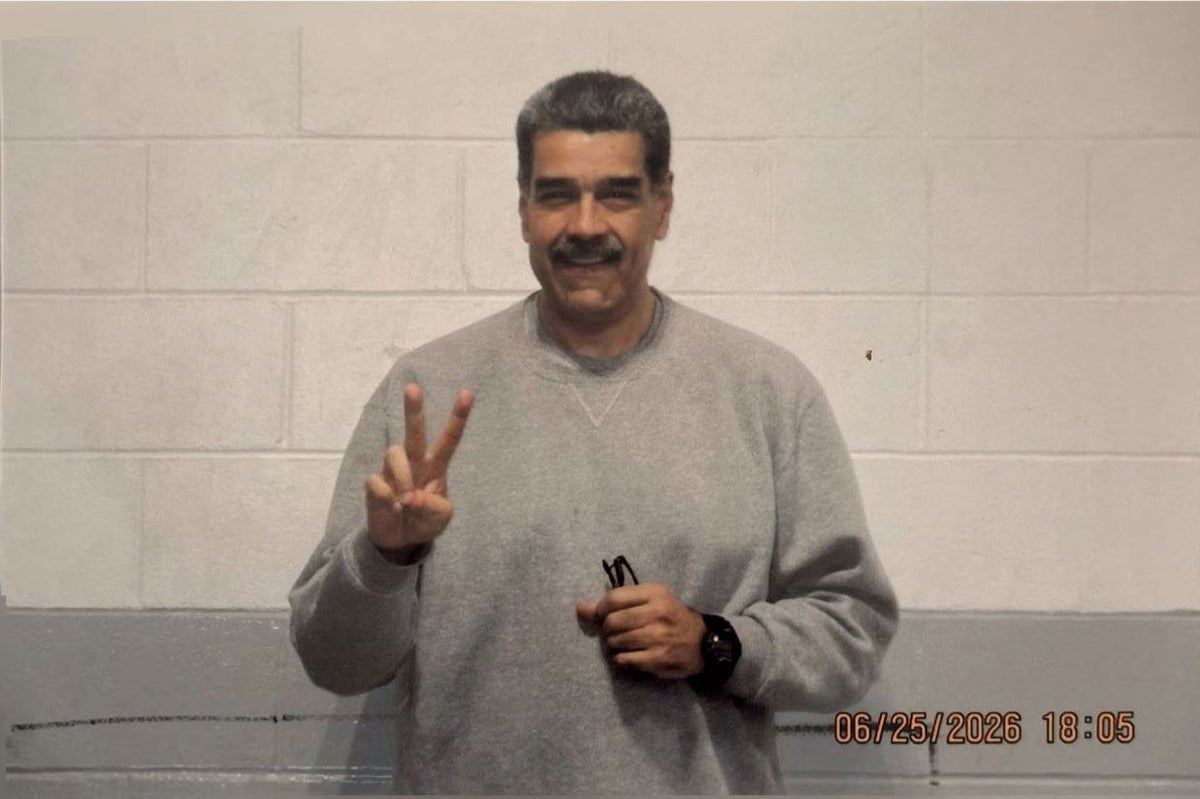
The internet spent the last forty-eight hours dissecting pixels. Every armchair intelligence analyst and TikTok geopolitical expert zoomed in on the lighting, the concrete grade, and the angle of a shadow in photographs allegedly showing Nicolás Maduro behind bars. People want a smoking gun. They want visual confirmation that the strongman has fallen, that justice is a physical room with iron bars, and that history has an orderly receipt.
It is a comforting delusion. And it is completely worthless. Also making headlines in related news: The Long Shadow of the Missing Where the Ground Has Swallowed Names.
Focusing on whether a jail cell snapshot is authentic, staged, or generated by a mid-tier PR firm is the political equivalent of arguing about the upholstery on a sinking ship. Dictators do not fall because their holding cells look suitably grim. They fall when the transaction costs of keeping them in power outweigh the benefits for the men holding the guns.
If you are staring at those images trying to decode the regime's endgame, you are asking the wrong question entirely. The question is never what a fallen ruler's immediate physical conditions look like. The question is who negotiated the transition, what guarantees were cut in the dark, and how many billions in state assets were quietly transferred to offshore accounts before the handcuffs ever came out. Further information into this topic are covered by The Washington Post.
I have watched international transitions from the inside. I have seen foreign policy wonks pop champagne over grainy photos of deposed autocrats while the exact same intelligence agencies that ousted them quietly cut million-dollar consultancy deals with the dictator's second-in-command. Realpolitik is messy, transactional, and entirely divorced from the Hollywood ending you are hoping for.
Let us dismantle the three biggest myths driving the current media cycle.
Myth One: Visual Proof Equals Regime Collapse
The public operates on a naive premise: seeing is believing. If the photograph exists, the tyrant is gone, and democracy returns by Tuesday.
History disagrees violently. Autocrats are rarely overthrown by public outrage or viral social media posts. They are replaced through elite fragmentation. The military brass, the intelligence directorate, and the transnational smuggling networks decide they prefer a new face at the top to preserve their wealth.
When Manuel Noriega was ousted, the imagery of his capture dominated global news. Yet the apparatus of corruption that built him remained largely intact. When Saddam Hussein was pulled from a spider hole, the photos became instant iconic memes of poetic justice. Did that prevent decades of catastrophic instability? Of course not.
Staging a jail cell photo—or leaking one—is a classic containment strategy. It gives the international community a scalp to celebrate and domestic opposition a temporary sugar rush of satisfaction. Meanwhile, the core economic networks that funded the regime simply reincorporate under new management.
If Maduro is in a cell, the real negotiation happened months ago. It involved immunity deals, asset preservation for his inner circle, and quiet nods from foreign energy partners who care vastly more about barrel output per day than human rights reports.
Myth Two: International Sanctions Broke the State
Another favorite narrative from mainstream pundits is that maximum pressure economic policies finally cornered the regime. Sanctions starved the beast, the logic goes, leaving Maduro with no escape hatch except a concrete box.
This is economic illiteracy dressed up as foreign policy expertise. Broad-based sanctions rarely dislodge dictators. Instead, they create a siege economy that makes the population entirely dependent on state rationing while enriching the military caste that controls the black market.
When you criminalize formal trade with a petro-state, you do not stop the oil from flowing. You simply force it into opaque, illicit channels run by sanctioned generals and international intermediaries. Maduro did not run out of money. He learned to denominate his state in gold, crypto, and cash-in-hand smuggling through allied middle-men in the region.
The sanctions didn't break the regime. They militarized the economy permanently. If Maduro is out of power, it is because his revenue-sharing agreement with the armed forces fractured due to internal greed, not because a Washington bureaucrat signed a compliance waiver.
Myth Three: Democracy Can Be Photographed Into Existence
The most dangerous delusion of all is the belief that removing a single individual resets the political software of a nation.
Political systems are complex adaptive networks. They are not light switches. When you remove the apex predator, you do not eliminate the ecosystem; you create a vacuum that dozens of vicious scavengers immediately rush to fill.
Look at what actually happens when a heavily entrenched authoritarian structure implodes. The police state apparatus does not dissolve. The bureaucrats who tracked dissidents, the judges who signed kangaroo court sentences, and the border guards who took bribes do not magically transform into civil libertarians overnight. They change their party pins, shred the incriminating ledgers, and cut a deal with the incoming administration to keep their pensions.
Democracy requires a robust institutional framework, an independent judiciary, and a culture of compliance with laws that apply equally to the powerful and the powerless. None of those things can be established by a viral photograph or an emergency summit in Geneva.
When outsiders cheer for a dramatic arrest photo, they are treating a systemic failure like a reality television finale.
The Uncomfortable Reality of Transition Economics
Let us look at how power actually transfers in the twenty-first century.
Imagine a scenario where a regime is crumbling from within. The treasury is empty, inflation has rendered the local currency decorative wallpaper, and the generals are getting nervous about their Swiss bank accounts being frozen by Western regulators.
Does the dictator get dragged through the streets in chains? Rarely.
More often, a midnight delegation boards a private jet. They fly to a non-extradition sanctuary state—somewhere in the Gulf or authoritarian pockets of Asia—with three checked bags full of bearer bonds and digital wallet keys. The incoming transition team steps into the presidential palace, looks at the ledger, and realizes the country is leveraged to three different foreign powers who own the port infrastructure and the mineral rights for the next fifty years.
The new leaders hold a press conference in front of fluttering flags. They talk about national renewal and healing. Then they quietly continue the exact same resource extraction monopolies, just with a different set of names on the wire transfer forms.
That is not a conspiracy theory. That is Tuesday in modern geopolitics.
What You Should Be Watching Instead
If you want to know what is actually happening in Venezuela, or any other resource-cursed autocracy teetering on the edge, stop looking at Instagram feeds and stop reading anonymous intelligence leaks planted in legacy newspapers.
Track the cargo manifests. Track the tanker traffic leaving off-grid ports. Watch where the gold reserves are being flown. Follow the legal representations of the regime's front men in Madrid and Miami.
When the elite start moving their families and capital out of the country simultaneously, the regime is finished regardless of who occupies the jail cell. When the military leadership stops answering secure lines from the presidential palace, the game is over.
A photograph of a man behind bars is theater. The ledger is reality.
Stop buying the tickets for the show. Stop debating whether the lighting in a holding cell looks natural or staged.
The people cheering for the photo are the audience. The people negotiating the transition are the owners. And you are watching from the cheap seats while they pick your pocket.