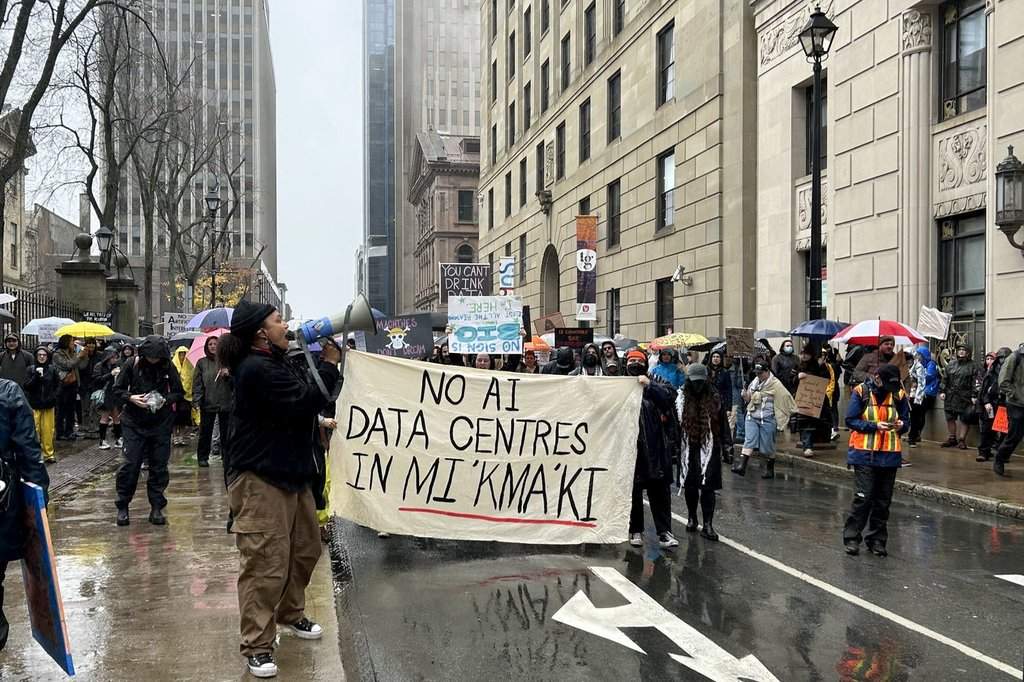
Walk past any community hall in rural Nova Scotia right now, and you'll hear the exact same question. Why are we welcoming massive server farms when our power grid already struggles every time a winter storm blows through?
That's the real heartbeat behind the recent Nova Scotia protests calling for a moratorium on data centre proposals in the province. Demonstrators gathered outside government offices and municipal meetings aren't just complaining about noisy fans or cleared trees. They're pushing back against a simple, uncomfortable math problem. Hyperscale computing facilities eat up staggering amounts of electricity and water, and Nova Scotians are worried they'll get stuck holding the bill—both financially and environmentally.
I've spent years covering energy policy and infrastructure development across Atlantic Canada, and I've seen this exact playbook run in Virginia, Ireland, and Quebec. Promises of high-tech jobs and municipal tax windfalls show up first. The massive power bills and grid strain arrive right after.
What Sparked the Nova Scotia Data Centre Protests
The pushback didn't come out of nowhere. Over the past couple of years, developers have quietly scouted land across Nova Scotia, eyeing the province's cool climate, transatlantic fiber-optic cable landings, and access to industrial sites. For tech companies trying to build AI training clusters or cloud storage hubs, a chilly coastal province looks pretty attractive on a spreadsheet.
Local residents and environmental groups see a very different picture. When protesters rallied to demand a temporary freeze on new approvals, they pointed straight at two sore spots—Nova Scotia Power's fragile electrical grid and the province's slow transition away from coal.
People are angry. And honestly, it's hard to blame them.
Nova Scotia has one of the highest rates of energy poverty in Canada. Families in Halifax, Cape Breton, and the Annapolis Valley have watched their electricity bills climb steadily while dealing with frequent outages. Dropping a single hyperscale data centre onto a grid like that can easily consume as much power as tens of thousands of homes running simultaneously, twenty-four hours a day.
The Power Grid Math Nobody Wants to Do Out Loud
Let's look at how these facilities actually operate. Unlike a factory that runs two shifts and powers down overnight, a data centre never sleeps. Its servers run at peak load around the clock, and its cooling systems work overtime to keep thousands of processors from melting down.
In places like Ireland—which became a cautionary tale for grid planners worldwide—data centres grew so fast they ended up consuming more than a fifth of the entire country's electricity. EirGrid, Ireland's state-owned grid operator, eventually had to impose a de facto moratorium around Dublin because the network simply couldn't handle new connections without risking blackouts.
Nova Scotia's grid is much smaller and far more isolated than Ireland's. We rely heavily on aging thermal plants, intermittent wind power, and limited transmission links to New Brunswick. The provincial government has a legal mandate to get off coal by 2030 and reach 80 percent renewable energy. Adding massive, uninterrupted industrial power loads right in the middle of that transition makes hitting those climate targets exponentially harder.
If a data centre demands 100 or 200 megawatts of continuous power, where does that electricity come from? Either Nova Scotia Power keeps fossil fuel generators burning longer, or we build brand-new wind farms and transmission lines at breakneck speed. Guess who usually pays for those grid upgrades when utility rates get recalculated? Regular ratepayers.
Water Use and the Quiet Environmental Toll
Electricity gets the headlines, but water is the silent issue driving rural opposition.
Most large data centres use evaporative cooling towers to shed heat. On hot summer days, a single large facility can evaporate millions of litres of fresh water every twenty-four hours. Even closed-loop cooling systems still rely on massive amounts of energy to run chillers, shifting the burden straight back onto the power grid.
In coastal communities and rural municipalities across Nova Scotia, wells run dry during late summer droughts. Municipal water treatment plants in smaller towns weren't engineered to supply an industrial cooling operation alongside local households. When residents hear about a proposed server facility near a local watershed, their first thought isn't cloud computing. It's whether their tap will still run in August.
What Developers Promise vs What Communities Actually Get
If you've ever sat through a developer's pitch at a municipal council meeting, you know the script by heart. They talk about hundreds of millions of dollars in capital investment, local construction booms, and positioning the region as a hub for the digital economy.
Here's what rarely gets emphasized during those slide presentations.
Construction jobs are temporary. Once the concrete is poured, the racks are wired, and the security perimeter goes up, a massive data centre operates like a dark warehouse. A facility covering hundreds of thousands of square feet might employ thirty to fifty full-time staff—mostly security guards, HVAC technicians, and a handful of network engineers.
Compare that job-to-megawatt ratio with almost any other industry. A manufacturing plant, a food processing facility, or a marine engineering yard using the same amount of electricity creates hundreds of permanent, middle-class paychecks. Data centres deliver very little ongoing employment per unit of energy consumed.
Tax revenue can be a genuine win for a cash-strapped municipality, provided the town doesn't give away the farm in tax incentives just to win the bid. Too often, local councils compete against each other by offering multi-year property tax breaks, shrinking the one guaranteed financial benefit the community was supposed to receive.
Why a Moratorium Isn't Just Anti-Tech Stubbornness
Critics of the protests love to frame the opposition as people standing in the way of progress. That's a lazy take.
Calling for a moratorium isn't the same thing as banning technology forever. A moratorium is a pause button. It buys time for regulators, utilities, and elected officials to write rules before irreversible approvals get stamped.
Right now, Nova Scotia lacks a comprehensive regulatory framework tailored specifically to hyperscale computing. Without clear rules, projects get evaluated piecemeal through standard industrial zoning and environmental assessments that weren't designed for facilities with massive, constant energy appetites.
Other jurisdictions have already figured out that guardrails are essential. Some regions now require data centre developers to bring their own dedicated renewable power generation—known as "additionality"—so they aren't cannibalizing clean electricity meant for homes and electric vehicles. Others mandate strict water-recycling standards, waste-heat recovery systems that warm nearby greenhouses or district heating loops, and special utility rate classes that shield residential customers from paying for new substations.
Nova Scotia has none of those protections locked into law yet. Approving giant server farms before setting those rules is like inviting a hundred guests to dinner before checking if you have enough chairs or groceries.
What Needs to Happen Before Another Proposal Moves Forward
If you live in Nova Scotia and want to make sure your community doesn't get blindsided by a poorly planned energy hog, watching from the sidelines won't cut it. Municipal councils and provincial regulators respond to specific, technical pressure far more than general outrage.
Start by tracking municipal land-use amendments and industrial park rezoning notices in your county. Data centre developers almost always seek rezoning quietly before announcing a formal project. Show up to those local planning advisory committee meetings and ask three direct questions on the public record—how many megawatts the facility will draw at peak load, whether the developer is funding 100 percent of the required grid interconnection upgrades, and what the maximum daily water draw will be during peak summer heat.
At the provincial level, push your MLA and the Nova Scotia Utility and Review Board to establish a dedicated large-load tariff before any major interconnection agreements get signed. Utilities shouldn't be allowed to socialize the cost of building high-voltage lines for private tech giants across residential power bills. Insist that any new data centre contract includes binding requirements for new, local renewable generation and strict penalties if the facility misses its energy efficiency targets.
Nova Scotia has plenty of advantages that make it attractive to modern industry, from our coastal geography to our skilled tradespeople. Protecting our grid and our watersheds doesn't mean turning our backs on investment—it just means making sure the math actually works for the people who live here.