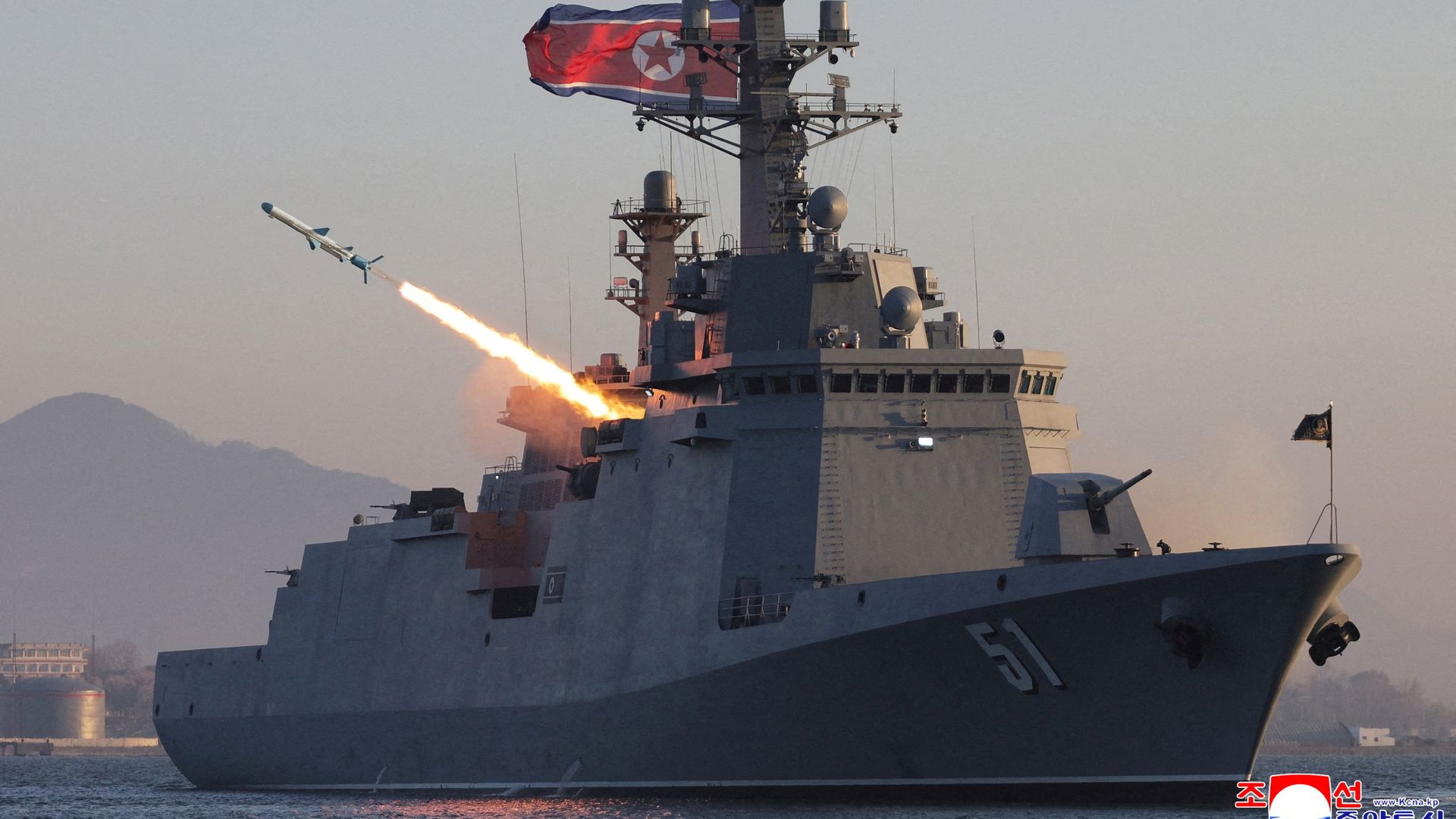
Stop reading the panicked headlines. Every time Pyongyang lofts a Hwasong-18 into the sea, the Western media cycle triggers a predictable, exhausting script. They call it "aggression." They call it "unprovoked." They talk about "regional instability" as if we are on the precipice of a nuclear exchange.
They are wrong. Recently making waves recently: Geopolitical Theater and the Myth of the Hormuz Chokehold.
If you view North Korea’s missile program through the lens of traditional military strategy, you are missing the forest for the trees. This isn't about starting a war they know they would lose in seventy-two hours. This is a high-stakes, multi-billion dollar R&D showcase and a masterclass in diplomatic leverage. North Korea isn't "lashing out"; they are checking off a punch-list of technical requirements while forcing their way to the top of the global priority list.
The Lazy Consensus of Aggression
The standard narrative suggests that Kim Jong Un wakes up, feels ignored, and decides to scare his neighbors. This interpretation is intellectually lazy. It ignores the rigorous, cold-blooded logic of the Kim regime’s survival strategy. Additional details on this are detailed by The New York Times.
North Korea has watched what happens to dictators who give up their "insurance policies." They saw Gaddafi in Libya. They saw Saddam in Iraq. They realized that the only way to ensure regime survival is to possess a credible, verifiable, and technologically advanced nuclear deterrent.
Every launch is a data point. When a missile fails, it’s a lesson in propulsion physics. When it succeeds, it’s a marketing brochure for their defense industry. To call this "provocation" is like calling a SpaceX flight test a declaration of war against the vacuum of space. It’s an engineering milestone disguised as a geopolitical stunt.
The Tech Debt of a Hermit Kingdom
Let’s talk about the actual hardware. The shift from liquid-fueled to solid-fueled missiles isn't just a marginal improvement; it’s a total shift in the strategic balance.
- Liquid-Fueled Missiles: These require a lengthy, visible fueling process. Satellites see the trucks. They see the activity. It gives the U.S. and South Korea time for a preemptive strike.
- Solid-Fueled Missiles: These are "cold-launched." They can be hidden in tunnels, driven out on a TEL (Transporter Erector Launcher), and fired in minutes.
When North Korea tests a solid-fuel ICBM, they aren't just making a "show of force." They are solving a specific technical vulnerability. They are reducing their "launch-to-impact" window to a point where missile defense systems like THAAD (Terminal High Altitude Area Defense) have to work perfectly, every single time, just to stand a chance.
The media obsesses over the politics of the launch. The smart money obsesses over the propellant chemistry.
Why We Should Stop Demanding Denuclearization
The West’s obsession with "Complete, Verifiable, Irreversible Denuclearization" (CVID) is a fantasy. It is a dead policy walking. No amount of sanctions or sternly worded UN resolutions will convince a nuclear state to voluntarily disarm when they believe that disarmament equals execution.
By clinging to the CVID myth, we ignore the reality of the situation: North Korea is a nuclear power. Period.
The question isn't "How do we get them to stop?" The question is "How do we manage a nuclear-armed North Korea without stumbling into an accidental war?"
The Cost of Sanctions Hypocrisy
We pretend that sanctions "isolate" the regime. In reality, they have forced North Korea to become the world’s most sophisticated illicit financial actor. From crypto heists to ship-to-ship oil transfers, Pyongyang has built a shadow economy that bypasses the SWIFT system entirely.
Sanctions didn't stop the missiles. They just made the regime better at hacking your bank account.
The Myth of the Madman
One of the most dangerous tropes in modern reporting is the "unpredictable" North Korean leader. There is nothing unpredictable about Kim Jong Un. He is one of the most rational actors on the world stage.
His goals are simple:
- Regime Survival: Ensure the Kim bloodline stays in power.
- Economic Viability: Lift enough sanctions to keep the elite class in Pyongyang happy.
- Strategic Autonomy: Avoid becoming a mere vassal state of China.
Every missile launch serves at least two of these goals. It secures the military's loyalty, proves technological prowess, and creates a "crisis" that can only be de-escalated through concessions. It is a cycle as predictable as the tides. We are the ones who act surprised every time it happens.
The Intelligence Community’s Secret Admission
If you talk to analysts who aren't trying to sell a book or get a cable news contract, they will tell you the same thing: The North Korean missile program is impressive.
They have managed to develop reentry vehicle technology—the ability for a warhead to survive the intense heat of screaming back into the atmosphere—at a pace that has shocked the Pentagon. They aren't "backward." They are focused. While the U.S. spends billions on bureaucratic bloat, North Korea puts every cent of its stolen Bitcoin and coal revenue into a singular, narrow technical goal.
Stop Asking the Wrong Questions
People always ask: "When will they stop?"
They won't. Not as long as the existential threat remains.
Instead, ask: "What is the price of their silence?"
Every missile launch is a price tag. It’s an invoice sent to Washington and Seoul. The message isn't "We are going to attack you tomorrow." The message is "We are too expensive to ignore and too dangerous to invade."
The real danger isn't a North Korean missile hitting Los Angeles. The real danger is the West’s refusal to acknowledge that the old playbook is burned to a crisp. We are participating in a scripted drama where we play the role of the outraged victim, and Pyongyang plays the role of the defiant rebel.
The Brutal Reality of the New Cold War
We are entering a phase where North Korea acts as a secondary front for a larger global realignment. As Russia seeks munitions for its war in Ukraine, Pyongyang has found a new, eager customer. This isn't just about missiles anymore; it's about a burgeoning "Axis of Convenience" that thrives on Western distraction.
By focusing on the "threat" of the missile, we miss the "opportunity" of the partnership. North Korea is no longer a lonely hermit. They are a crucial node in a supply chain that feeds conflict elsewhere.
The Advice Nobody Wants to Hear
If you want the launches to stop, you have to stop rewarding them with the exact thing they want: a seat at the table on their terms. But you also have to stop pretending that they are going to go away.
We need to pivot from "denuclearization" to "arms control."
This is a bitter pill for many to swallow. It feels like a defeat. It feels like we are validating a rogue state. But in the world of realpolitik, feelings are irrelevant. Results are the only currency.
Managing North Korea as a nuclear state—rather than a state trying to get nukes—changes the entire calculus. It moves the conversation from "Give up your weapons" to "Let's make sure neither of us accidentally starts a fire."
The missiles will keep flying. The engines will keep getting bigger. The range will keep extending. You can choose to be shocked, or you can choose to see the launches for what they are: the violent, expensive, and incredibly effective resume of a country that refuses to die.
Next time the sirens go off in Hokkaido, don't look at the sky. Look at the ledger. That’s where the real war is being fought.