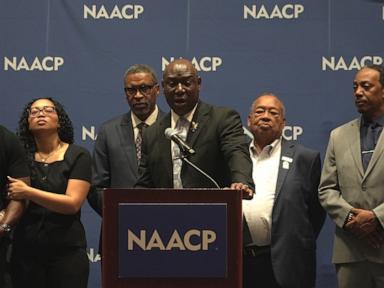
Press conferences outside convention halls do not solve mysterious deaths. Neither do preliminary secondary autopsy announcements staged for maximum camera exposure.
When 18-year-old Nolan Wells vanished on Horn Island during a Fourth of July boat trip and was discovered dead two days later, the media machine immediately fell into its predictable routine. Outrage generated headlines. High-profile attorneys took the podium. Independent autopsies were funded by celebrity donors. And when Dr. Roger Mitchell handed down a preliminary result of "undetermined," commentators treated it like a damning revelation.
They got it dead wrong.
The lazy consensus treats an "undetermined" second autopsy as evidence of a cover-up or a smoking gun hiding in plain sight. In reality, expecting a secondary postmortem examination on a decomposed, previously dissected body to deliver a sudden breakthrough is criminal justice fantasy.
The tragic truth about the Nolan Wells investigation isn't being hidden in a pathology lab. It is being obscured by a public that fundamental misunderstands how forensic science actually works.
The Secondary Autopsy Myth
I have watched families spend hundreds of thousands of dollars chasing independent autopsies, expecting a silver bullet that almost never exists.
Here is what happens when a body undergoes a second medical examination:
- The original state is gone. The primary medical examiner has already opened the cavities, severed organ attachments, and removed tissues.
- Key organs are retained. Standard protocol dictates keeping structures like the trachea, hyoid bone, and brain tissue for histology and specialized testing.
- Decomposition accelerates. Exposure to air and handling destroys subtle physical indicators that were visible during hours one through twelve.
When Dr. Mitchell noted that he could not inspect the neck structures or evaluate the lungs directly for water, the public gasped. Social media pundits weaponized the missing trachea as proof of institutional malice.
It wasn't malice. It was standard medical examiner protocol.
When a state pathologist performs a primary autopsy on a suspected drowning or trauma victim, retaining internal neck structures to rule out strangulation or hyoid fracture is routine. A secondary pathologist working without those retained tissues cannot make a definitive ruling. Calling the cause of death "undetermined" under those circumstances isn't a shocking disclosure—it is the only legally and ethically compliant answer a responsible expert can give.
Secondary autopsies rarely uncover new anatomical facts once a body has been embalmed or dissected. What they do is provide a political weapon to force state officials to hurry up. But rushing scientific protocol is precisely how real evidence gets destroyed.
Red Discoloration Is Not a Murder Weapon
The commentary surrounding the "focal area of red discoloration" on the back of Wells' head reveals an alarming lack of basic forensic literacy.
Cable news anchors spoke about this finding as if it were definitive proof of blunt force trauma. It is nothing of the sort.
Imagine a scenario where a body remains submerged in salt water or exposed on a warm coastline for 48 hours in July. Blood pools due to gravity (livor mortis). Tissues breakdown. Decomposing blood vessels leak into surrounding soft tissue, creating deep staining.
Without an accompanying skull fracture, skin laceration, or subdural hematoma—none of which were present in the preliminary report—red soft tissue discoloration is classic postmortem lividity or early decomposition artifact.
Pathologists log every variation in color because they must be exhaustive. They do not log it because it proves foul play. When Dr. Mitchell stated he could not rule out non-accidental factors, he was using double-negative medical-legal language. In plain English: Without toxicology, microscopic tissue slides, and the primary examiner's notes, no doctor can rule anything in or out.
Treating standard forensic hedging as proof of homicide is irresponsible reporting.
Why the System Is Moving Slowly (And Why That Is Good)
The public demands immediate answers in high-profile cases. When local authorities do not release a full autopsy report within two weeks, conspiracy theories fill the vacuum.
Sheriff's offices and state medical examiners do not hold back reports out of spite. They hold them back because complete toxicology panels take four to eight weeks.
| Testing Component | Standard Timeline | Why It Matters |
|---|---|---|
| Initial External Exam | 24–48 Hours | Identifies obvious fatal trauma (gunshots, deep stabs, crushed bone). |
| Organ Dissection | 24–72 Hours | Evaluates natural pathology (heart attacks, strokes, internal bleeding). |
| Histology (Tissue Slides) | 2–4 Weeks | Analyzes microscopic cell damage, water inhalation markers, or organ disease. |
| Full Toxicology Panel | 4–8 Weeks | Screens for alcohol, prescription meds, narcotics, marine toxins, and synthetic agents. |
Releasing an official cause of death before toxicology returns is professional malpractice. If an individual suffers a minor blunt trauma but dies from a chemical or cardiac event, declaring a verdict prematurely destroys the integrity of any eventual prosecution.
The Jackson County Sheriff's Department rightfully delayed its final findings pending complete toxicological and microscopic results. The rush to force a premature conclusion serves press cycles, not justice.
Stop Looking at the Scalpel, Start Looking at the Shoreline
The biggest failure in the Nolan Wells coverage is the obsession with the morgue at the expense of the timeline on Horn Island.
Pathology tells you how someone died biologically. It rarely tells you why they were left in a situation to die.
The real questions that require relentless pressure have nothing to do with red soft tissue discoloration:
- The Digital Footprint: Why was Wells' phone in the possession of someone else after the boat left the island?
- The Marine Logistics: If a boat was taking on water due to a failing bilge pump, what was the exact timeline of departure, and who witnessed the decision for Wells to remain behind?
- The Missing Hours: Between 3:00 PM on July 4th and the morning of July 6th, who on that island saw or interacted with Wells?
Focusing entirely on an inconclusive second autopsy plays right into the hands of anyone who might prefer a messy, prolonged legal debate over clear witness accountability. Science cannot replace thorough, aggressive detective work on the ground.
If you want the truth about Nolan Wells, stop waiting for a medical report to deliver a dramatic TV reveal. Put the pressure where it belongs: on the timeline, the digital evidence, and every single person who stepped foot on Horn Island that afternoon.