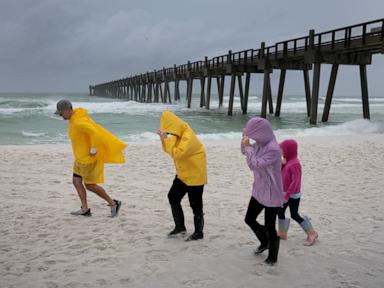
The air always changes first. It does not announce itself with a siren or a flashing light. It changes in the way the humidity clings to the back of your neck like a damp wool blanket, heavy and still, before a single leaf even thinks about trembling.
In the coastal towns bracing for Hurricane Isaias, that stillness was the most terrifying part. Meteorologists at the National Hurricane Center stared at satellite imagery mapping sustained winds roaring past 85 miles per hour, translating barometric pressure drops into cold, flat percentages of destruction. Computer models spat out tracks, cone graphics, and probability percentages. But numbers do not capture the sound of a screen door rattling against its frame at three in the morning, or the specific shade of bruised, violent purple that the sky turns just before the power grid dies.
Consider Marcus, a fictional homeowner in coastal North Carolina whose experience mirrors thousands across the Eastern Seaboard that week. He spent Saturday afternoon doing what generations of coastal residents have done out of desperate habit. He taped his windows with yellow masking tape in an old wives' superstition that everyone knows does nothing for structural integrity, yet somehow makes you feel like you are fighting back. He filled plastic bins with tap water. He watched the local news anchor point a trembling finger at a digital radar loop, warning of a life-threatening storm surge that could swallow roads whole.
Storm surge. Two dry words.
To a forecaster, it is a calculation of height above normal tide levels, driven by onshore winds pushing a wall of seawater inland. To Marcus, standing on his front porch as the first heavy raindrops began to punch holes in the dust, it meant the difference between returning to a home with wet carpets or returning to a concrete slab where his living room used to be.
When Isaias made landfall as a Category 1 hurricane near Ocean Isle Beach, the meteorological profile understated the psychological weight. Sure, winds were clocked at hurricane strength, and tropical storm warnings stretched from Florida all the way to New England. Sure, more than three million homes and businesses lost power, plunging entire counties into the dark ages of battery-operated radios and warm refrigerators. But statistics are a sterile way to measure a disaster.
The human element lives in the margins of those reports. It lives in the elderly woman down the street who refused to evacuate because her cat was hiding under the bed. It lives in the linemen from three states away who drove straight into the gale-force winds, sleeping in the cabs of utility trucks just to string copper back onto shattered wooden poles. It lives in the quiet realization that our modern, interconnected lives are entirely at the mercy of a warm ocean current and a shifting atmospheric pressure drop.
We build our lives on the edges of water. We love the view. We love the salt air. We love the rhythm of the tides, right up until the ocean decides it wants the land back.
As the eye of Isaias tracked northward, spawning tornadoes in its wake and dumping torrential rainfall that triggered flash floods from Virginia to New York, the storm morphed from a weather event into a collective trial of endurance. Trees crashed through roofs in Suffolk. Subway lines flooded in New York City. Commuter traffic ground to a halt beneath slate-gray skies that wept without mercy.
We talk about extreme weather as if it is an anomaly, a rogue chapter in an otherwise orderly book. It is not. It is the recurring cost of living on a dynamic, breathing planet.
When the sun finally broke through the ragged clouds days later, casting a blinding, humid glare over overturned boats and flooded intersections, the quiet returned. Not the still, heavy quiet before the storm, but the tired, industrious quiet of recovery. Chainsaws buzzed in the distance. Neighbors emerged from their front doors, shaking hands, assessing losses, and looking up at the sky to see what tomorrow would bring.
The wind had moved on, but the landscape—and the people who inhabited it—had been irrevocably rewritten.



