The grass underfoot at the end of a World Cup final does not look like television. Up close, it is a battlefield of torn turf, scattered white chalk, and the literal sweat of men who have just spent two hours running themselves into the earth. If you stand near the tunnel, the air smells of deep winter wintergreen rub, damp earth, and the metallic tang of pure adrenaline.
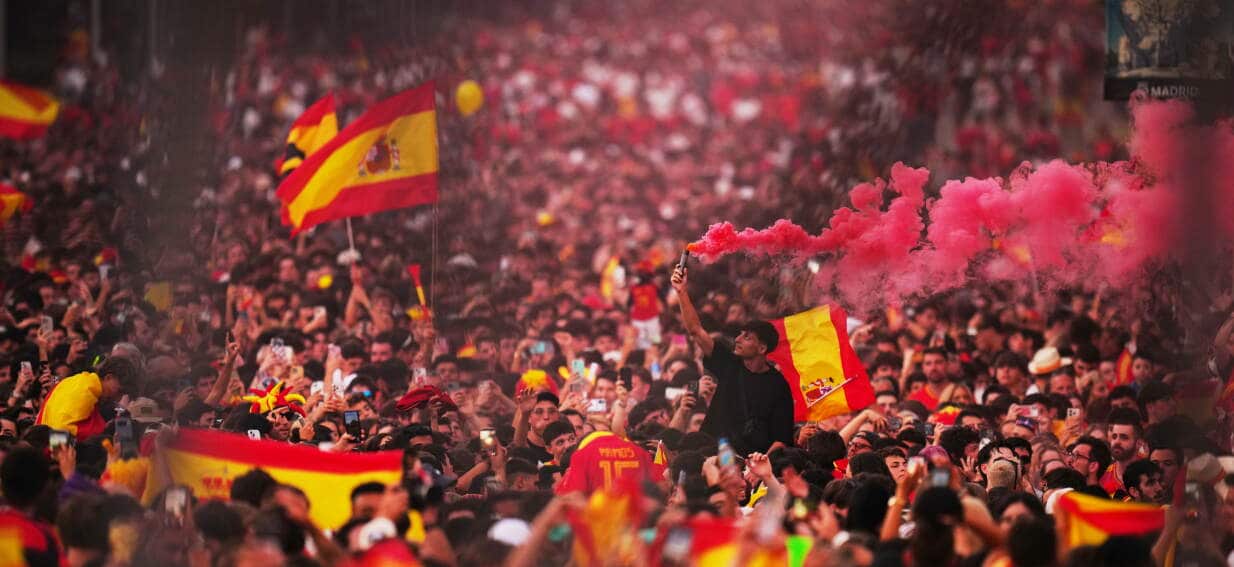
For ninety minutes, plus the agonizing stretches of extra time, the stadium exists as a singular organism. Eighty thousand people in the stands do not breathe independently; they inhale together when the ball crosses the midfield line, and they exhale in a collective, bruised groan when a shot clips the crossbar. It is a rare, fragile space where tens of thousands of strangers agree on exactly what matters.
Then the whistle blows. The tension snaps. The green pitch transforms from a theater of war into a holy sanctuary.
We watch the players collapse. Some fall flat on their backs, staring blindly into the sky, their lungs heaving as they try to absorb the reality of what they have just done. Others drop to their knees, burying their faces in their grass-stained hands to hide tears that have nothing to do with sadness. This is the rawest human emotion available on modern television. It is earned. Every ounce of it is bought with years of ruptured ligaments, lonely mornings on freezing practice fields, and the terrifying weight of a nation’s expectations.
But then, the mood shifts. The sanctuary is invaded.
The transformation begins with the arrival of the workers in dark suits. They roll out the pristine carpets, avoiding the patches of torn mud. They assemble the gleaming, neon-lit stage. They bring out the golden trophy, reflecting the harsh glare of the stadium floodlights. And then, walking onto that stage to hand over the prize, come the men who did not run a single yard.
When FIFA President Gianni Infantino and Donald Trump stepped out onto the grass to take their places at the podium, the stadium changed. The collective euphoria did not just fade; it curdled.
A low rumble started in the upper tiers, a vibration that felt less like vocal cords and more like a physical shift in the air pressure. Within seconds, it cascaded down to the lower bowls, gathering volume and venom until it became a deafening, unified wall of sound.
Boos. Sharp, whistling, uncompromising boos.
It was a striking moment of cultural friction. Two men accustomed to controlling the room, men who operate in spheres where power is absolute and dissent is carefully managed, were suddenly naked in front of eighty thousand people who had no obligation to be polite.
The Currency of the Unearned
To understand why the crowd reacted with such visceral rejection, you have to look at what a trophy ceremony actually represents.
For the politician and the sports executive, the podium is a branding opportunity. It is the ultimate photo-op, a chance to stand next to youth, excellence, and global triumph, hoping that some of that glittering gold rubs off on their own public image. It is an act of political alchemy, attempting to turn the genuine achievement of athletes into a validation of their own authority.
Consider a fan named Mateo. He spent three months’ salary on a nosebleed ticket, sleeping in a cramped hostel and eating street food just to be in this building. To Mateo, the match was a spiritual event. He watched his heroes bleed for the shirt. When he looks at the stage, he wants to see the culmination of that sacrifice.
Instead, he sees the suits.
When the crowd opens its throat to boo, they are not necessarily executing a coordinated political protest. They are reacting to an allergic presence. The presence of individuals who represent the transactional, cynical world outside the stadium walls, invading the one space that is supposed to be pure. The fans are protecting the sanctity of the narrative. They are saying, You did not bleed for this. You do not belong in this frame.
The contrast is brutal. On one side of the grass stand the players, physically spent, emotionally transparent, completely vulnerable. On the other side stand the dignitaries, pristine in their tailored jackets, smiling fixedly, calculating the angles of the cameras. The stadium reacts to this contrast the only way it knows how: by rejecting the graft.
The Illusion of Control in a Visual Age
We live in an era where power is obsessed with the frame. Every press conference is staged, every backdrop is focus-grouped, and every statement is scrubbed by a committee of public relations experts. The goal is to create a seamless simulation of leadership.
The football stadium, however, is notoriously difficult to script.
You can control the security at the gates. You can control the VIP guest list. You can even control which cameras cut away when a pitch invader runs onto the grass. But you cannot control the collective throat of eighty thousand people who realize, all at once, that they hold the microphone.
When the boos echoed through the rafters, the television broadcast faced a dilemma. Do you turn down the ambient crowd microphones? Do you focus the lenses tightly on the trophy to hide the shifting, uncomfortable expressions of the men presenting it?
The tension was visible. You could see it in the tightening of a jaw, the slight stiffening of the shoulders under a dark suit coat. For a man like Trump, whose entire public persona is built on the premise of adoration and massive, cheering crowds, a stadium full of sports fans refusing to follow the script is a profound disruption. For Infantino, who has spent years defending the opaque, billionaire world of global football governance, the noise was a reminder that no matter how many executive boards he sits on, he cannot purchase the affection of the people who actually love the game.
The stadium becomes a truth machine. It strips away the titles, the entourages, and the press releases, leaving only the raw mathematical reality of public sentiment.
The Geography of the Pitch
There is a distinct border on a football field. The white touchlines do not just mark the boundaries of play; they mark the boundary of reality. Inside those lines, the rules are absolute, transparent, and fair. If you are faster, if you work harder, if you pass with greater precision, you win. The ball does not care about your net worth, your political party, or your family name.
Outside those lines, the world is messy, unfair, and often corrupt.
When politicians and executives cross those white lines and step onto the grass, they are violating that boundary. They are bringing the messiness of the outside world into the clean reality of the sport. The boos are a defensive reflex. The crowd is trying to push them back across the line, back into the luxury boxes where they belong.
Think about the absurdity of the ritual itself. The players have just played the most important match of their lives. They are covered in dirt, their socks are rolled down around their ankles, their muscles are seizing up. They want to hold each other, to run to the corner flags and dance with the fans who traveled thousands of miles to see them.
Instead, they are forced to form a neat line. They must wait patiently while men who spent the afternoon drinking champagne in climate-controlled suites slowly walk down the steps, adjust their ties, and take their sweet time handling the prize.
It is a performance of dominance. It is the system reminding the artists that no matter how beautiful their art is, the system still owns the gallery.
The Sound That Lingers
The noise eventually died down, of course. The trophy was handed over, the confetti cannons exploded in a brilliant shower of silver and gold, and the fireworks lit up the night sky. The cameras focused back on the weeping captains and the joy of the bench players rushing the field. The news cycle moved on to the statistics, the tactical breakdowns, and the legacy of the winning manager.
But the memory of that collective roar remains.
It remains because it was a moment of unscripted truth in a world that is increasingly manufactured. It proved that despite the billions of dollars flowing through the sport, despite the corporate takeovers and the soaring ticket prices, the soul of the stadium still belongs to the people in the seats.
They cannot change the outcome of the match once the final whistle blows. They cannot vote the executives out of their boardroom seats, nor can they dictate the foreign policy of nations. But for a few fleeting minutes, under the blinding stadium lights, they can make the powerful listen to exactly what the world thinks of them.
The sound was not just a rejection of two specific men. It was a declaration of independence from the crowd, a reminder that the magic of the game belongs to the players who sweat for it and the fans who weep for it—and absolutely no one else.