Silence.
That is what hits you first when an entire nation holds its breath at 7:59 PM on a Sunday night, watching a digital map of South America’s largest democracy flicker between red and blue, waiting to see which way the pendulum will swing.
According to official tallies released by Brazil’s Superior Electoral Court (TSE) and reported across international outlets including Le Monde, Reuters, and Folha de S.Paulo, Luiz Inácio Lula da Silva secured a fourth presidential term in a result that defied almost every pre-election forecast. For weeks leading up to the vote, political analysts, financial markets, and opposition strategists had treated the incumbent’s vulnerability as an open secret. Rising food prices, a fractured congressional coalition, and relentless scrutiny over public spending had painted the picture of a leader running out of road.
Yet when the final ballot boxes from the rural interior of the Northeast and the dense working-class peripheries of São Paulo were tallied, the numbers told a different story.
The Kitchen Table Calculus
To understand how an outcome labeled a "general surprise" by French daily Le Monde actually happened, you have to leave the air-conditioned studios of Brasília and step into a hypothetical kitchen in Pernambuco—a composite drawn from the demographic data published by the Brazilian Institute of Geography and Statistics (IBGE).
Meet Dona Helena. She is sixty-four, a retired seamstress whose monthly pension stretches just far enough to cover blood pressure medication, rice, beans, and the occasional Sunday chicken. In the lead-up to the election, pollsters working for firms like Datafolha and Quaest noted a sharp decline in presidential approval ratings among urban middle-class voters frustrated by inflation and tax debates. On television panels, pundits dissected macroeconomic indicators: fiscal deficits, interest rates set by the Central Bank, and investor hesitation on the B3 stock exchange.
Dona Helena does not read bond yield curves. She reads the price tag on a carton of eggs and the balance on her Bolsa Família transfer.
For millions of Brazilians in similar circumstances, the ballot box is not an ideological battleground; it is a ledger of lived memory. Political scientists interviewed by BBC Brasil and El País pointed out after the vote that traditional polling models struggled to capture a phenomenon they called "pragmatic nostalgia"—voters who voiced loud dissatisfaction with the current economy during telephone surveys, yet ultimately refused to hand the keys of the Planalto Palace to an opposition movement they feared would dismantle social safety nets.
Anatomy of an Upset
Why did the experts miss it?
Think of pre-election polling like taking a photograph of a moving train through a rain-streaked window. You can measure the speed of the engine, count the passengers near the glass, and still completely misjudge where the tracks actually curve.
In the final stretch of the campaign, three invisible currents converged beneath the surface of public opinion:
- The Abstention Paradox: According to TSE turnout records, abstention rates in conservative-leaning southern strongholds ticked upward slightly in the decisive round, while mobilization efforts by trade unions and community organizers in the Northeast kept turnout remarkably resilient.
- The Fragmented Opposition: Analysts at the Getulio Vargas Foundation (FGV) noted that right-of-center voters remained divided over strategy and leadership until the final forty-eight hours, preventing a unified wave from cresting at the exact moment ballots were cast.
- The Ground Game Versus the Algorithm: While opposition campaigns dominated short-form video feeds and encrypted messaging groups with viral critiques of government spending, Lula’s Workers’ Party (PT) relied on an older, slower machinery—door-to-door canvassing, municipal mayors protecting federal infrastructure funds, and direct engagement with evangelical and rural community leaders.
It was a collision between two different theories of political gravity. One bet on digital momentum; the other bet on concrete, asphalt, and cash transfers.
The Weight of a Fourth Mandate
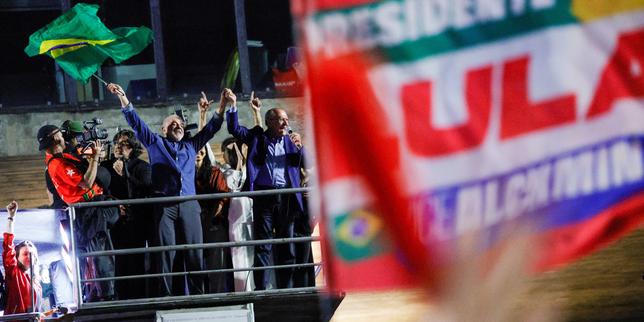
Celebration in the streets of São Paulo’s Paulista Avenue carried a noticeably different texture than Lula’s historic first victory in 2002. Back then, the air tasted like pure, unbridled reinvention—a former metalworker and union organizer ascending to the presidency of a country still shaking off the shadows of its military dictatorship.
Twenty-four years later, the confetti fell on gray hair, tired shoulders, and a deeply polarized electorate.
Even supporters interviewed by Agência Brasil on election night acknowledged that a fourth mandate brings as many questions as answers. Governing Brazil today means negotiating daily with the Centrão—the powerful, transactional bloc of centrist and conservative lawmakers who control the rhythm of Congress. Every budget amendment, every judicial appointment, and every environmental regulation in the Amazon basin requires painstaking brokerage.
Financial markets reacted immediately on Monday morning with characteristic caution. Currency traders in São Paulo and New York watched the Brazilian real fluctuate as investors weighed promises of fiscal discipline against commitments to expand social programs. As economists at Itaú Unibanco and Bradesco noted in morning briefings to clients, winning the election was the sprint; managing the debt-to-GDP ratio over the next four years is the marathon.
Beyond the Red and Blue Map
If you zoom out far enough from the electoral map, the sharp boundary lines between north and south, rich and poor, begin to blur into something far more human and far less predictable.
A democracy of more than 150 million voters never moves in a straight line. It lurches, hesitates, contradicts itself in opinion polls, and then speaks with sudden, unmistakable clarity when the electronic voting machines chime their familiar two-note confirmation. Critics see a nation stuck in a loop, returning repeatedly to a familiar patriarch because it fears the unknown. Supporters see resilience—a refusal by working-class families to surrender their hard-won seat at the national table.
Both interpretations live side by side in the same apartment buildings, on the same commuter buses, and across the same Sunday dinner tables from Manaus to Porto Alegre.
At dawn the morning after the vote, street sweepers in Brasília pushed damp flyers and crumpled flags into the gutters outside the Three Powers Plaza while the first gray light hit the white marble curves of Oscar Niemeyer’s columns, the celebration already swept away before the work of governing had even begun.