Silence.
In the Persian Gulf, silence is never merely the absence of noise; it is a physical weight that settles onto your chest around three in the morning, heavy with salt, diesel, and the low, persistent hum of desalination plants working overtime to keep millions of people alive in a desert. Don't forget to check out our earlier coverage on this related article.
If you have ever stood on the corniche in Manama or looked out over the dark water from Kuwait City during a regional escalation, you know the exact frequency of that quiet. Your ears strain against the humid air. You watch the red warning lights blinking atop the telecom towers, waiting for a flash on the horizon that turns distant geopolitics into shattered glass on your living room floor.
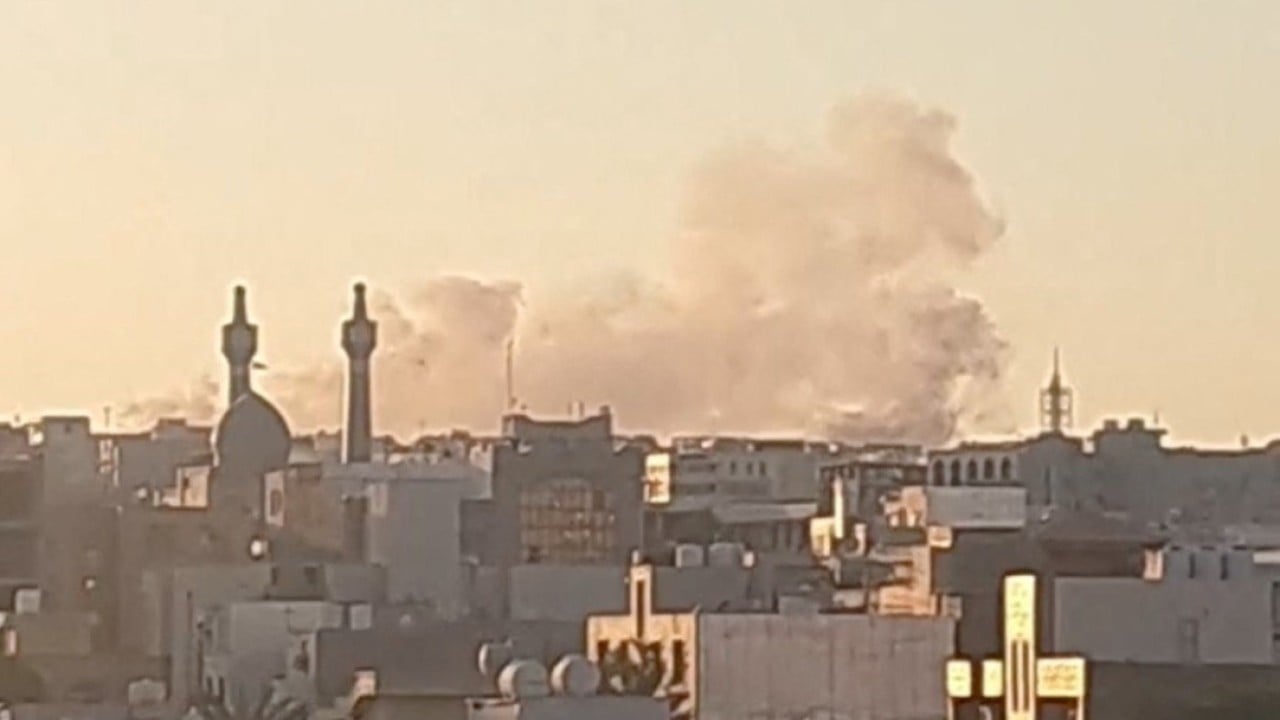
When the news tickers rolled out their cold, sanitized headlines—Bahrain and Kuwait repel drone attacks after US strikes Iranian island—the world read a tidy two-sentence summary of military mechanics. A strike happened here. A retaliation flew there. Interceptors worked. Nobody died. Scroll down. If you want more about the background of this, BBC News provides an informative breakdown.
That clinical framing misses the entire human reality of what happens when the narrowest, most volatile waterway on earth becomes a shooting gallery in the dark.
To understand what those intercepted drones actually meant, you have to step off the briefing room floor and sit at a kitchen table in Muharraq, or inside a cramped radar bunker outside Al Jahra, while fifty kilograms of high explosives scream across the water at a hundred miles an hour.
The Anatomy of a Three-Minute Warning
Let us construct a hypothetical figure to ground the mechanics of that night—call him Tariq, a composite of the radar operators and civil defense technicians who staff the air defense batteries along the western shore of the Gulf.
Tariq is twenty-nine. He drinks too much cardamom coffee to survive the graveyard shift, and his entire universe consists of glowing green arcs on a liquid-crystal display. Between his console and the Iranian coast lies less than two hundred kilometers of shallow, warm sea.
Think about what two hundred kilometers means in modern warfare. A commercial airliner covers that distance in fifteen minutes. A ballistic missile does it in two. Even a slow, lawnmower-engined unmanned aerial vehicle—the kind of delta-wing drone built out of fiberglass, commercial electronics, and a warhead packed with ball bearings—crosses that water in roughly an hour.
When American forces struck an Iranian island installation in the Gulf, the retaliation was neither an abstract chess move nor a surprise. Across the water, launch rails tilted upward in the dark. Dozens of small radar signatures lifted off, skimming low over the waves to hide inside the clutter of sea spray and merchant shipping.
In Tariq’s bunker, the quiet breaks with a sharp, rhythmic chime.
At first, a low-flying drone looks indistinguishable from a flock of cormorants or a rogue fishing skiff. The software flags the anomaly. The human brain has to verify it. Every second spent squinting at a phosphor dot is another fifty meters closer to a refinery, a naval pier, or an apartment block where children are sleeping under air conditioners humming at full blast.
This is the invisible math of Gulf security. It is not fought with grand declarations; it is fought in agonizingly tight margins of time, where a single miscalculation between a false alarm and a live warhead carries catastrophic consequences.
Why an Island Becomes a Tripwire
People looking at a map from thousands of miles away often wonder why barren specks of rock and coral in the Persian Gulf trigger global oil shocks and midnight missile exchanges.
Consider the geography. The Persian Gulf is barely wider than a large lake in places, yet roughly a fifth of the world’s petroleum supply squeezes through its southern throat at the Strait of Hormuz. Scattered across these waters are dozens of islands—some little more than sandbars, others fortified outposts bristling with radar dishes, anti-ship batteries, and underground bunkers.
Strategically, an island in the Gulf functions like a watchtower built inside a crowded hallway. Whoever controls the rock sees every tanker, every warship, and every fishing boat moving through the channel. When the United States conducted strikes against an Iranian island target, it was hitting a nerve center—a forward-operating sensor and launch platform designed to project power directly into the shipping lanes.
But in a cramped hallway, nobody throws a punch without elbows hitting the walls.
Bahrain and Kuwait sit directly against those walls. Bahrain, an archipelago nation smaller than New York City, hosts the headquarters of the U.S. Navy’s Fifth Fleet. Kuwait, tucked into the northwestern corner of the Gulf, sits at the intersection of Iraq, Iran, and Saudi Arabia, acting as a vital logistical hub for coalition forces while living perpetually within artillery range of regional conflicts.
Neither country ordered the strike on the Iranian island. Neither country controls the broader shadow war between Washington and Tehran. Yet when the retaliatory drones lifted off into the night sky, their flight paths pointed straight toward Bahraini and Kuwaiti airspace.
The Sound of Interception
What does it actually feel like when an air defense network "repels" an attack?
In official communiqués, the word repel sounds clean, almost polite, like a raincoat shedding drizzle. On the ground, an interception is violent, deafening, and terrifyingly close.
Imagine being woken at four in the morning not by an alarm clock, but by a deep, sub-audible thump that rattles the aluminum frames of your bedroom windows before your ears even register the sound. That is the launch of a surface-to-air interceptor—a Patriot or Hawk missile tearing upward into the black sky on a pillar of blinding white fire.
Seconds later comes the second sound: a sharp, cracking boom high in the troposphere as kinetic energy meets explosive payload.
When a kinetic interceptor strikes an incoming drone, the target does not vanish into thin air. Physics demands that everything that goes up must come down. Burning carbon fiber, jagged chunks of aluminum engine casing, and unspent fuel rain downward through the darkness. Civil defense sirens wail across industrial zones and residential suburbs alike. People stand on flat concrete roofs in their pajamas, filming streaks of orange light with their smartphones, trying to figure out whether the glow on the horizon is a successful interception or an oil tank burning.
I remember speaking with an engineer in Manama after an earlier regional flare-up who described finding a twisted piece of composite wing the size of a dinner plate resting beside his parked car the next morning. He didn't talk about grand strategy or deterrence theory. He talked about how his hands shook while holding his house keys, realizing that ten meters to the left, that piece of debris would have gone straight through his daughter’s bedroom window.
That is the lived reality behind the dry vocabulary of regional defense. "Zero casualties" is a statistical triumph, a testament to billions of dollars in radar integration and split-second human discipline. Still, it leaves behind an invisible residue of exhaustion that no defense budget can ever fully scrub away.
The Fragile Lifeline Beneath the Waves
To grasp why Bahrain and Kuwait invest so heavily in multi-layered air defense—and why a swarm of relatively cheap drones poses such a disproportionate threat—you have to look at what those interceptors are actually guarding.
It is easy to assume they are only protecting military bases or oil terminals. They are not. They are protecting water.
In the arid heat of the Arabian Peninsula, natural freshwater aquifers are scarce and heavily depleted. Both Kuwait and Bahrain rely overwhelmingly on massive coastal desalination plants to turn seawater into drinking water. Roughly ninety percent of Kuwait’s potable water comes from these sprawling industrial complexes lining the coast.
Think about that vulnerability for a moment.
A modern city without electricity is miserable; a desert city without water is uninhabitable within seventy-two hours. A single drone packed with explosives might not sink an aircraft carrier, and it might only dent the armored hull of a reinforced bunker. Directed at the intake pipes, power transformers, or evaporative chambers of a coastal desalination plant, however, that same inexpensive weapon becomes an existential threat to millions of civilians.
This asymmetry is the central nightmare of modern Gulf defense. An attacker can build a one-way attack drone for twenty thousand dollars using off-the-shelf components. Defenders must fire a multi-million-dollar interceptor missile to guarantee its destruction before it crosses the coastline. You cannot afford to let even one slip through, because the targets along the shore are soft, vital, and irreplaceable.
When Kuwaiti and Bahraini air defenses locked onto those incoming tracks and brought them down over the water and empty desert margins, they were not merely defending military hardware. They were defending the fragile umbilical cord that keeps modern life possible in one of the harshest climates on earth.
Living in the Crossfire of Giants
There is a quiet, unspoken frustration that runs through conversations in the cafes of Kuwait City and the offices of Manama whenever tensions spike between Washington and Tehran.
People in the Gulf are not naive. They understand the history of their neighborhood—the Tanker War of the 1980s, the invasion of Kuwait in 1990, the endless cycle of proxies, sanctions, and naval standoffs that has defined life around this body of water for nearly half a century. They know that geography is destiny, and their destiny is to live on the fault line between competing superpowers and regional rivals.
Yet understanding the geopolitics does not make it any easier to live inside the blast radius of someone else’s decisions.
Consider the merchant captain steering a liquefied natural gas carrier through the Gulf that night, watching radar alerts flash across his bridge console while twenty miles off his port bow, tracers and missile trails stitch the darkness together. Consider the Filipino nurse working a double shift in a hospital ward in Kuwait, checking her phone during a five-minute break to see if flights out of the international airport have been suspended again. Consider the Bahraini shopkeeper opening his shutters at dawn, sweeping fine dust off his doorstep while glancing nervously toward the gray horizon.
Their lives are bound together by a delicate web of maritime trade, expatriate labor, and regional commerce that requires stability the way lungs require oxygen. Every drone launch, every retaliatory strike on an island outpost, pulls that web tighter until the threads begin to fray.
Insurance premiums on cargo ships spike overnight. Airlines reroute flights, adding hours and fuel costs to journeys connecting East and West. Foreign investors pause projects, waiting to see whether Tuesday night’s exchange of fire was the end of a chapter or the opening page of a wider war.
The Mechanics of Restraint
What happened after the smoke cleared over Bahrain and Kuwait reveals something crucial about how conflicts in this region are actually managed—and why they remain so perilously close to spiraling out of control.
In traditional warfare, an attack on sovereign territory triggers an immediate, escalatory counterstrike. Here, the choreography is far more calibrated, yet infinitely more nerve-wracking.
By intercepting the drones cleanly before they struck populated areas or critical infrastructure, Bahraini and Kuwaiti air defense crews accomplished two things simultaneously. First, they saved lives and prevented physical devastation. Second, they bought political breathing room.
Had even one drone slammed into a high-rise apartment building in Manama or ignited a storage tank in Kuwait, domestic outrage and alliance obligations would have forced an immediate, massive escalation. The region would have tumbled over the cliff into open, unrestricted conflict.
Instead, the successful interception created a strange, tense equilibrium. Washington demonstrated its reach by hitting the island target. Tehran demonstrated its willingness to respond across the water. And the Gulf states demonstrated that their defensive shields could absorb the blow without shattering.
Everyone walked away claiming deterrence had held. Nobody mentioned how thin the margin had been.
The Weight of the Next Quiet Night
By sunrise, the streets of Manama and Kuwait City looked remarkably normal. Traffic clogged the highways. Delivery vans unloaded crates of vegetables outside neighborhood groceries. Baristas steamed milk for morning lattes while business news channels scrolled green and red numbers across silent screens in the corner of the room.
To an outsider flying in on an afternoon flight, there would be almost no visible trace of what had happened hours earlier in the dark sky above the Gulf.
And perhaps that is the most unsettling part of all.
Human beings possess an astonishing capacity to normalize the abnormal—to treat the hum of radar arrays and the distant crack of interceptors as just another weather pattern, like a summer shamal wind blowing sand off the desert. We adapt. We go back to work. We check the headlines, feel a brief flicker of relief that the shield held this time, and move on with our day.
Yet out in the dark water between the coasts, the radar dishes keep turning, sweeping the horizon every few seconds for the next faint blip against the waves.
Eventually, the sun drops back into the Gulf, the humidity rises against the glass, and the silence settles over the shore once more—heavy, watchful, and waiting to see who blinks first.