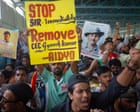
The tea stalls in the alleyways of the capital usually hum with late-night gossip long after the streetlights flicker out. But tonight, the tin cups are set down in sudden, heavy silences. The iron shutters of corner shops are dragged down hours early. Something is shifting in the damp midnight air, an old anxiety wearing a freshly pressed uniform.
Across the city, ordinary doors are being rattled.
To understand what is happening behind those locked doors, you have to look past the bureaucratic language of state orders and look directly at the faces of people like Rajesh. Rajesh is not a revolutionary in any cinematic sense. He is forty-two, with ink-stained thumbs from decades of running a modest printing press and a persistent cough from Delhi dust. He belongs to a political movement often derided by its detractors as a "cockroach" party—a stinging, resilient insect that refuses to stay crushed beneath the heavy boots of establishment politics. They are small, scattered, and stubbornly persistent.
Until tonight.
Tonight, the resilience of small things is being put to a brutal test.
At 2:00 AM, a heavy knock echoes down Rajesh's stairwell. It is not the casual rap of a neighbor borrowing sugar. It is the rhythmic, authoritative thud that every politically active citizen in the margins recognizes in their bones. Preemptive detention. The administrative machinery of the state has spun into motion before the weekend's planned protest can even find its voice on the streets.
There are no formal charges yet. Just names on a clipboard, dark vans idling in narrow alleyways, and the quiet rustle of papers as local police execute orders designed to vacuum up dissent before the sun comes up.
Why? Because power is terrified of a megaphone, but it is deeply unsettled by a whisper that refuses to quiet down.
When a political faction is dismissed as insignificant, you would expect the state to ignore it. Instead, we witness the opposite. Mass roundups of members, late-night raids, and the hurried locking away of local organizers reveal a quiet panic within the halls of governance. The math of autocracy is simple: if you cannot win the argument, you remove the audience. If you cannot stop the march, you lock up the feet that intend to walk it.
Consider the sheer logistics of fear. Hundreds of party members, regional coordinators, and grassroots volunteers find themselves pulled from their beds, herded into station houses, and told they are being held for "preventive maintenance" of public peace. Public peace, it turns out, requires the systematic silencing of anyone inclined to question it.
Rajesh sits on a wooden bench inside a crowded precinct station, smelling the familiar mix of stale chai, cheap phenyl, and institutional dread. He looks across the room at a college student who joined the party three weeks ago because she was angry about rising fuel prices. She is shaking, clutching her phone with a dead battery.
"They said we're disrupting the peace," the student whispers, her voice cracking.
Rajesh manages a tired, dry smile. He adjusts his spectacles. "Peace," he says softly, "is often just another word for silence."
This is the hidden cost of modern governance. It is not always an overt explosion or a dramatic martial law decree in the public square. More often, it looks like this: bureaucratic efficiency applied to political dissent, executed under the cover of darkness while the rest of the city dreams. It is the quiet clearing of chess pieces off the board before the match has even begun.
The weekend protest was supposed to be about labor rights, about accountability, about the bruised dignity of ordinary people who feel left behind by gleaming digital infrastructure and soaring economic statistics that somehow never reach their dinner tables. Those issues have not vanished just because the organizers are sitting in holding cells. If anything, the locked doors have magnified them.
History teaches us a harsh lesson about this kind of containment. You can sweep an insect under the rug, but you only ensure that the room remains dirty. Every detention order signed tonight is a confession of weakness disguised as strength. It broadcasts a clear message to every citizen watching from behind their curtains: We cannot defeat their ideas, so we are locking up their bodies.
Dawn is breaking now. The sky over the capital turns a bruised shade of purple and orange. The first commuters are stepping out onto quiet streets, unaware of the vans that moved through the dark or the empty rooms left behind in tenement houses.
At the intersection where the weekend protest was scheduled to take place, the police barricades are already standing tall, cold, and gleaming in the early morning light. They wait for a crowd that has been forcibly scattered.
But ideas do not require a central committee to survive. They travel through family kitchens, through hushed phone calls, through the stubborn memory of a knock at 2:00 AM.
The vans will drive away. The precinct lights will dim. And somewhere in the quiet city, a tin cup will be lifted once again.


