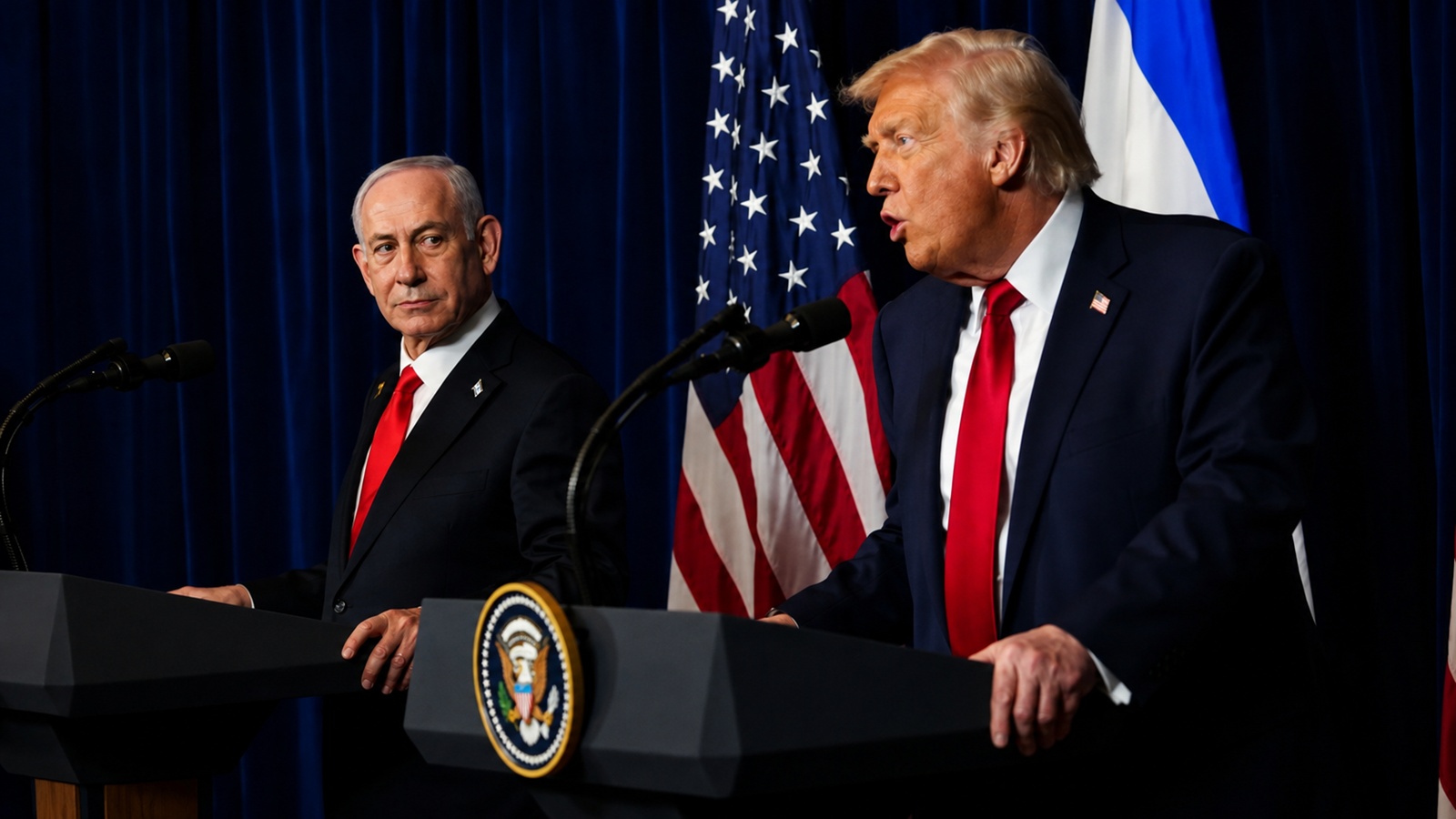
Geopolitics rarely operates on straightforward timetables. When major international stakeholders pitch sweeping blueprints for Middle Eastern stability, local leaders evaluate those frameworks through the lens of immediate survival and long-term security. The friction surrounding recent diplomatic proposals for the Gaza Strip highlights deep chasms between external visions for peace and the hard reality on the ground.
Benjamin Netanyahu's rejection of Donald Trump's outlined approach to Gaza isn't just about political posturing. It exposes fundamental disagreements over governance, security control, and the ultimate timeline for regional normalization. If you want to understand why these high-stakes negotiations hit a wall, you have to look past the press releases and examine the core demands clashing behind closed doors. You might also find this connected story useful: Inside the Waziristan Security Vacuum That is Devastating Tribal Leadership.
The Reality of Post-War Security Control
External architects of peace deals often imagine a clean slate. They draw maps, establish transitional committees, and project a smooth handover of power. Netanyahu's calculus works differently. Israeli leadership has consistently maintained that absolute operational freedom of movement for the Israel Defense Forces inside Gaza remains non-negotiable for the foreseeable future.
Trump's framework envisioned a rapid stabilization phase managed by regional partners and international coalitions. Netanyahu's administration rejected models that rely heavily on external guarantees rather than boots-on-the-ground Israeli military oversight. Trust is low. Past withdrawals from southern Lebanon and the 2005 disengagement from Gaza left deep political scars in Israel. Leaders there argue that handing over security architecture too early creates a vacuum that hostile forces immediately exploit. As extensively documented in latest reports by Associated Press, the effects are widespread.
Why Regional Partners Hesitate
It's not just Israel pushing back against external blueprints. Key Arab states whose financial backing and diplomatic muscle are essential for any reconstruction plan have their own red lines. Nations like Egypt, Saudi Arabia, and the United Arab Emirates refuse to fund or police a devastated territory without a clear, irreversible pathway toward a two-state solution or genuine Palestinian self-determination.
When international proposals skip over Palestinian statehood or treat it as an afterthought, regional capitals balk. They won't act as municipal cleaners for a war zone while the core political conflict remains entirely unaddressed.
The Hard Truth About Hamas Disarmament
Disarmament sounds simple on paper. Militant groups lay down their weapons, security forces step in, and civil society rebuilds. In practice, stripping an entrenched insurgency of its military capacity is practically impossible through negotiation alone.
Hamas views its military wing as its primary source of political leverage and physical survival. Asking the group to disarm without total military eradication or absolute capitulation is a non-starter for them. At the same time, Israeli intelligence assessments emphasize that partial disarmament is useless. Underground weapons caches, rocket manufacturing capabilities, and smuggling tunnels running beneath the Philadelphi Corridor mean that any deal leaving remnant militant infrastructure intact simply resets the clock for the next conflict.
The Problem with Transitional Authorities
Many diplomatic proposals suggest handing civil administration over to technocratic committees or revived Palestinian Authority figures. Realistically, the institutional capacity inside Gaza is shattered. Local governance requires functioning courts, tax collection, police forces, and municipal services.
Without deep structural reform within the Palestinian Authority and a complete security sweep of the strip, any civilian authority installed from the outside will lack legitimacy in the eyes of local residents and lack the muscle to prevent Hamas from operating in the shadows.
What This Means for the Future
The diplomatic stalemate leaves the civilian population trapped in an ongoing humanitarian and security crisis. External leaders will keep pitching grand visions, but sustainable quiet depends entirely on addressing the ground-level security dilemmas that neither side is willing to compromise on.
Until a framework bridges the gap between total Israeli security control and genuine Palestinian sovereignty—while solving the impossible puzzle of neutralizing an unyielding militant network—these high-profile plans will continue to stall before they even begin. Keep a close eye on the humanitarian corridors and border logistics, because those operational flashpoints will dictate the next phase long before any permanent political agreement takes shape.