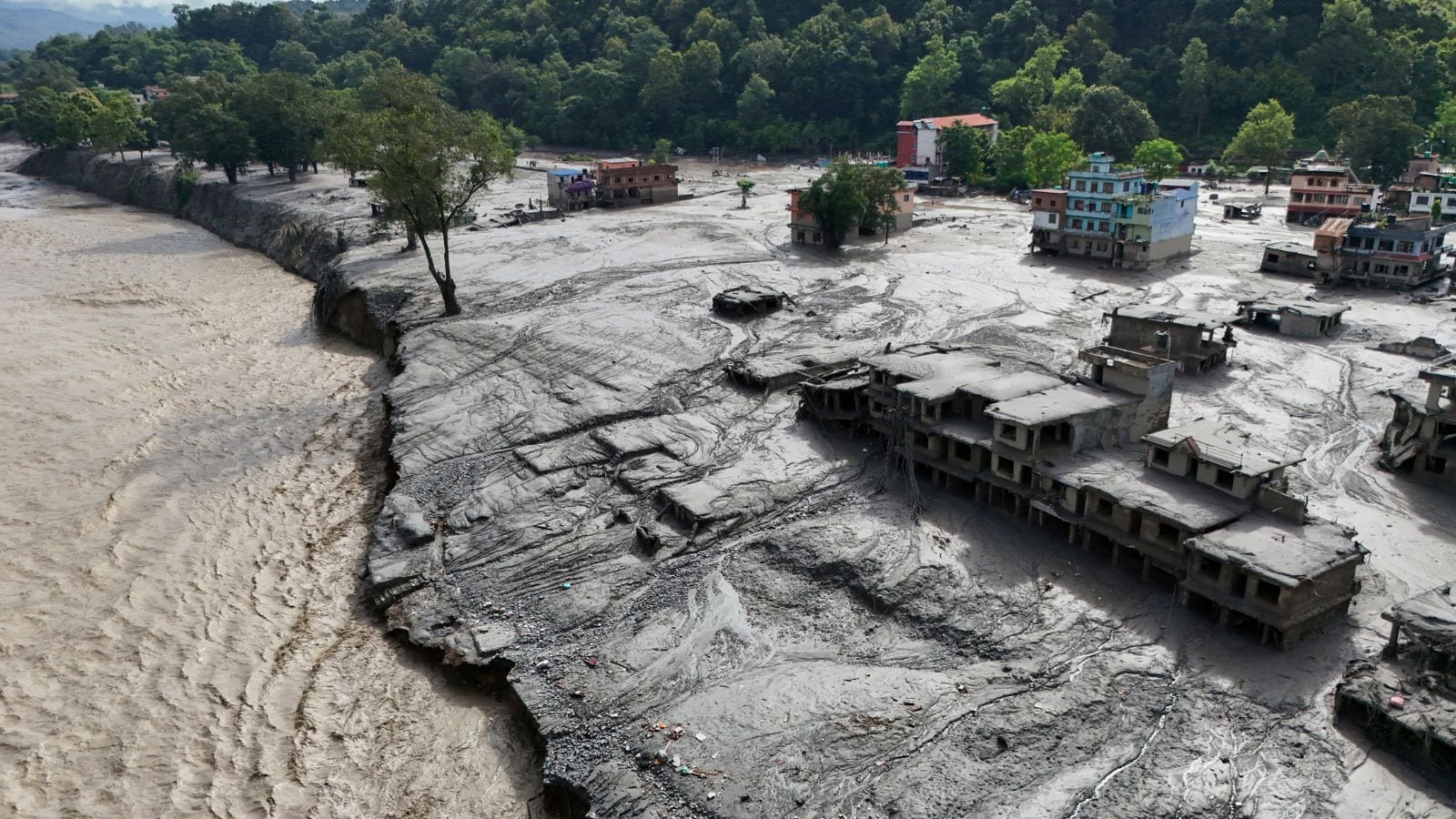
The Himalayas are breaking down. When a massive high-altitude ice-rock avalanche smashed into the border region between Nepal and Tibet, it triggered a catastrophic flash flood that swept away villages, left hundreds dead, and plunged nearly a thousand people into missing status.
Now, the immediate panic of the initial collapse has morphed into a slow-motion secondary nightmare. Both Nepalese and Chinese authorities are sounding urgent alarms as newly formed artificial barrier lakes threaten to burst right as continuous monsoon rains lash the region.
If you are wondering why this disaster refuses to stabilize, you have to look at the massive volumes of water piling up behind unstable debris dams at high altitudes.
The Secondary Threat Behind the Border Barrier Lakes
Water is accumulating at a terrifying pace. Chinese water resource ministries warned that roughly 3 million cubic meters of water—matching the volume of about 1,200 Olympic swimming pools—are pouring into a newly dammed lake on the Chinese side of the border.
This massive pool is pressing against fragile walls of mud, stone, and debris. Peak flow and maximum pressure points are projected to hit soon, and forecasts indicate heavy rainfall will continue to swell these basins.
On the Nepalese side, disaster management authorities issued strict safety notices. They are urging rescue teams, locals, and travelers to clear riverbanks immediately. When a debris-clogged river system gives way, it doesn't just flow; it drops like a wall of liquid concrete.
Why Early Warning Systems Missed the Initial Blow
Technology has limits in extreme terrain. Scientists from China and Nepal designed a cross-border monitoring network intended to track glacial risks and issue alerts. While that system has successfully flagged past hazards, it failed to prevent this week's catastrophe.
High-altitude ice-rock avalanches happen in seconds. When bedrock detaches from beneath a glacier high up in the mountains, sensors placed miles downstream or even closer have virtually no reaction time. By the time ground monitors or satellite links register an anomaly, the mudslide is already tearing through the valley.
Experts from the Chinese Academy of Sciences note that tracking these cross-border events requires dense instrumentation that simply doesn't exist across every remote Himalayan ridge. You are dealing with terrain sitting thousands of meters above sea level, where maintaining hardware is as difficult as predicting weather anomalies.
The Long Reality of Himalayan Climate Stress
This isn't an isolated accident. Research from organizations like the International Centre for Integrated Mountain Development (ICIMOD) shows that glacier ice loss across the Hindu Kush Himalaya region has doubled since the year 2000.
The smallest glaciers—those under half a square kilometer—are disappearing the fastest. That rapid melting feeds an expanding network of unstable glacial lakes.
When heavy monsoon downpours hit terrain that is already thawing and destabilized, catastrophe becomes a mathematical certainty over time. The region has recorded a sharp spike in glacial lake outburst floods over the last decade, running at triple the frequency of previous decades.
What Needs to Happen on the Ground Right Now
If you are monitoring this crisis or managing logistics near affected river basins like the Bhote Koshi or Trishuli, traditional safety margins no longer apply.
- Move permanently away from low-lying river channels until peak monsoon threats subside.
- Treat official SMS alerts and local emergency advisories as immediate evacuation orders.
- Expect severe disruptions to transport links around trade hubs like Gyirong Port as mud and debris continue to block rescue access.
The water upstream is still rising, and the danger will not pass when the rain stops for a single afternoon. Stay clear of the valleys until hydrological teams confirm the barrier lakes have stabilized.