The pharmaceutical industry is currently obsessed with a collective delusion: that the biggest hurdle in obesity medicine is a tiny, microscopic needle.
Pick up any mainstream healthcare report or market forecast, and you will see the same lazy consensus repeated as gospel. They claim that the current wave of weekly injections—like semaglutide and tirzepatide—is just a temporary bridge. The real gold rush, they tell us, lies in the upcoming pipeline of daily oral pills. The narrative says patients are terrified of injections, adherence is cratering, and the company that replaces the syringe with a tablet wins the trillion-dollar jackpot. You might also find this similar story insightful: The Dark Reality of Underground Penis Filler Clinics Exposed.
This is a fundamental misunderstanding of human behavior and metabolic biology.
I have spent years analyzing the clinical rollouts and commercial realities of chronic disease treatments. I can tell you that pharma companies are about to spend billions of dollars solving a problem that doesn’t exist, while worsening the exact issues they claim to fix. The needle is not the enemy. The obsession with eliminating it is a distraction from a much uglier operational reality. As highlighted in latest reports by CDC, the results are notable.
The Compliance Myth: Why Pills Are Harder Than Injections
The core argument for oral weight loss drugs is that patients prefer swallowable tablets over subcutaneous injections. It sounds intuitive. It matches how we buy over-the-counter pain relievers.
It is also completely wrong.
In chronic disease management, daily adherence to oral medication is notoriously abysmal. Look at statins, oral contraceptives, or blood pressure medications. Clinical data consistently shows that roughly 50% of patients stop taking daily oral medications for chronic conditions within the first year.
Why? Because human beings are forgetful, routines are chaotic, and a daily pill requires 365 correct micro-decisions every single year.
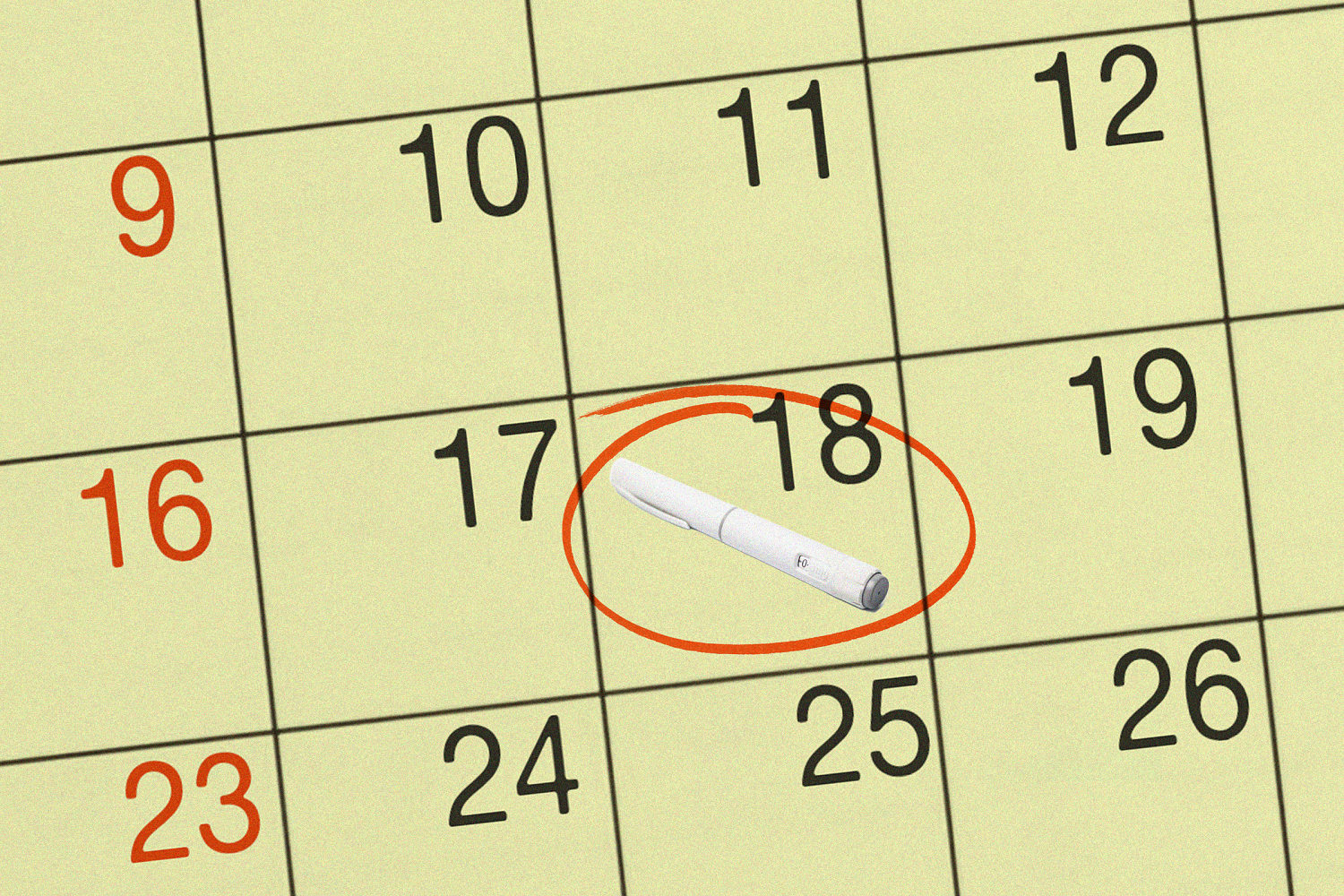
Compare that to a weekly injection. A single click on Sunday morning covers the patient for seven days. You reduce the required cognitive load from 30 decisions a month to just four. By forcing a metabolic treatment into a daily oral format, manufacturers are increasing the surface area for patient error by 700%.
When you look at actual real-world data rather than hypothetical patient preference surveys, the syringe wins on compliance. A patient who forgets two pills in a week faces immediate hormonal fluctuations and a return of baseline appetite. A patient who takes their injection twelve hours late on a Sunday faces zero loss in efficacy. Pharma is racing toward a delivery system that inherently invites human failure.
The Biology Tax: The Brutal Math of Bioavailability
Let's look at the actual science, stripped of marketing spin. Peptides are fragile chains of amino acids. The human stomach is a highly efficient destruction machine designed to break down proteins into fuel.
To make a peptide like semaglutide survive the stomach acid and get absorbed into the bloodstream via a pill, you have to attach it to an absorption enhancer like SNAC (sodium N-[8-(2-hydroxybenzoyl) amino] caprylate). Even then, the bioavailability is laughably low.
Imagine a scenario where you have to dump 100 milligrams of a highly expensive, scarce chemical into a tablet just so the body can absorb 1 milligram of it. That is not a hypothetical example; that is the literal engineering reality of oral peptide delivery.
+------------------------+------------------------+
| Delivery Method        | Average Bioavailability|
+------------------------+------------------------+
| Subcutaneous Injection | ~80% to 89%            |
| Oral Peptide Tablet    | ~0.5% to 1%            |
+------------------------+------------------------+
This biological tax creates three massive systemic problems that the industry is actively downplaying:
1. The Cost Floor Will Never Drop
The raw ingredients (API) for these drugs are incredibly complex and expensive to manufacture. If an oral version requires 20 to 50 times the amount of active ingredient per dose compared to a weekly injection to achieve the same therapeutic effect, the cost of goods sold skyrockets. Wall Street analysts are predicting that oral weight loss drugs will democratize access and lower prices. The math says otherwise. Oral versions will remain luxury items because they waste massive amounts of active drug just to survive the gut.
2. Supply Chain Strangulation
The world is already facing severe shortages of these medications. Factories cannot scale chemical synthesis fast enough to meet global demand. Transitioning the market to oral tablets means scaling the required volume of raw active ingredients by orders of magnitude. It is the manufacturing equivalent of trying to fill an Olympic-sized swimming pool with a garden hose.
3. The Gastrointestinal Gauntlet
When you inject a GLP-1 receptor agonist, it enters the systemic circulation directly. When you swallow a massive dose of a peptide engineered to force its way through the gastric mucosa, you are subjecting the localized tissue of the stomach and upper intestine to a concentrated chemical assault. The clinical trials for oral small-molecule GLP-1s and high-dose oral peptides consistently show significant rates of nausea, vomiting, and localized GI distress during the titration phase.
Dismantling the "People Also Ask" Consensus
Whenever this topic arises, the mainstream health media answers a very predictable set of questions with equally predictable, flawed answers. Let’s correct the record directly.
"Won't oral weight loss drugs be cheaper for insurance companies to cover?"
No. Insurance companies do not care about the physical form of the drug; they care about the net cost and the long-term clinical outcomes. Because oral options require vastly more raw material to manufacture, their list prices will likely match or exceed current injection prices. Furthermore, if real-world adherence drops because patients miss daily doses, the long-term health economic benefits (reduced cardiovascular events, fewer diabetes complications) evaporate. Insurers will restrict coverage for oral versions just as aggressively as they do for needles.
"Isn't needle phobia a major barrier to obesity treatment?"
This is an outdated assumption driven by memories of thick, manual syringes used for insulin decades ago. Modern autoinjectors use ultra-thin, hidden needles that are virtually painless. The actual barrier to entry for patients is not fear of the needle; it is access, insurance approval, out-of-pocket cost, and managing systemic side effects. Treating needle phobia as the primary roadblock is a convenient excuse for companies failing to solve the pricing crisis.
The Dark Side of Oral Options: Rebound Effects
There is a distinct operational downside to oral delivery that no one in the executive suites wants to discuss: the speed of elimination.
Many of the oral small-molecule weight loss drugs currently in development have shorter half-lives than their long-acting injectable counterparts. When a patient stops taking a weekly injection, the drug slowly tapers off in their system over weeks, allowing the body a gentle, albeit difficult, transition period.
If a patient suddenly stops a short-acting daily oral drug—due to a missed prescription refill, a sudden loss of insurance, or severe side effects—the metabolic crash is immediate. The sudden drop in circulating drug levels triggers acute, intense hunger signals. This rapid biological rebound can cause immediate weight regain and acute metabolic distress, far exceeding the gradual comedown of a weekly injection.
The Real Winner Isn't a Pill
The future of metabolic medicine is not a daily oral tablet that wastes active ingredients and relies on flawless human memory.
If you want to look at where the industry is actually going to be disrupted, look toward ultra-long-acting injectables—formulations that require a single shot once a month, or even once a quarter, using implantable or slow-release technology.
A quarterly injection eliminates the compliance problem entirely. It bypasses the destructive environment of the digestive tract. It maximizes bioavailability, keeps manufacturing costs sustainable, and removes the daily friction of managing a chronic disease.
The obsession with developing oral weight loss drugs is a multi-billion-dollar miscalculation. It is a classic corporate mistake: fixing a superficial consumer preference while completely breaking the underlying biological and economic engine that makes the therapy work.
Stop waiting for the pill. The needle was the solution all along.


