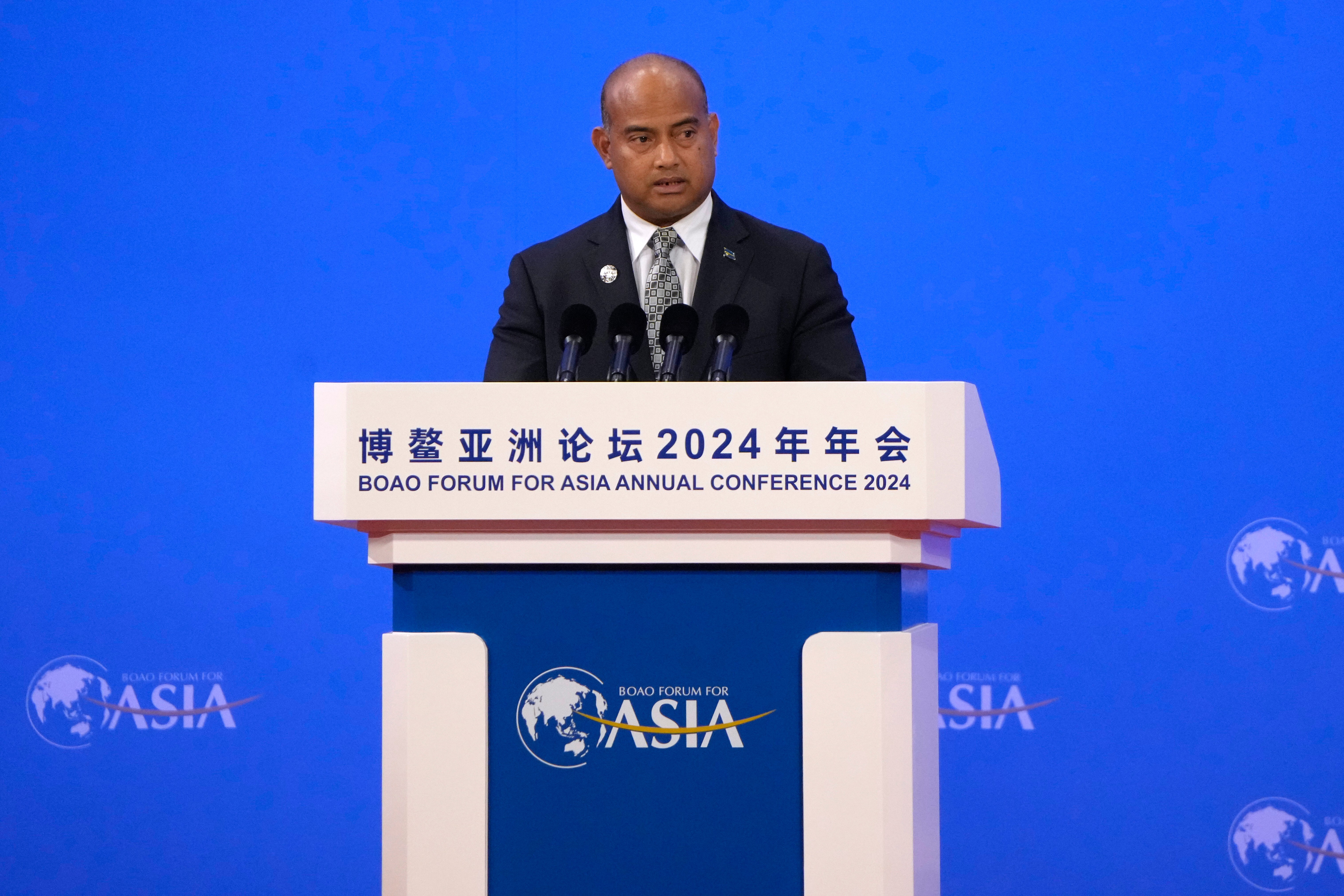
The recent decision by the government of Nauru to formally transition its international identifier from the colonial-era spelling to Naoero represents a structural shift in sovereign branding. Surface-level coverage frames this maneuver as a simple orthographic update, missing the underlying institutional architecture of national renaming initiatives. This transformation is not merely cosmetic. It operates as a calculated exercise in linguistic repatriation, designed to realign external state signals with endogenous cultural identity while introducing distinct administrative friction points across global legal, financial, and aviation networks.
Sovereign entities rarely alter their designations without anticipating a high cost function. For a microstate with a landmass of just 21 square kilometers and a population hovering around 11,000, every administrative adjustment carries disproportionate operational weight. To understand why a government allocates political capital to a nomenclature shift, analysts must evaluate the mechanics of state branding through three distinct lenses: historical rectification, international registry friction, and domestic consensus generation. You might also find this similar coverage useful: The Normalization Trap Behind Global Apathy to Presidential Threats.
The Orthographic Imperative and Linguistic Reclamation
The name Nauru is an exogenous artifact. Nineteenth-century German administrators and British colonial officials recorded the indigenous term Anibare or the local locational reference Anáoero phonetically to suit European administrative systems. The resulting corruption, Nauru, became the standard legal identifier used in United Nations charters, diplomatic credentials, and global shipping manifests.
This linguistic imposition created a permanent cognitive dissonance between internal self-reference and external administrative reality. When citizens of the island speak their native language, they do not utter the German-influenced trisyllable; they invoke Naoero. The formal correction of this label addresses a foundational asymmetry in state identity. In political science, sovereign recognition requires both territorial control and self-determination of nomenclature. By reclaiming the phonetic integrity of the indigenous term, the state shifts the locus of authority from colonial archives back to local linguistic structures. As reported in detailed reports by Reuters, the effects are worth noting.
The transition process exposes the friction inherent in post-colonial statecraft. National names are not static labels; they are hardcoded variables in global databases. Changing them triggers a cascade of compliance updates across international jurisdictions, exposing the vulnerability of small island developing states to global bureaucratic inertia.
The Administrative Cost Function of State Rebranding
Operationalizing a name change for a sovereign state requires a multi-layered matrix of compliance updates. The structural costs manifest across four primary operational vectors.
First, international legal instruments require formal notification through diplomatic channels. The United Nations Department of General Assembly and Conference Management must process the amendment across all official working languages. Treaties, bilateral trade agreements, and maritime boundary demarcations established under the legacy designation must undergo legal review to ensure continuity of state obligations.
Second, global aviation and telecommunications registries present severe technical bottlenecks. The International Civil Aviation Organization and the International Telecommunication Union rely on rigid country codes and standardized naming conventions. While the alpha-2 and alpha-3 ISO country codes may remain stable, secondary documentation, flight path clearances, and passport issuance systems must reflect the updated sovereign identifier. For a nation whose economy historically depended on phosphate extraction and currently relies on regional processing centers and maritime licensing fees, any disruption in passport validity or customs clearing creates immediate transaction costs.
Third, financial infrastructure introduces profound compliance hurdles. Correspondent banking networks, the Society for Worldwide Interbank Financial Telecommunication, and international securities depositories operate on strict algorithmic validation rules. A mismatch between state self-designation and legacy SWIFT directory entries can trigger automated AML and KYC compliance flags. While Nauru's financial sector is small, maintaining frictionless integration with Australian and global banking partners is vital for foreign aid disbursement and trade settlement.
Fourth, cartographic and digital infrastructure demands synchronization. Global positioning systems, geographic information systems, domain name registries, and international media archives must purge legacy entries. The administrative burden of this digital migration falls disproportionately on a civil service constrained by human capital limitations.
Geopolitical Signaling and Economic Diversification Strategy
Why absorb these administrative costs at this specific juncture? Microstates operate in a hyper-competitive global arena where visibility dictates leverage. Nauru has spent decades managing economic transitions following the exhaustion of its primary phosphate reserves in the late twentieth century. The state has oscillated between offshore banking hubs, regional asylum seeker processing facilities, and deep-sea mineral exploration advocacy.
In an era of intense geopolitical contestation in the Pacific, small island nations possess outsized diplomatic utility. Aligning state nomenclature with indigenous heritage functions as a signal of internal stability and cultural confidence. It asserts that despite extreme geographic vulnerability and historical economic volatility, the sovereign entity retains autonomous agency over its identity.
Furthermore, this branding shift intersects with the nation's positioning in international environmental and maritime governance. As a founding member of the Pacific Islands Forum and an aggressive proponent of international regulations regarding seabed mining through the International Seabed Authority, Nauru requires a distinct, authoritative voice. A sovereign identity untetheried from colonial phonetic baggage reinforces the nation's posture as an independent actor rather than a historical extraction site.
The Domestic Feedback Loop
State-led identity projects succeed or fail based on internal reception. Unlike large republics where federal rebranding initiatives can alienate regional populations, microstates possess high social cohesion that accelerates the adoption of localized norms. The linguistic shift from Nauru to Naoero requires minimal public education overhead because the population already utilizes the indigenous term natively.
However, the domestic challenge lies in institutional execution. Government ministries, educational institutions, and state-owned enterprises must simultaneously update statutory forms, currency notes, and official seals. The speed of this institutional pivot serves as an empirical indicator of state capacity. When civil service departments execute these updates without administrative gridlock, it signals effective bureaucratic governance. When backlogs accumulate, it highlights the structural vulnerabilities of microstate administration.
The transition also forces a re-evaluation of educational curricula. Institutionalizing the correct linguistic form ensures that younger generations inherit an administrative framework that mirrors their cultural heritage. This intergenerational transfer of linguistic sovereignty mitigates the erosion of indigenous vocabulary caused by globalized digital media and historical administrative assimilation.
Strategic Institutional Execution
Governments undertaking nomenclature revisions must treat the project as an exercise in supply chain management for data and legal status. The primary risk is not domestic resistance, but international administrative drift—where foreign partners continue using legacy terminology out of bureaucratic inertia.
To overcome this, the Nauruan administration must systematically audit every touchpoint of international interaction. Legal teams must prioritize multilateral treaties over bilateral agreements to maximize the multiplier effect of recognition. Concurrently, diplomatic missions must engage directly with standardization bodies to secure preemptive updates before legacy databases lock in outdated entries.
The shift to Naoero demonstrates that sovereign identity is an ongoing negotiation between historical remediation and modern administrative compliance. By absorbing the short-term friction of a global name change, the state establishes a durable baseline for international engagement, proving that scale does not restrict a nation's capacity to redefine its place in the global order.

.png?itok=1mb05mKJ)

