The headlines are predictable. A flash on the wires, a scramble on the trading desks, and a chorus of "systems are responding" from official channels. When the UAE or any regional power signals that their air defenses are active, the financial world defaults to a state of manufactured panic. Gold spikes. Oil futures jitter. The "lazy consensus" dictates that we are watching a demonstration of national strength and technological shields.
They are wrong.
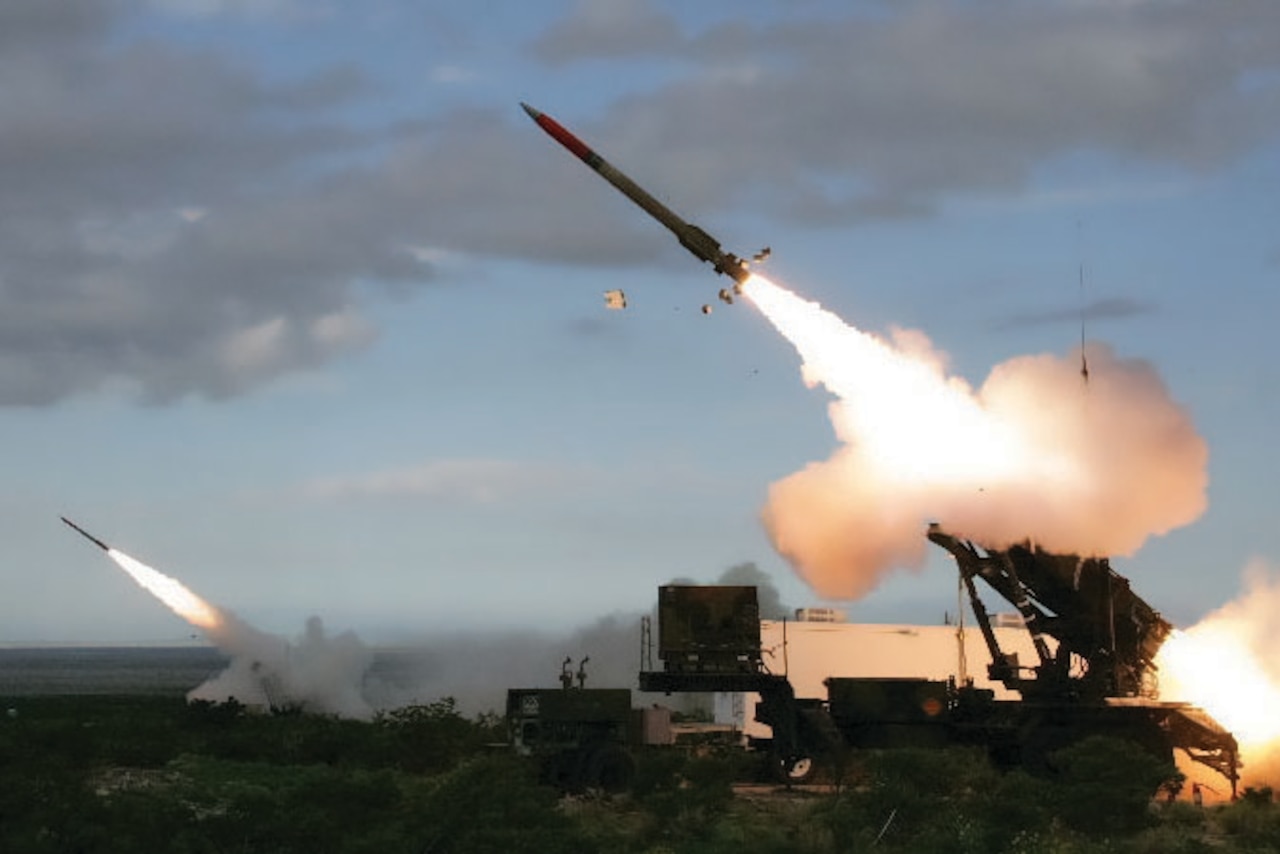
What you are actually seeing is not a display of sovereignty, but a display of dependency. You are watching the ultimate sunk-cost fallacy play out in real-time at $2 million per interceptor. The markets react as if a "missile threat" is a binary event—it either hits or it doesn't. In reality, the true threat isn't the kinetic impact of a stray drone or a ballistic shell. It is the systematic bleeding of Western-aligned treasuries by low-cost attrition.
The Mathematical Insanity of the Intercept
Traditional defense reporting focuses on the "save." A missile was fired, a Patriot or THAAD battery engaged, and the target was neutralized. Success, right?
Only if you can't do basic math.
We are currently witnessing the most lopsided economic war in human history. It costs a non-state actor or a regional proxy roughly $20,000 to $50,000 to assemble a one-way attack drone or a rudimentary cruise missile. To counter that, defense systems deploy interceptors that cost between $1 million and $4 million per shot.
- Attacker Cost: $20,000
- Defender Cost: $2,000,000 (at minimum)
- Ratio: 1:100
When the UAE says it is "responding," it is admitting that it is being forced into a trade it cannot win long-term. No economy, no matter how oil-rich, can sustain a 100-to-1 negative exchange rate indefinitely. The markets should not be pricing in the "safety" of the shield; they should be pricing in the inevitable bankruptcy of the strategy.
I’ve sat in rooms with defense contractors who treat these lopsided ratios as a feature, not a bug. For the military-industrial complex, an active air defense environment is a recurring subscription model with the highest possible margins. For the nation state, it is a slow-motion heist.
The Sovereignty Illusion
The "consensus" view suggests that these defense systems provide a blanket of security that allows business as usual to continue in hubs like Dubai or Abu Dhabi. This ignores the "Single Point of Failure" reality of modern integrated air defense.
Most of these systems are not indigenous. They are black boxes manufactured in the United States or Europe. The "response" the UAE announces is entirely contingent on foreign software updates, foreign spare parts, and foreign satellite data.
True sovereignty isn't having the button; it’s owning the code.
When a missile threat is "responded to," the UAE is essentially acting as a field-tester for Raytheon or Lockheed Martin. If the US decides to pivot its foreign policy, or if a diplomatic spat delays a shipment of interceptor missiles, that "shield" evaporates in weeks. Investors who treat these defense announcements as a sign of regional stability are betting on a supply chain they don't control and a geopolitical mood they can't predict.
Why the Market Misreads "Successful Interceptions"
Algorithms and retail traders love the word "intercepted." It implies the problem went away. It didn't.
Every time a battery goes hot, several things happen that the Forex Factory crowd ignores:
- Electronic Signature Mapping: The attacker isn't always trying to hit a building. Often, they are "tickling" the defense. They want to see where the batteries are located, how long it takes them to cycle, and what frequencies they use. An interception is a data harvest for the enemy.
- Psychological Wear: You cannot run high-alert defense indefinitely. Personnel fatigue is real. Hardware degradation in desert environments is brutal.
- The Debris Factor: Physics doesn't care about your PR statement. A "successfully intercepted" ballistic missile doesn't vanish. Hundreds of kilograms of burning metal and unspent fuel still have to land somewhere. In a densely populated urban environment, a "success" can still be a multi-million dollar disaster on the ground.
The False Security of the Petro-Shield
The common retort is that the UAE has the money to burn. "They can afford the interceptors," the analysts say. This misses the shift in global energy dynamics.
In a world moving toward diversified energy, the "Petro-Shield" is a liability. The cost of defending oil infrastructure is becoming a significant percentage of the barrel price itself. If it costs $5 in defense spending to protect the extraction of $75 worth of oil, your margins are shrinking in a way that green energy competitors don't have to worry about.
Imagine a scenario where a localized conflict results in 100 drones being launched over a month. That is $200 million in interceptors alone, not counting the fuel, the man-hours, or the lost opportunity cost of closed airspace. That isn't a "response." That is a tax.
Stop Asking if the System Works
The "People Also Ask" sections of the internet are filled with questions like "How effective is the UAE's air defense?" or "Can the Patriot system stop Houthi missiles?"
These are the wrong questions.
The right question is: "At what point does the cost of defense exceed the value of the protected asset?"
We are approaching that threshold. The current "consensus" is obsessed with the kinetic—the explosion in the sky. The smart money should be obsessed with the ledger. The UAE’s announcement isn't a signal of strength; it’s a distress signal from a financial model that is being bled dry by cheap, off-the-shelf technology.
If you are trading based on the "success" of these interceptions, you are buying into a theater of safety. You are ignoring the fact that the "threat" has already succeeded the moment the interceptor leaves the tube. The attacker has already won the economic engagement. The rest is just fireworks.
The era of the impenetrable shield is over. We have entered the era of the expensive target. Every time a "missile threat" is announced, don't look at the sky. Look at the balance sheet. The shield is a sieve, and the money is pouring out.
Move your capital accordingly.


