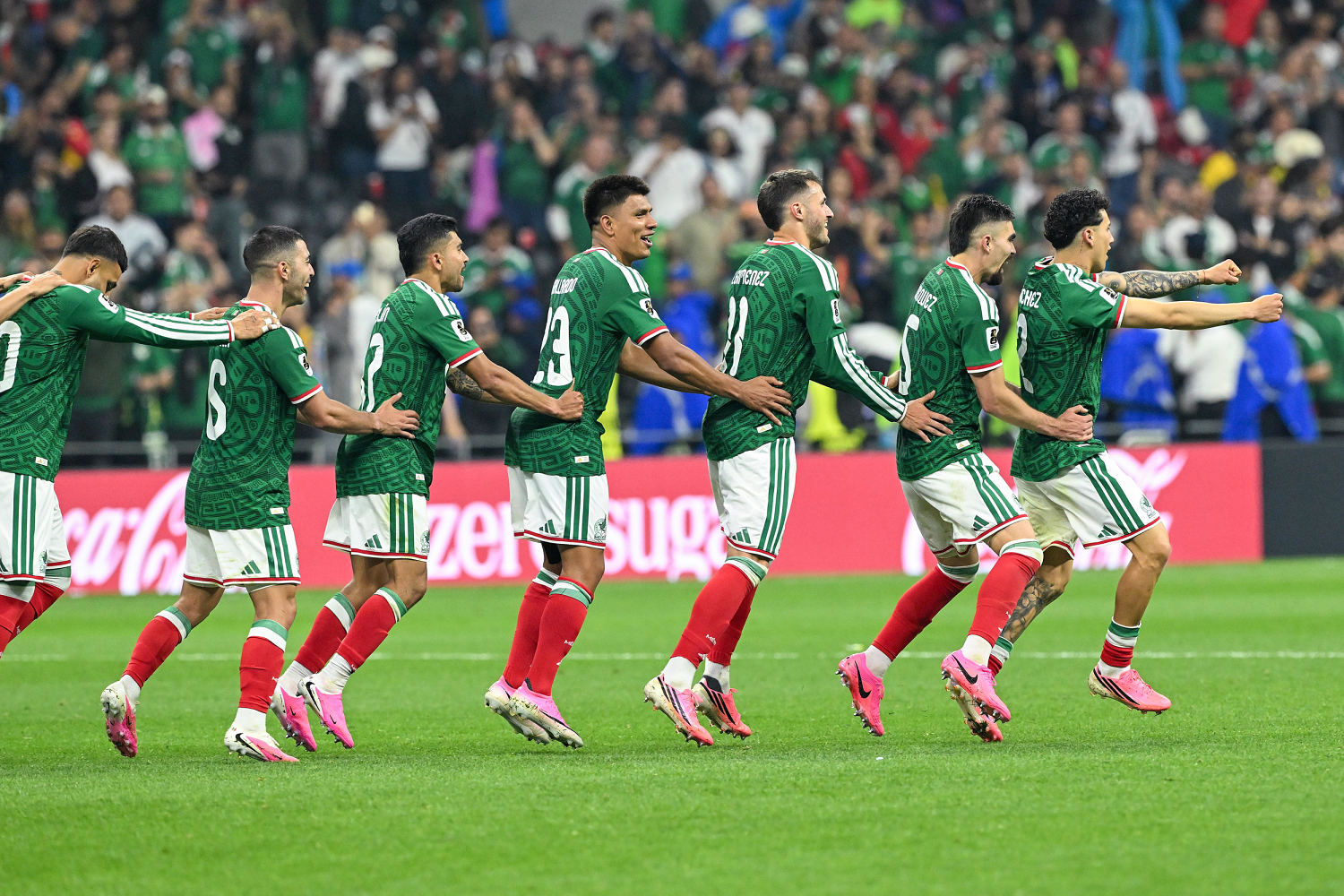
Mexico national football team just achieved its first knockout stage victory at a major international tournament in forty years, sending shockwaves through the global sports community and sparking mass celebrations across North America. For decades, the Mexican football federation chased the elusive fifth game at the World Cup, a psychological and competitive barrier that came to define generations of failure. This recent breakthrough on the pitch appears, at first glance, to be the culmination of a radical structural overhaul. The reality is far more complicated. Beneath the euphoria of this historic victory lies a deeply compromised system where commercial imperatives still routinely override athletic development.
To understand how Mexico finally broke its four-decade knockout curse, one must look beyond the tactical adjustments of the current manager. The victory was not born from a sudden explosion of grassroots talent or a sudden wave of benevolence from club owners. It was the result of a calculated, high-stakes gamble by Liga MX executives who realized that their highly lucrative market in the United States was on the verge of collapse due to decades of on-field mediocrity.
The Economics of Mediocrity
For twenty years, Mexican football operated as a money-printing machine that required very little actual sporting success to remain profitable. The federation mastered the art of selling nostalgia and hope to millions of fans. By organizing lucrative friendly matches across American NFL stadiums, a strategy colloquially known as the "Molero tours," the federation guaranteed massive gates and premium television ratings regardless of the squad's form.
This financial cushion created complacency. Mexican clubs, backed by massive media conglomerates and corporate giants, saw no reason to export their best young talent to Europe. Young Mexican players were routinely overvalued within the domestic market, receiving wages that mid-tier European clubs could never match. Why risk the cold benches of the Dutch Eredivisie or the Spanish La Liga when you could earn millions in Guadalajara or Monterrey?
The turning point arrived when the financial engine began to sputter. Television ratings among younger Mexican-American fans started to dip, replaced by a growing interest in Europe’s top flights and a rapidly improving Major League Soccer. The product on the pitch had grown so stale that even the most loyal fans began voting with their wallets. The federation did not modernize out of a sudden desire for sporting excellence. They modernized because their core business model faced an existential threat.
The Tactical Compromise That Broke the Curse
The breakthrough victory relied heavily on a forced philosophical shift that many traditionalists within Mexican football still despise. For decades, the national team identity was tied to a style of play known as La Volpiana, characterized by methodical building from the back, short passing, and an emphasis on possession. It was beautiful when it worked, but utterly fragile against elite, physical counter-attacking sides.
The current regime abandoned this aesthetic idealism entirely. They embraced a cynical, hyper-pragmatic approach focused on mid-block pressing and vertical transitions.
[Traditional Possession Style] -> High risk, slow buildup, vulnerable to counter-attacks
[The New Pragmatic Model]       -> Low risk, compact mid-block, rapid vertical transitions
This structural shift directly reflects the changing profile of the modern Mexican footballer. By finally forcing clubs to adhere to strict playing-time quotas for athletes under the age of 23, the league inadvertently produced a crop of players who are faster, more physical, and far more comfortable defending in space than their predecessors.
The strategy worked, but it exposed a glaring vulnerability. During the historic knockout match, Mexico surrendered 65% of possession and relied heavily on tactical fouls to disrupt the opponent's rhythm. It was an effective strategy for a single tournament run, but it raises serious questions about long-term sustainability. Can a nation with Mexico's footballing history sustain a national culture built entirely on destroying the opponent's game rather than creating its own?
The Liga MX Catch-22
The domestic league remains the greatest obstacle to sustained international success. While the recent young-player mandates yielded immediate short-term results for the national team, the broader infrastructure of Liga MX is still designed to prioritize short-term profit over long-term player development.
The abolition of promotion and relegation in the domestic league created a consequence-free environment for poorly managed clubs. Without the threat of dropping down a division, owners have little incentive to invest heavily in youth academies. Instead, many preferred to fill their rosters with cheap, aging foreign imports who could provide immediate, mediocre results without requiring long-term capital expenditure.
Domestic Wage Inflation vs. European Development
The transfer market dynamics within Mexico remain fundamentally broken. When a young Mexican talent shows promise, the domestic price tag is immediately inflated to astronomical levels.
| Player Profile | Domestic Market Value | Realistic European Valuation |
|---|---|---|
| 21-Year-Old Mexican Winger | $12,000,000 | $4,500,000 |
| 22-Year-Old Mexican Center-Back | $10,000,000 | $3,500,000 |
This disparity creates a golden cage. European sporting directors look at the price tags of young Mexican players and immediately turn their attention to South America or Eastern Europe, where equivalent talent can be acquired for a fraction of the cost. The national team’s recent victory was achieved with a squad comprised mostly of domestic-based players, flying in the face of the conventional wisdom that a nation needs dozens of players in Europe's top five leagues to compete.
However, treating this single victory as proof that the domestic league is sufficient is a dangerous misinterpretation of data. The tournament run benefited from a favorable bracket and a series of refereeing decisions that could have easily gone the other way. Relying on domestic talent that rarely tests itself against elite opposition on a weekly basis is a high-wire act that will eventually fail.
The American Threat and Co-Dependency
The geopolitical reality of North American football is shifting rapidly, and Mexico's historic win cannot be viewed in isolation from the rise of Major League Soccer. For years, Mexican football authorities looked down on their American counterparts, viewing MLS as a retirement league for aging European stars. That arrogance has evaporated.
MLS has quietly transformed into one of the most efficient talent-exporting leagues in the Western Hemisphere. By focusing on academy infrastructure and selling players to Europe at a young age, the United States built a pool of athletic, tactically versatile players who test themselves in the UEFA Champions League regularly.
This reality forced Mexico into a complicated partnership. The Leagues Cup, a joint venture tournament between Liga MX and MLS, is often criticized by purists as a shameless cash grab that disrupts the domestic calendar. It is exactly that. Yet, it also provided Mexican players with consistent, highly physical competitive matches outside their comfort zone. The intense travel schedules and hostile environments of these cross-border matches served as an inadvertent boot camp for the national team, building the exact mental resilience that was previously lacking in knockout scenarios.
The Myth of the Savior Coach
Every time Mexico enjoys a brief moment of international success, the media rushes to deify the manager. The current coach is being praised as a tactical genius who unlocked the secrets of the Mexican sporting psyche. This narrative is lazy journalism.
The manager did not reinvent the wheel. He simply stopped fighting the system. Previous coaches tried to implement grand, multi-year projects aimed at changing the culture of Mexican football from top to bottom. They were all chewed up and spat out by the toxic combination of media pressure, impatient owners, and dressing-room politics.
The current approach succeeded precisely because it was transactional. The coaching staff accepted that they could not fix the deep structural flaws of the federation, so they focused entirely on optimizing the specific tools available to them for a short, intense window. They selected players based on current form and physical metrics rather than reputation or marketing value, a move that alienated several high-profile veterans but created a cohesive, hungry squad.
This success, however, masks a deeper rot. The federation’s youth scouting network remains archaic, relying heavily on pay-to-play academies that systematically exclude talent from lower socio-economic backgrounds. The vast majority of the current national team roster comes from affluent or middle-class backgrounds, an anomaly in a country where football is the working-class religion. By failing to tap into the true grassroots talent pool, Mexico is competing with one hand tied behind its back, regardless of what a single tournament scoreboard says.
The four-decade knockout curse is broken, but the underlying structural issues that created the curse remain entirely untouched. The federation will undoubtedly use this victory to justify its current commercial strategies, sign lucrative new sponsorship deals, and maintain the status quo. If the leaders of Mexican football mistake this hard-fought, pragmatic tournament run for a sign that their systemic problems are solved, they will find themselves waiting another forty years for the next one.