The Corporate Tourism Trap
Global summits and state visits follow a predictable, expensive script. A prime minister flies into an international capital, a fleet of black sedans rolls up to a five-star hotel, and a curated group of chief executives lines up for a handshake. The cameras flash. Press releases fly. The media breathlessly reports on the "pivotal" shift in bilateral relations.
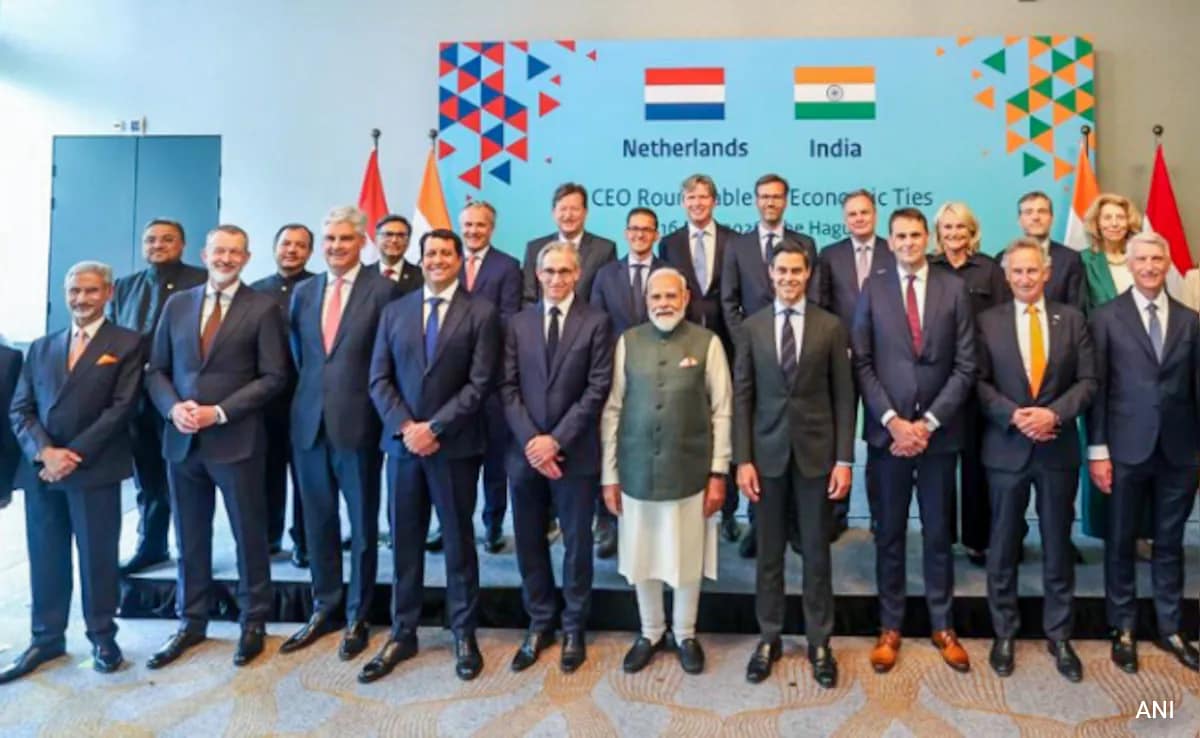
When Indian Prime Minister Narendra Modi met with top Dutch CEOs in the Netherlands—including the bosses of semiconductor giant ASML, dredging giant Royal Boskalis, and dairy cooperative FrieslandCampina—the mainstream business press treated it as a massive triumph for Indian industrial policy. The narrative was neat: India is the next global manufacturing hub, and European capital is rushing to get in.
It is a comforting story. It is also completely wrong.
These high-level meetups are rarely about actual economics. They are corporate tourism. They are political theater designed to signal intent while masking the grueling, unsexy realities of cross-border capital deployment. If you believe that a two-hour roundtable in Amsterdam moves the needle on billions of dollars in foreign direct investment (FDI), you do not understand how boardrooms actually operate.
Dismantling the Semiconductor Myth
Let us start with the biggest name in the room: ASML. The media immediately spun the meeting as a massive step forward for India’s semiconductor ambitions. The logic seemed simple enough: India wants chips, ASML makes the machines that make chips, so a meeting means factories are coming.
This reveals a profound ignorance of the tech supply chain.
ASML does not build chip factories. They build extreme ultraviolet (EUV) lithography machines—monolithic pieces of engineering that cost upwards of $200 million each and require years of lead time to manufacture. They sell these machines to a tiny, elite handful of fabrication companies like TSMC, Intel, and Samsung.
[Global Semiconductor Supply Chain: Tooling (ASML) -> Fabrication (TSMC/Intel) -> Assembly/Testing -> End Product]
India does not currently possess a single operational, leading-edge commercial semiconductor fab. Courting ASML to fix India's chip shortage is like trying to build a domestic airline industry by having tea with the company that manufactures the rivets for Boeing's wings. It is the wrong end of the value chain.
I have watched emerging markets waste hundreds of millions of dollars chasing high-tech vanity projects because politicians want to stand next to high-tech logos. If India wants to become a semiconductor powerhouse, the conversation should not be with ASML in the Netherlands. It needs to be with TSMC in Hsinchu or Samsung in Suwon, focusing on the brutal, unglamorous fundamentals: uninterrupted clean water, a flawless power grid, and massive, long-term capital subsidies.
The Reality of Dutch Capital
The Netherlands is consistently ranked as one of the top source countries for FDI into India. Sounds impressive on paper, doesn't it?
Now let us look at the nuance the mainstream press misses. A massive chunk of the capital flowing from the Netherlands into India does not originate from Dutch factories or Dutch savings. The Netherlands is a corporate conduit. Because of its favorable tax treaty networks and corporate structuring laws, global multinational corporations route their investments through Dutch holding companies (Besloten Vennootschap, or BVs).
When a statistics bureau reports that billions of dollars flowed from Amsterdam to Mumbai, a significant portion of that is actually American, British, or Japanese money wearing a Dutch coat.
Meeting with a group of Dutch CEOs to celebrate this pipeline misses the point. The real decision-makers aren't sitting in Rotterdam; they are scattered across the globe. Celebrating "Dutch investment" without acknowledging this tax-routing reality is like thanking the mail carrier for the money inside your birthday card.
Decoding the Corporate Agenda
Why do these CEOs show up to these meetings if nothing tangible is happening? Because for a European multinational, a meeting with the leader of the world’s most populous nation is an insurance policy.
Consider the sectors represented at that table:
- Infrastructure and Dredging (Royal Boskalis): Deeply dependent on government contracts, environmental clearances, and state-backed maritime projects.
- Agriculture and Dairy (FrieslandCampina): Operating in a market where domestic farming lobbies are fiercely protective and tariff barriers can shift overnight.
- Health Technology (Philips): Navigating complex public procurement systems and changing data localization laws.
These executives are not there to announce new factories. They are there for risk mitigation. They are there to look the Prime Minister in the eye and subtly lobby for regulatory stability. They want to ensure that if their local Indian subsidiary gets bogged down in bureaucratic red tape, or if a sudden tax policy shift threatens their margins, they have a photograph of themselves shaking hands with the man at the top to show the local regulators.
It is access capitalism, plain and simple. It satisfies the politician's need for a headline and the CEO's need for political cover.
The Flawed Premise of "Ease of Doing Business"
The standard question asked after these events is: "How will this discussion improve the ease of doing business between India and the Netherlands?"
The question itself is flawed. It assumes that the bottleneck holding back European investment in India is a lack of high-level communication. It assumes that the CEO of a global logistics firm just needs to hear an encouraging speech from a prime minister to sign off on a new hub.
The real bottlenecks are structural, local, and incredibly stubborn.
| Metric | High-Level Photo Op Reality | Ground-Level Operational Reality |
|---|---|---|
| Speed | Commitments made in minutes | Land acquisition takes years |
| Clarity | Broad agreements on green energy | Retrospective taxation risks remain |
| Labor | Focus on India's young talent pool | Complex, fragmented state-level labor laws |
| Logistics | Promises of world-class infrastructure | High domestic logistics costs relative to GDP |
No amount of executive face-time in Amsterdam changes the fact that acquiring land for a factory in an Indian state can involve navigating dozens of overlapping jurisdictions, dealing with local political factions, and enduring years of litigation. A CEO can smile for the cameras, but their Chief Financial Officer and General Counsel back home will look at the local risk profile and quietly put the investment on hold.
The Hidden Cost of the Contrarian Reality
If we reject the hype surrounding these CEO roundtables, what is the alternative?
The alternative is colder, slower, and much harder to sell to voters. It requires recognizing that capital does not care about sentiment or grand speeches. Capital goes where it is treated best, where the rules are predictable, and where the infrastructure works.
The downside to this realistic view is that it strips away the excitement. It forces us to admit that building an economic superpower is a game of inches, played out over decades in dull legislative sessions and municipal zoning offices, not in five-star hotel ballrooms. It means acknowledging that India is still competing with Vietnam, Mexico, and Poland—countries that are often more aggressive, more nimble, and less bureaucratic when dealing with mid-tier foreign manufacturing firms.
Stop looking at who met whom in Europe. Stop measuring economic success by the number of tweets generated from an international tour.
If you want to know if India is winning the war for foreign capital, look at the contract enforcement rates in local courts. Look at the time it takes to clear goods through a major port. Look at the stability of the power supply in industrial corridors. Everything else is just noise designed to keep the markets amused while the real work remains undone.