Smell is the first sense to betray a city.
Long before you see the cranes slicing the horizon, or the neat rows of suburban roofs marching toward the bay, you smell the landfill. It is a dense, metallic tang that clings to the back of the throat, a heavy reminder of everything a community consumes and frantically wishes to forget. For decades, the eastern edge of Virginia Beach lived under that invisible cloud. It was a mundane geometry of modern existence. You throw an empty yogurt cup into a bin, the truck roars down the asphalt at dawn, and the problem vanishes. Also making headlines recently: Why A Bad Mood Wrecks Your Best Plans.
Except it never really vanishes. It just moves.
Multiply that yogurt cup by six hundred and forty thousand tons. More information regarding the matter are explored by Cosmopolitan.
Imagine the sheer physical mass of it. Not as an abstract statistic on a municipal spreadsheet, but as dead weight. Every broken lawnmower, every greasy pizza box, every shattered television set, and half-eaten sandwich from the late nineteen-nineties piled into a sprawling, weeping mound of municipal discard. It was a mountain born entirely of human negligence and relentless routine. Year after year, the earth groaned under the accumulation. Bulldozers compressed it. Clay capped it. Rain fell, leaching through the synthetic guts of the earth, threatening the delicate water table below.
It was an eyesore. It was a liability. It was our collective shadow cast in trash.
Then, something strange happened.
Instead of walking away, the city decided to climb it.
Consider what happens when engineers, landscape architects, and stubborn visionaries look at a mountain of refuse and see a horizon. They did not simply bury the shame deeper. They engineered a transformation so radical it sounds like science fiction. They drove thick gas-extraction wells deep into the core of the belly of the beast, capturing the invisible, volatile methane ghosts of our discarded meals and turning them into energy. They wrapped the weeping slopes in heavy geomembranes, sealed them with pristine topsoil, and waited for the earth to remember how to breathe.
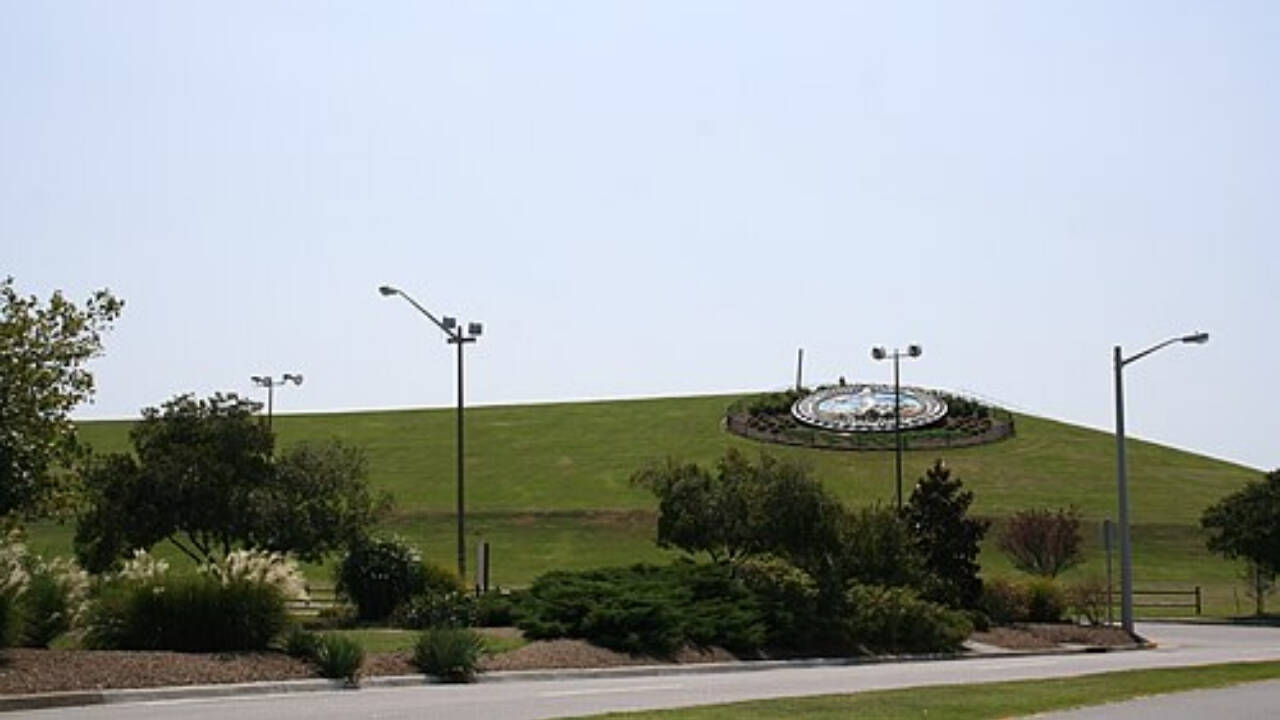
Today, if you stand at the summit of that sixty-foot rise, the old smell is entirely gone. Replaced by the sharp, salt-kissed bite of the Atlantic wind.
You are standing on top of Mount Trashmore's newer, quieter sibling, or rather, the sprawling evolution of a repurposed municipal giant. Though Mount Trashmore Park itself famously rose from the ashes of an old landfill decades ago, the modern engineering feats of Virginia Beach continue to redefine what we do with our waste. This specific 165-acre expanse does not look like a graveyard of consumerism. It looks like a sanctuary.
Let me introduce you to Sarah. She is hypothetical only in name, but her footsteps echo every afternoon across these paved trails. She is thirty-four, works remotely in graphic design, and lives in a townhouse three blocks away. Five years ago, she hated this neighborhood. She hated the hum of the dump trucks. She hated knowing what lay underneath the rolling green hills—that massive, buried monument to human excess.
Today, Sarah pushes her toddler in a stroller right past the slopes where those hundreds of thousands of tons of garbage sleep in eternal darkness.
"At first, it creeps you out," she told a neighbor last spring, pausing near the edge of a glittering freshwater lake. "You think about what is rotting ten feet beneath your sneakers. But then you look at the kids flying kites on the ridge. You watch the blue herons hunting in the wetlands. And you realize the dirt won. Nature took our worst mistake and turned it into a park."
That is the magic of the pivot. Not a linguistic pivot, but a physical, brutal, expensive redirection of human will.
We are a species defined by what we throw away. Anthropologists dig through ancient middens to understand the rise and fall of civilizations based entirely on broken pottery and discarded bones. Future historians will likely dig through our modern landfills and weep at the sheer volume of single-use plastic. But Virginia Beach did something remarkable with this 165-acre project. They wrote a different ending to the chapter.
They took a scar and stitched it closed with walking paths, fishing piers, and sprawling athletic fields.
Look closely at the mechanics of the transition. It cost millions. It required years of monitoring groundwater, checking for toxic plumes, installing flare systems to burn off the creeping gases, and truckloads of clean fill dirt. It wasn't clean. It wasn't easy. It was messy, technical, and fraught with the quiet terror of what might happen if the containment failed.
Yet, the risk paid off.
The grass grows thick and green now because it has to. The roots fight their way down through engineered layers of sand and clay, anchoring themselves against the synthetic barriers below. It is a fragile ecosystem, carefully monitored by sensors and environmental scientists who check the pulse of the earth weekly. Every gallon of rainwater that filters through is tested. Every puff of gas is measured.
Beneath the sound of children laughing and skateboards clattering against concrete ramps, there is a low, industrial hum. It is the sound of maintenance. It is the price we pay for redemption.
We cannot stop producing trash. Not yet. Our supply chains are too tangled, our modern conveniences too deeply embedded in our daily survival. Every trip to the grocery store yields another sleeve of plastic, another cardboard box, another item destined for the bin. But walking through this sprawling park changes the internal calculus of how you view a piece of litter.
When you know that your old couch might one day sit beneath the foundation of a kite-flying hill, you look at your couch differently. When you realize that the empty water bottle in your hand is part of a continuum that either ends in an open ocean or an engineered containment cell, the choice sharpens.
The sun begins to dip below the tree line, casting long, bruised purples and golds across the water of the central lake. The wind picks up, carrying the faint, distant roar of traffic on the nearby boulevard. On the peak of the hill, a lone teenager stands silhouette against the dusk, holding the string of a soaring red diamond kite.
Beneath his sneakers, six hundred and forty thousand tons of our forgotten lives lie completely still, transformed into the floor of the world.