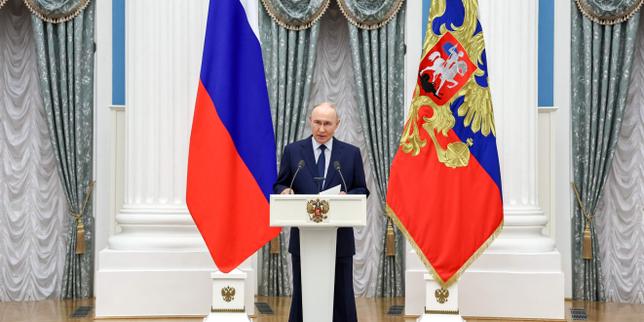
Moscow is no longer whispering behind closed diplomatic doors. The Kremlin has officially escalated its economic demands, insisting that the European Union completely dismantle the sanctions architecture targeting high-profile Russian billionaires Alisher Usmanov, Mikhail Fridman, and a sweeping roster of corporate figures tied to the wartime state. This blunt ultimatum marks a strategic pivot from quiet legal lobbying to aggressive geopolitical coercion, weaponizing energy, agricultural dependencies, and legal vulnerabilities to force a crack in Western solidarity.
To understand why these specific names matter so intensely to the Russian state, one must look past the public rhetoric of personal wealth protection. These individuals are not merely wealthy businessmen caught in the crossfire of international conflict. They are structural pillars of a transnational financial network that historically greased the wheels of Western capital markets while remaining deeply tethered to Moscow's political machinery. When Brussels froze their assets, impounded superyachts, and restricted their movement, it did more than punish individuals. It severed vital financial conduits that sustained elite loyalty and cross-border influence.
The European Union built its sanctions regime on the premise that squeezing the inner circle of the ruling apparatus would spark internal dissent, forcing key economic actors to pressure the political leadership. That theory has collided with a stubborn, brutal reality. Instead of turning against the state, sanctioned magnates have locked arms with the Kremlin, utilizing elite Western legal representation to mount aggressive counter-offensives in European courts. Moscow's recent demand for a blanket reversal is a signal that this legal pressure campaign is now being backed by full state force, transforming corporate defense into a core diplomatic objective.
The Architecture of Financial Containment
When tanks rolled across borders, European policymakers reached for a weapon they had spent decades refining. Asset freezes, travel bans, and trade restrictions were deployed with unprecedented speed. Bureaucrats in Brussels drafted legal justifications under the banner of preserving European security and penalizing those who materially or financially supported the campaign. Yet, drafting a sanction is vastly different from defending it before the stringent evidentiary standards of the European Court of Justice.
The legal foundations supporting these measures rest on proving a direct link between the targeted individual and the apparatus of state power, or establishing that they derive significant benefits from the ruling administration. For figures like Alisher Usmanov, whose fortunes span steel, telecommunications, and mining, defense teams have relentlessly exploited the ambiguity of these criteria. They argue before judges in Luxembourg that mere association or historical success within a closed economic system does not constitute active support for military actions.
This legal friction has created a nightmarish dilemma for Western regulators. If courts begin annulling sanctions due to thin evidentiary trails or overbroad definitions, the entire deterrence model begins to fray. Moscow understands this vulnerability acutely. By formalizing the demand for total absolution, the Russian foreign ministry is amplifying the work of defense attorneys through state megaphones, attempting to turn judicial setbacks into political victories that expose the fragility of European executive overreach.
Inside the Luxembourg Courtrooms
The battleground for this economic war stretches far beyond diplomatic summits and battlefield trenches. It is fought daily in the sterile, high-security courtrooms of the General Court of the European Union. Here, high-priced legal teams hired by sanctioned billionaires dissect every clause of EU council decisions with surgical precision.
The central argument advanced by these lawyers centers on proportionality and fundamental property rights. Western democracies pride themselves on adherence to the rule of law, a principle that dictates punitive measures must be supported by verifiable, unclassified facts rather than broad intelligence assumptions. When European authorities fail to produce concrete, unassailable proof linking a specific business transaction or dividend payout to the funding of military operations, defense teams pounce.
Alisher Usmanov’s legal battles offer a masterclass in this protracted trench warfare. His representatives have systematically challenged every renewal of his listing, pointing to divestments, corporate restructuring, and the collateral damage inflicted on European joint ventures and employees. Mikhail Fridman has pursued a parallel track, emphasizing his dual citizenship, residency history, and the operational paralysis of his philanthropic and commercial ventures across multiple jurisdictions.
Every legal victory, no matter how minor or procedural, sends shockwaves through regulatory corridors. If a court rules that the Council of the European Union failed to substantiate a claim, it opens the floodgates for dozens of similar challenges. The Kremlin’s insistence on lifting sanctions for all Russian businessmen is designed to capitalize on this mounting judicial fatigue, suggesting that European unity is cracking under the weight of its own legal bureaucracy.
Alisher Usmanov and the Anatomy of Metals Influence
To grasp the magnitude of Usmanov’s inclusion on the sanctions roster, one must examine the raw materials that built his empire. Holding stakes in iron ore, steel production, and digital infrastructure, Metalloinvest and its founder sat at the very intersection of Russian industrial output and global supply chains. European steel mills relied on Russian raw materials for critical manufacturing processes, creating an intricate web of economic interdependence that took years to construct.
When those supply lines were severed, European manufacturing sectors felt immediate price shocks and operational disruptions. While Western governments absorbed these blows to starve the Russian war machine of foreign currency, Usmanov’s network absorbed the domestic pivot. Assets were reorganized, local management took control of regional subsidiaries, and the state stepped in to insulate critical industrial assets from total collapse.
The demand for his rehabilitation is not about a single billionaire returning to European capitals to manage private estates or yacht fleets. It is about restoring transactional fluency for strategic commodities. By demanding the removal of Usmanov and his peers, Moscow is testing whether European resolve on industrial decoupling can withstand the long-term economic friction of higher energy and material costs.
Mikhail Fridman and the Illusion of Western Integration
Mikhail Fridman represents a different facet of the Russian oligarchic experiment. For decades, Fridman and his partners at Alfa Group cultivated an image of sophisticated, Western-facing international financiers. They poured capital into European banking, retail, and telecommunications, positioning themselves as independent business leaders who operated outside the traditional state-dominated heavy industries.
That narrative evaporated the moment sanctions were announced. European regulators viewed the entire financial ecosystem constructed by LetterOne and Alfa Group as intrinsically linked to the Russian financial apparatus. Accounts were frozen, investments were immobilized, and Fridman found himself largely confined to London and later Israel, fighting to untangle billions of dollars in frozen capital.
His public statements following the outbreak of hostilities reflected genuine shock at the swift dismantling of his adopted Western life. He argued that economic sanctions punish the wrong people while failing to alter political trajectories. Yet, the Western consensus remained firm: wealth accumulated within the Russian state ecosystem cannot be easily divorced from its political origins, regardless of how many European art galleries or cultural foundations one funds.
Moscow’s insistence on bundling Fridman into its blanket demand for sanctions relief reveals the state's desire to protect its entire cosmopolitan elite class. The message to the broader business community inside Russia is clear. Loyalty to the state, even when paired with global ambitions, remains the only path to eventual state-backed redemption.
The Fractured Consensus Inside European Capitals
Behind the public facade of unwavering European unity, profound disagreements persist regarding the long-term utility of comprehensive economic sanctions. Capitals heavily reliant on trade and financial services view the endless expansion of blacklist rosters with quiet anxiety. They worry about the precedent being set when private property rights are suspended based on broad political alignment rather than specific criminal convictions.
Furthermore, enforcement mechanisms vary wildly across member states. While some jurisdictions aggressively track down hidden assets and pursue non-compliance with zealous fervor, others treat the mandates as administrative inconveniences, offering subtle loopholes and delayed enforcement. This patchwork implementation creates fertile ground for high-powered lobbying efforts aimed at carving out sector-specific exemptions or securing quiet delistings.
The Kremlin’s ultimatum exploits these internal European fissures. By demanding an all-or-nothing reversal, Moscow forces member states to debate the fundamental purpose of their economic strategy. Are sanctions designed to punish past behavior, deter future actions, or serve as leverage for a future negotiated settlement? As the economic costs compound and legal challenges mount, European leaders find themselves answering those questions with increasing unease.
The Reality of Economic Realpolitik
Economic warfare is rarely a clean, surgical strike. It is a messy, prolonged war of attrition that inflicts collateral damage across global markets while reshaping trade routes and financial loyalties. The Russian demand for the complete removal of restrictions on its leading business figures is an admission that the sanctions are biting, yet it is simultaneously a calculated challenge to Western staying power.
History suggests that comprehensive economic isolation is exceedingly difficult to maintain indefinitely when major global actors retain alternative trade partners and financial workarounds. As trade flows reorient toward Asian markets and domestic substitution takes root, the leverage provided by Western asset freezes gradually degrades.
The legal battles in Luxembourg and the diplomatic posturing in international forums will continue to grind forward, dictated by procedural rules, evidentiary thresholds, and political fatigue. There is no neat resolution waiting at the end of this standoff, only a continuous renegotiation of power where every frozen asset and every court ruling becomes a bargaining chip in a much larger, darker game of global realignment.


