The exodus of Western capital from Russia was never going to end with a polite handshake and a clean audit. When foreign conglomerates announced their grand withdrawals following the invasion of Ukraine, corporate boardrooms imagined a predictable wind-down, orderly asset sales, and a quiet exit. They were profoundly mistaken. The Kremlin has shifted from merely taxing departures to actively stripping foreign owners of their holdings, turning retail empires and industrial facilities into state-managed spoils.
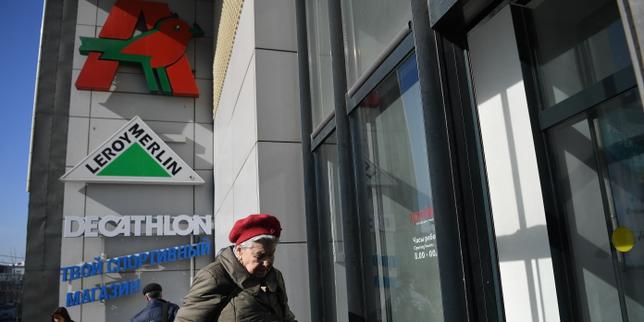
Recent state actions targeting major retail and consumer mainstays like Auchan, Leroy Merlin, and Nestlé highlight a brutal reality. If you leave your keys on the table in Moscow, someone else will pick them up, change the locks, and declare ownership. This is not just a localized commercial dispute. It represents a fundamental rewriting of property rights for any multinational trying to untangle itself from a sanctioned jurisdiction.
The Illusion of the Clean Break
For months, Western executives comforted themselves with the belief that selling at a steep discount was the worst-case scenario. Discounted sales, mandated exit taxes, and approval hurdles from government commissions were viewed as the price of doing business—or rather, the price of getting out. Yet the regulatory tollbooths were only the first phase.
Take the retail footprint built by the Mulliez family through Auchan and Leroy Merlin. These entities did not simply close doors; they anchored massive commercial real estate ecosystems across dozens of Russian cities. When the pressure mounted, keeping hypermarkets stocked and employees paid became an operational tightrope walk. But survival under foreign banners carried an inherent contradiction. The longer a brand stayed to protect its staff or preserve supply chains, the more exposed it became to sudden administrative intervention. Conversely, attempting to accelerate an exit triggered emergency state procedures designed to transfer control locally without paying fair market value.
The mechanics of these seizures rely on a growing arsenal of administrative decrees. Russian authorities have mastered the art of weaponizing local legal frameworks, designating foreign-owned subsidiaries as assets requiring external state management or temporary stewardship. Once placed under such administration, the original owners lose all operational leverage. Decisions regarding capital allocation, supplier contracts, and executive appointments migrate entirely to state-appointed trustees.
Inside the Mechanized Takeover
Understanding how assets change hands requires looking past the political rhetoric and examining the administrative pipeline. When a Western parent company hesitates or fails to find an approved buyer who satisfies the Kremlin's shifting criteria, the state steps in under the guise of protecting national economic security.
First comes the bureaucratic squeeze. Supply chain bottlenecks, currency transfer restrictions, and targeted tax audits create an untenable operating environment. Local managers find themselves caught between compliance demands from home jurisdictions and survival demands on the ground.
Second, the regulatory apparatus invokes emergency decrees that permit the transfer of management rights to domestic entities or state-backed funds. This is distinct from outright nationalization on paper, but functionally identical in outcome. The foreign shareholder retains a nominal equity stake that is suddenly worth zero, stripped of voting rights, dividend access, and executive oversight.
Nestle’s experience in the region mirrors this high-stakes containment strategy. While consumer goods companies attempted to shield essential food production from moral and political fallout by maintaining restricted operations, the defensive perimeter shrank by the month. Local subsidiaries operating vast manufacturing plants found themselves increasingly insulated from Geneva or Vevey, managed instead by local directors answering directly to federal regulators who prioritize domestic supply stability over foreign shareholder returns.
The Broader Fallout for Global Balance Sheets
The implications of these forced acquisitions extend far beyond the supermarket aisles of Moscow or St. Petersburg. CFOs across Europe, North America, and Asia are recalculating the sovereign risk premium of every market outside their home regions. The traditional playbook of globalization—diversifying manufacturing and retail footprints across geopolitical divides—now carries an existential tail risk that traditional insurance policies cannot cover.
When property rights become conditional on geopolitical alignment, long-term capital investment dries up. No board of directors will authorize billions in foreign direct investment if the exit strategy can be unilaterally rewritten by executive order. The message sent by these seizures is unambiguous. Foreign capital is welcome only so long as it serves state objectives, and disposable the moment political utility expires.
As these corporate remnants are absorbed into domestic holdings, the physical infrastructure remains, but the bridge between Russian commerce and Western financial systems collapses entirely. There is no return to status quo ante. The corporate landscape has fragmented permanently, leaving behind a cautionary tale of what happens when commerce collides with unyielding state power.
The doors are locked, the management teams replaced, and the assets reallocated. For those still waiting to exit, the window has slammed shut