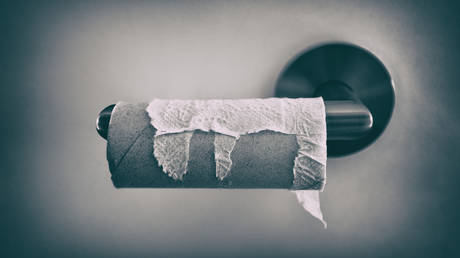
The porcelain is cold. It is always cold at six in the morning, long before the sun has decided to clear the frost from the pine trees outside the window.
Meet Arthur. He is not a diplomat, nor is he a trade representative holding a fountain pen across a polished mahogany table in Geneva or Washington. Arthur is a retired machinist living just outside of Buffalo, New York. He wakes up, shaves with a razor he has used for a decade, brushes his teeth with toothpaste squeezed from a tube that crossed an international border three times before it reached his medicine cabinet, and reaches for a roll of toilet paper.
That roll of paper is where geopolitics meets the bathroom floor.
We tend to think of trade wars as grand, abstract theater. We picture men in charcoal suits shouting into microphones, cargo ships idling off foggy coastlines, and jagged lines on stock market charts plunging into the red. We talk about tariffs on steel, quotas on aluminum, and the complex machinery of semiconductor supply chains. But trade policy does not live in spreadsheets. It lives in the quiet, mundane friction of daily survival.
Consider what happens next: a tariff drops. A border thickens. And suddenly, the invisible conveyor belt that feeds the most intimate corners of North American homes starts to stutter.
To understand how a trade dispute between the United States and Canada ends up dictating the price of bathroom tissue, you have to look at a map not of nations, but of forests.
For over a century, the North American timber and paper industries have operated not as two separate entities, but as a single, sprawling organism. A softwood log harvested in the rugged interior of British Columbia might be milled into pulp in Washington State, turned into jumbo rolls in Ontario, converted into consumer-ready bathroom tissue in a plant in Pennsylvania, and shipped back to a grocery store shelf in Calgary. It crosses the border multiple times before a consumer ever peels back the plastic wrapping.
This integration is a marvel of industrial efficiency. It is also a massive vulnerability.
When political friction spikes—whether over dairy quotas, softwood lumber duties, or environmental regulations—politicians reach for the easiest lever available: the border tax. They slap tariffs on imported paper products or raw timber, believing they are punishing a foreign adversary.
They are not. They are taxing Arthur.
Arthur does not care about the Softwood Lumber Agreement. He cares that the store-brand toilet paper he has bought for twenty years just jumped twenty percent in price. He cares that the remodeling project for his downstairs half-bath, designed with Canadian cedar paneling and specialized plumbing fixtures, suddenly costs more than his used sedan.
The friction is real. It smells like sawdust and stinging eyes.
Imagine walking through a modern paper mill in the industrial corridor near the Niagara River. The sound is a deafening, rhythmic roar—a mechanical heartbeat that never stops. Giant machines crush wood chips into slurry, bleach the fibers, press them into gossamer-thin sheets, and wind them onto steel cores at terrifying speeds.
Now, imagine dropping a wrench into that machinery. That wrench is a tariff.
When the United States imposes duties on Canadian lumber or paper inputs, mills on both sides of the border face an impossible choice. They can absorb the cost and watch their profit margins evaporate, or they can pass the burden down the line. They always pass it down the line.
Economists call this pass-through rate. Arthur calls it inflation.
The absurdity of a US-Canada trade war over bathroom products lies in the absolute symmetry of the supply chain. Canada needs American chemicals and machinery to process its paper. America needs Canadian fiber and finished goods to meet domestic demand. Neither country can simply decouple without plunging its domestic market into chaos.
Yet, politicians keep pulling the trigger. Why? Because a tariff is visible. It looks like action. It looks like protection.
When a factory worker in Michigan hears that their government is slapping a twenty percent tariff on Canadian paper imports, it sounds like defense. It sounds like someone is standing up for local jobs. But the hidden cost is paid by every single household that flushes a toilet, wipes a counter, or blows a nose.
History shows us that trade wars in forest products rarely end with a victor. They end with exhausted combatants signing a truce that looks remarkably like the deal they tore up five years earlier, after millions of dollars have been burned in legal fees, administrative delays, and lost consumer purchasing power.
Meanwhile, Arthur stands in the aisle of his local supermarket, staring at a price tag that defies logic. He does not know about the bureaucratic tug-of-war between Ottawa and Washington. He only knows that the simple act of living has quietly, persistently become more expensive.
The supply chain heals slowly. Trust heals even slower. And out in the quiet forests of the north, the trees keep growing, indifferent to the lines we draw on our maps.