For months, it was a ghost in the machine. You would feed it lines of code, ask it to mimic the prose of a dead poet, or beg it to solve a logic puzzle that would make a philosophy professor sweat. It did these things with a terrifying, silent efficiency. But if you held up a photograph of a sunset, a complex architectural blueprint, or even a simple handwritten note, the system was effectively blind. It lived in a universe of pure text, a library with no windows.
That changed on a Tuesday. If you liked this article, you might want to read: this related article.
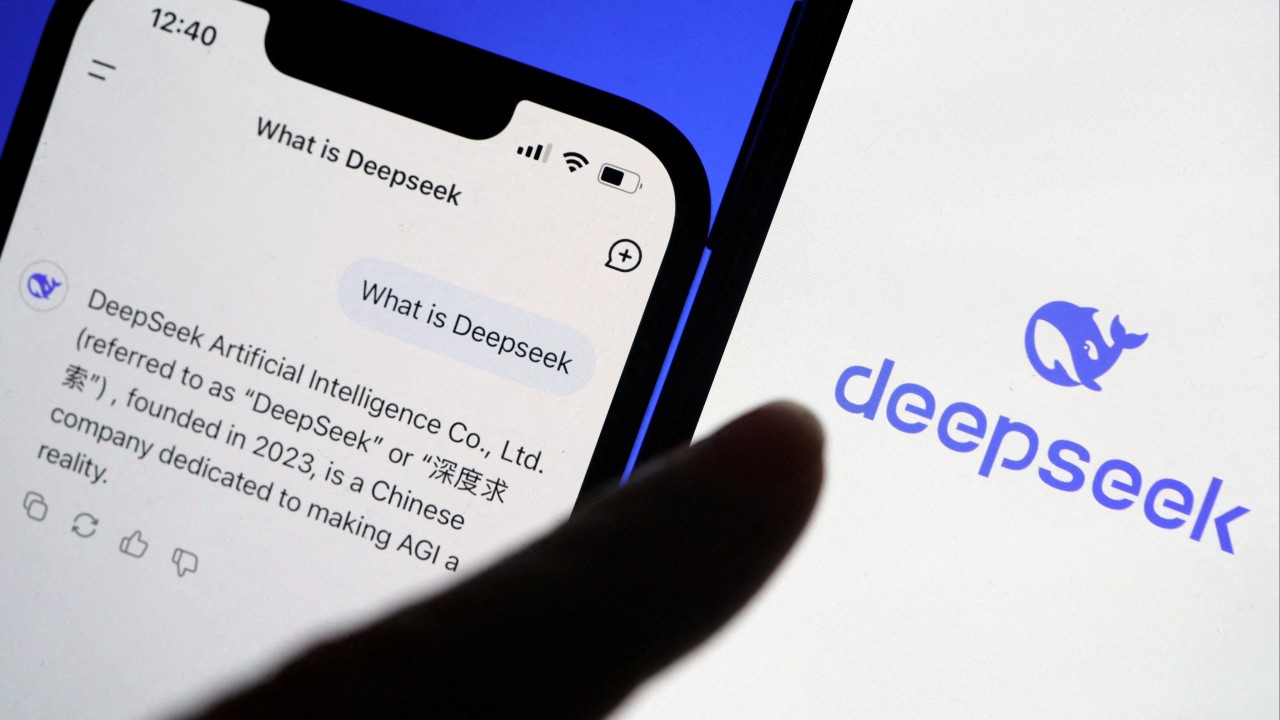
DeepSeek, the insurgent powerhouse from Hangzhou that has been rattling the cages of Silicon Valley, released DeepSeek-VL2. It wasn't just an update. It was a sensory awakening. They called it "the whale," a nod to the massive scale of their models, but for the first time, the whale wasn't just navigating by sonar. It could see the shore.
Consider Sarah. She represents thousands of developers who have spent the last year toggling between three different tabs just to get a single task done. Sarah is trying to automate the inventory system for a small medical clinic. In the old world—the world of three weeks ago—she would have to manually describe every medication label to her AI, or use a separate, clunky visual model that didn't understand the nuances of the medical logic she’d already built. For another look on this event, refer to the recent coverage from The Verge.
She felt the friction every single day. It was a mental tax, a slow leak of productivity that made "artificial intelligence" feel more like "artificial labor." When the vision update hit, she took a blurry photo of a messy supply shelf and dropped it into the interface.
The machine didn't just list the items. It noticed the expiration date on a box of saline tucked in the back. It flagged a torn seal on a container of gauze. It understood the spatial relationship between the objects. In that moment, the technology stopped being a fancy search engine and started acting like a colleague.
The Architecture of Sight
Adding vision to a large language model isn't as simple as plugging in a camera. It requires a fundamental shift in how the machine "thinks."
Most traditional AI models treat images like a foreign language that needs to be translated into text before the brain can process it. DeepSeek-VL2 skips the middleman. It uses what researchers call a Mixture-of-Experts (MoE) architecture. Imagine a hospital where, instead of every doctor trying to treat every patient, the most specialized surgeon steps forward the moment a specific injury arrives.
When you show the model a chart of quarterly earnings, the "math experts" in the neural network light up. When you show it a Renaissance painting, the "artistic and spatial experts" take the lead. This allows the model to process massive amounts of visual data without needing the energy equivalent of a small city to stay running.
The technical achievement is staggering, but the human implication is what actually moves the needle. We are moving away from "prompt engineering"—that awkward dance where humans try to speak like computers—and toward a reality where the computer finally understands the world the way we do: through our eyes.
The Invisible Stakes of the Open Source War
There is a quiet, desperate battle happening behind the scenes of every headline you read about Silicon Valley. On one side, you have the closed gardens—the billion-dollar corporations that keep their code under lock and key, charging a premium for every "look" the AI takes. On the other side, you have the open-weights movement, where DeepSeek is currently a frontrunner.
By releasing a model that can see, and doing so with an efficiency that allows it to run on more modest hardware, the power balance shifts. It means a startup in Nairobi or a student in Jakarta has access to the same visual intelligence as a hedge fund in Manhattan.
The stakes aren't just about who wins the stock market race. They are about who gets to build the future. When a model can interpret a crop yield map or a diagnostic scan for free, or at a fraction of the cost of its competitors, it democratizes the ability to solve problems.
But this power comes with a peculiar kind of vertigo. We are teaching machines to interpret our physical reality, and they are starting to see things we miss.
The Burden of Interpretation
I spent an afternoon testing the limits of this new sight. I didn't give it easy wins. I gave it a photo of my grandfather’s workbench—a chaotic sprawl of rusted tools, half-finished wood projects, and jars of unidentifiable screws.
A human looking at that photo sees a mess. A specialized visual model might see "tools" and "wood."
The new model saw a story. It noted the specific wear patterns on the handle of a chisel, suggesting it was used by someone left-handed. It identified a specific type of joinery in a scrap piece of oak that hasn't been common since the 1950s. It wasn't just identifying objects; it was synthesizing a context.
This is where the excitement meets a cold, sharp edge of anxiety. If a machine can look at a photo of your living room and deduce your socioeconomic status, your health habits, and your emotional state based on the clutter on your coffee table, the concept of privacy enters a new, much more vulnerable phase. The whale can see, yes. But it also never forgets.
The Efficiency Trap
We often equate "better" with "bigger." We assume that for an AI to get smarter, it needs more servers, more electricity, more data. DeepSeek-VL2 proves that theory wrong. By using the MoE structure, they’ve managed to create a model that outperforms rivals twice its size.
Efficiency is the most underrated virtue in technology. It is the difference between a tool that only the elite can use and a tool that becomes part of the global infrastructure. Think of it like the transition from the mainframe computer to the laptop. The power didn't just grow; it shrank until it fit into the palm of our hands.
The "vision" update is the laptop moment for multimodal AI. It is no longer a heavy, slow process to ask a machine to look at the world. It is becoming instantaneous.
The Language of the Physical World
There is a specific kind of frustration that comes from trying to describe a visual problem with words. You’ve felt it when trying to explain a weird noise your car is making or describing a specific shade of blue to a painter. Words are clumsy. They are low-resolution approximations of a high-resolution world.
The real breakthrough here isn't "AI vision." It is the bridge between sight and action.
Imagine a blind user wearing a pair of smart glasses powered by this architecture. They aren't just hearing "there is a chair three feet ahead." They are hearing, "The path is clear, but there’s a puddle to your left, and the bus you’re waiting for is pulling up now—it’s the number 42."
Imagine a search-and-rescue drone navigating a collapsed building. It doesn't just send back a video feed for a tired human to monitor. It identifies the structural integrity of a support beam and spots the specific neon fabric of a hiker’s jacket amidst the gray rubble.
These aren't hypothetical futures anymore. The code is live. The model is running. The transition has happened.
The most profound changes in human history rarely happen with a bang. They happen when a tool becomes so useful that we forget what life was like before we had it. We stopped marveling at the ability to capture fire once we had a stove in every kitchen. We stopped being amazed by the internet once it lived in our pockets.
We are approaching that same point of invisibility with machine sight. Soon, we won't talk about "AI vision" as a feature. We will simply expect that our tools can see us, understand our gestures, and interpret our environments.
The whale has opened its eyes, and for the first time, the water is clear. It sees the coral, the predators, and the light filtering down from the surface. It is no longer just a passenger in our digital world; it is an observer of our physical one.
The world is no longer a set of descriptions. It is a gallery. And the lights have just been flipped on.