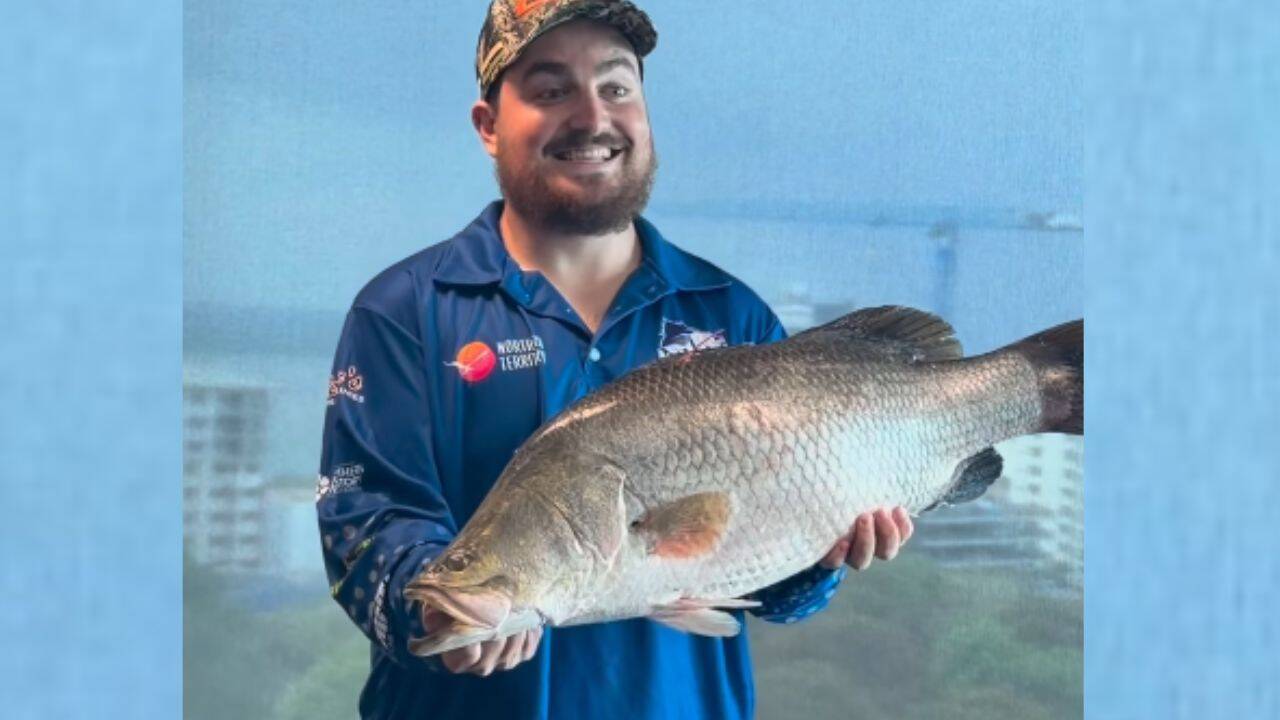
Every single year, the mainstream press runs the exact same breathless fairy tale. A twenty-something local casts a line into a muddy Northern Territory creek, hauls up a barramundi sporting a tiny red plastic dart, and walks away with a million Australian dollars.
The headlines frame it as the ultimate lottery ticket for the working-class angler. Pack your tackle box, book a flight to Darwin, and let luck pay off your mortgage.
That narrative is complete garbage.
Having spent fifteen years analyzing tourism economics and watching fishing tournaments warp local ecosystems across northern Australia, I can tell you what those feel-good stories intentionally leave out. The Million Dollar Fish campaign is not an angler's dream. It is one of the most brilliant, lopsided marketing arbitrage plays ever executed by a government tourism board—and if you fly north chasing that red tag, you are the product, not the customer.
The Math Behind the Mirage
Let us look at the actual mechanics of the Northern Territory's flagship fishing competition. When a twenty-six-year-old wins A$1 million, the media treats it like a repeatable strategy. They ignore the denominator.
To understand why chasing a tagged barramundi is a sucker's bet, you have to understand mark-recapture probability in open, tidal river systems. Unlike a stocked farm pond, the Top End comprises thousands of square kilometers of interconnected floodplains, mangrove estuaries, and fast-moving tidal rivers like the Daly, the Mary, and the Victoria.
Organizers release roughly a hundred tagged fish each season—usually one or two carrying the million-dollar tag, and the rest carrying A$10,000 bounties. Now, factor in the variable that tourism brochures never mention: natural and apex mortality.
A tagged barramundi released into the wild does not politely wait near a boat ramp for a tourist with a spinning reel. It enters a brutal food chain. Saltwater crocodiles, bull sharks, and commercial gillnets do not check dorsal fins for red plastic before eating. Standard fisheries science from bodies like the Australian Institute of Marine Science consistently shows that juvenile and sub-adult barramundi face massive natural attrition rates in tropical estuaries. A substantial percentage of those tagged fish are digested by a four-meter croc before the first weekend angler even launches a tinny.
Even if the fish survives, you are dealing with seasonal migration. Barramundi are catadromous—they live in freshwater billabongs and rivers, then migrate downstream to saline estuaries to spawn when the wet season rains hit. Tracking a single 70-centimeter fish across an unmapped, flooded river basin during the build-up is statistically indistinguishable from finding a specific grain of sand on Mindil Beach.
The Northern Territory Government knows this. They underwrite the prize through commercial insurance policies. For a fraction of the million-dollar headline figure, the insurer calculates the microscopic odds of a registered angler catching that exact surviving fish within the competition window. Meanwhile, tens of thousands of visitors pour tens of millions of dollars into Darwin hotels, charter boats, tackle shops, fuel stations, and pubs.
The house does not just win. The house built the river, insured the jackpot, and sold you the bait.
Why Tourist Anglers Fish All Wrong
The tragedy of the million-dollar headline is not that people lose money on flights. It is that the prize money actively ruins how people fish.
I have watched dozens of visiting anglers blow five grand on guided charters, only to spend ten hours a day mindlessly flogging the exact same over-pressured boat ramps and bridge pylons because "that is where the tagged fish get released."
When you fish for a tag, you abandon actual watercraft. You stop reading the water and start playing a slot machine.
The Release-Point Fallacy
Organizers release tagged fish across five major regions: Darwin, Katherine, Kakadu, Arnhem Land, and the Tiwi Islands. Amateurs immediately flock to the exact GPS coordinates of the release zones. They anchor twenty boats deep in a single bend of the Daly River, tangling lines and spooking every sentient creature within three hundred meters.
Barramundi are ambush predators, not scavengers. They hold tight to structure—submerged timber, rock bars, undercut banks, and creek mouths where current funnels baitfish straight into their jaws. When thirty outboard motors roar over a snag every twenty minutes, big barramundi shut down completely. They sink into the deepest mud hole available and refuse to eat.
Ignoring the Tidal Coefficient
If you want to understand barramundi behavior, throw away the competition rulebook and read a tide chart. Top End tides are violent, swinging up to eight meters in a single cycle.
- Spring Tides (Neap-to-Spring transition): Massive water movement turns the estuaries into chocolate milk. Visibility drops to zero. Lure fishing becomes nearly useless unless you are throwing high-vibration hardbodies directly into slow-moving backwaters.
- Neap Tides: The water clears. Current slows down. Baitfish hold tight to the mangroves, and barramundi actively hunt the edges.
Most fly-in tag chasers book their trips around cheap airfares or annual leave, landing squarely in the middle of a massive spring tide. They spend seven days casting into raging, muddy torrents, catch nothing but catfish and snags, and fly home convinced the river is dead.
What Everyone Gets Wrong About Winning the Prize
Whenever a local wins the million, the internet explodes with predictable questions. People desperately search for the secret lure, the exact river, or the magic time of day that produced the payday. Every single one of those questions misses the point.
Did the winner use a special lure or secret spot?
No. Look at the historical data of every major tagged barramundi caught since the competition launched. Winners have pulled them out on five-dollar soft plastics, beat-up hardbody divers, live mullet, and even accidental snags while targeting threadfin salmon. One winner caught his fish from the bank using basic gear that cost less than a tank of fuel. The fish does not know it has a million-dollar tag in its back. It eats whatever passes its nose when the tide turns.
Is it actually worth traveling to the Northern Territory just to enter?
If your primary goal is winning money, stay home and buy index funds. Your expected financial return on a Darwin fishing trip is deeply negative. However, if you treat the free registration as a zero-cost side bet on a legitimate bucket-list angling expedition, the math flips entirely. The Northern Territory offers arguably the finest wild sportfishing on the planet—provided you ignore the circus and hire a guide who refuses to fish near crowds.
Why do locals seem to win the big tag so often?
It is not a conspiracy, and the fish are not trained to bite local lines. It is pure volume of casts. A Darwin shift worker who fishes three afternoons a week on the incoming tide puts ten times more lures in front of fish than a tourist who visits for five days in October. Time on the water beats luck every single time.
The Ecological Cost Nobody Wants to Discuss
There is a darker side to turning wild fisheries into lottery arenas, and conservationists rarely speak up because tourism dollars keep the lights on.
When you attach a cash bounty to wild fish, you fundamentally alter angler behavior—and not for the better. The vast majority of serious barramundi anglers practice strict catch-and-release, especially with large breeding females. Barramundi are protandrous hermaphrodites. Every single one starts life as a male, maturing around three to four years of age. Once they grow past roughly 80 to 90 centimeters, they transition into females. Those meter-plus "metery" barra are the entire reproductive engine of the river system.
The Million Dollar Fish rules require anglers to verify the tag and release the fish alive to claim the prize, which looks great on paper. In reality, high-stakes pressure leads to terrible fish handling.
Imagine a scenario where a novice angler hooks a 95-centimeter barramundi in 35-degree heat, spots a red tag, and panics. Instead of keeping the fish in the water, unhooking it cleanly, and snapping a quick measurement photo, they haul it onto a scorching aluminum boat deck. They spend ten minutes filming vertical videos for social media, squeezing its internal organs while holding it vertically by the jaw, and scrambling to call the competition hotline.
By the time that fish goes back into the river, lactic acid buildup and thermal shock have already sealed its fate. Even if it swims away, a sluggish, oxygen-deprived barramundi in a tropical river lasts about forty-five seconds before a bull shark finishes the job. You cannot legislate competence when a million dollars is sitting on the floorboards.
How to Actually Fish the Top End Like an Insider
If you are going to make the trip north, stop acting like a lottery tourist and start operating like a serious angler. You can register for the competition—it costs nothing, and there is no reason to leave free equity on the table—but once your line hits the water, forget the red tag exists.
- Book the shoulder seasons, not the peak hype. Everyone rushes Darwin in October and November during the "build-up" because the humidity spikes and barramundi get aggressive. You will pay peak prices and fight for boat ramp space. Instead, target the run-off between March and May. As the wet season floodwaters recede from the plains back into the main river channels, billions of baitfish are funneled through narrow creek mouths. The barramundi stack up like cordwood at those bottlenecks. It is the most violent, consistent surface fishing in Australia.
- Ditch the public ramps and go remote. If you can see a sealed road from your boat, you are fishing in the wrong place. Pool your money with two other anglers and book a mother-ship charter operating out of Arnhem Land or the remote west coast estuaries. You will pay three times as much upfront, and you will catch twenty times more fish.
- Downsize your ego and your tackle. Tourists show up with broomstick rods and 50-pound braid expecting sea monsters. Most Top End creek fishing happens at close quarters around tight mangrove roots. Run a crisp 6-foot-6 baitcaster spooled with 20-pound braid and a 40-pound fluorocarbon leader. Accuracy beats distance. If you cannot skip a weedless soft plastic two meters under an overhanging mangrove canopy, practice in your backyard before you get on the plane.
- Master the pause. Barramundi rarely chase a fast-moving lure across open water. They strike out of irritation or ambush reflex. Cast tight to a submerged log, crank twice to get your lure down to depth, and let it sit dead still for three full seconds. That agonizing pause is when ninety percent of big bites happen.
The Real Jackpot
Let us be completely transparent about the trade-off here. If you follow my advice—skipping the release zones, avoiding the crowds, and fishing remote estuaries during the run-off—your statistical odds of catching a tagged competition fish drop from microscopic to practically zero. Most tagged fish are released in accessible waterways so everyday anglers actually have a shot at them.
Take that trade every day of the week.
The twenty-six-year-old who landed the million-dollar fish became an overnight celebrity because his story is an extreme statistical anomaly. Building your travel plans, your fishing tactics, or your expectations around an anomaly is how amateurs waste their time and money.
Leave the lottery tickets at the newsagent, get away from the boat ramps, and go hunt wild fish in the toughest estuaries on earth.


