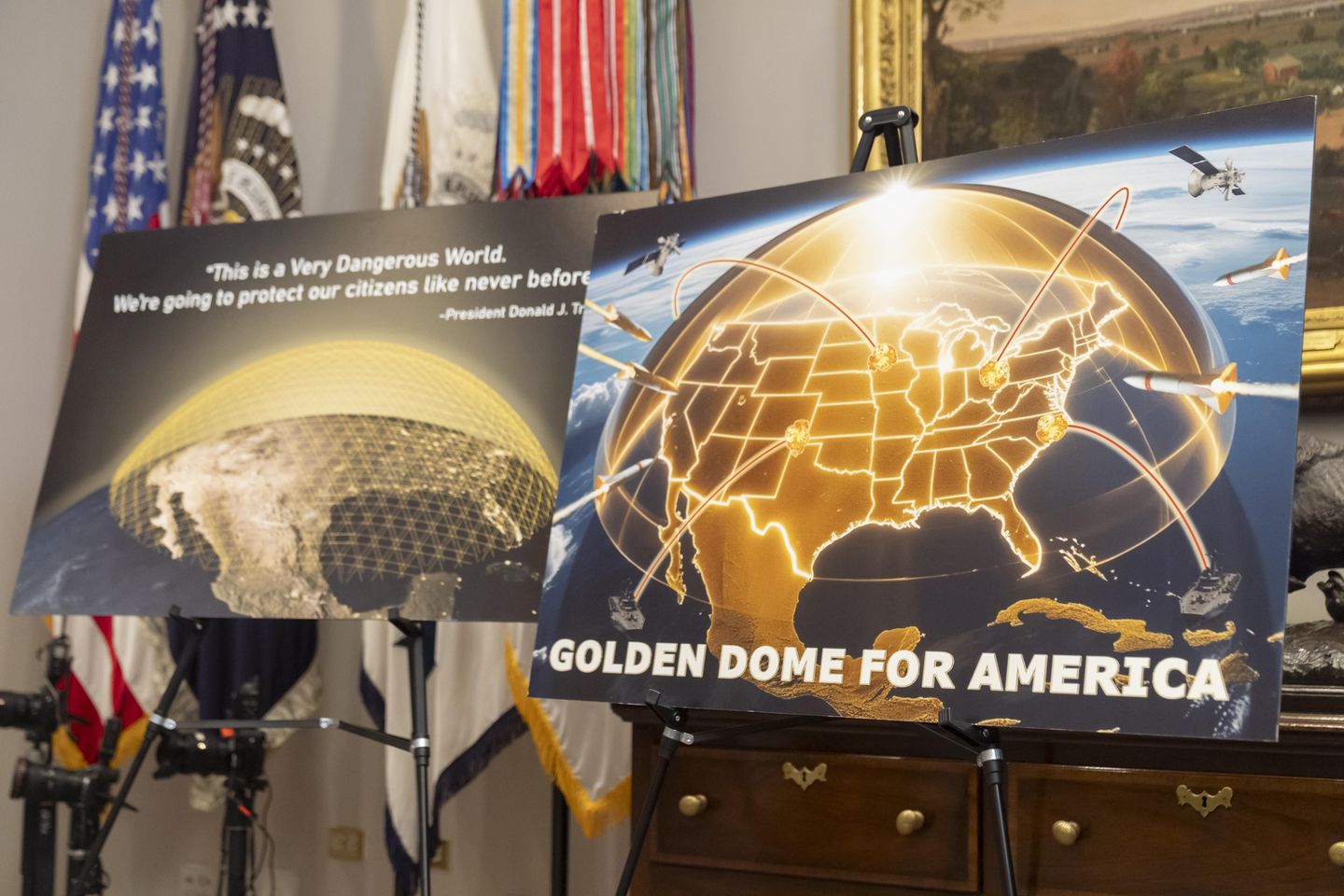
The headlines scream about an impending cosmic Pearl Harbor. Defense bureaucrats love a shiny new frontier because fear opens checkbooks faster than any spreadsheet. They sell the public a terrifying narrative: adversaries are building orbital killer satellites, anti-satellite missiles are multiplying, and our communications architecture hangs by a microscopic thread in the void.
So governments spin up dedicated space squadrons, brandish protective shields, and promise to guard the heavens against unprecedented threats. It sounds like high-stakes science fiction. It is actually an expensive, strategic delusion. If you enjoyed this article, you should look at: this related article.
I have watched defense contractors and military procurement officers salivate over orbital budgets for decades. They want you to believe space is a high-altitude trench warfare zone where dogfights will happen above the Karman line. The reality is far more mundane, and infinitely more difficult to solve with traditional military doctrine. You cannot dig a trench in a vacuum, you cannot park a patrol boat in a decay orbit, and most importantly, putting armed guards on orbit is the worst way to protect hardware that is already impossible to defend.
The Physics Problem Nobody in Uniform Wants to Talk About
Orbital mechanics destroy the entire premise of space defense squadrons. If you launch a kinetic interceptor or a defensive escort satellite into low Earth orbit, you are not establishing a stationary checkpoint. You are locked in a relentless orbital ballet traveling at seventeen thousand five hundred miles per hour. For another perspective on this story, refer to the recent update from Engadget.
At that velocity, relative positioning is a nightmare. If a hostile actor launches a cloud of shrapnel or an asset-destroying micro-satellite in a retrograde orbit, the closing speed makes interception mathematically terrifying. You do not maneuver an orbital guard dog to sniff out an intruder. You collide with kinetic energy equivalent to a tactical explosive device.
The defense establishment loves to talk about space control and orbital dominance as if we are operating naval fleets in the Pacific. That is a category error of historic proportions. The ocean offers drag, buoyancy, hideouts, and maneuverability. Orbit offers pure, unadulterated orbital mechanics where every action has an immediate, catastrophic, equal, and opposite reaction.
When you blow up a satellite in low Earth orbit, you do not eliminate the threat. You create a jagged cloud of tens of thousands of hyper-velocity shrapnel bullets that will threaten your own expensive satellites, your adversaries' assets, and the very space squadron you just spent billions assembling. Kessler Syndrome is not a theoretical hazard reserved for academic papers. It is an active ecological catastrophe waiting for an eager military to pull the trigger.
The False Equivalency of Orbital Territorials
Defense analysts point to the South China Sea or historical airspace violations to justify militarized orbital policing. They argue that if we do not plant our flag and put guns in space, someone else will.
This argument relies on a fundamental misunderstanding of asset vulnerability. Terrestrial military assets are hardened, dispersed, and capable of hiding behind terrain, camouflage, or concrete bunkers. A satellite is a fragile, solar-paneled aluminum tube operating in a vacuum under extreme thermal swings, constantly bathed in radiation. It has zero cover. It cannot duck. It cannot pull over to the side of the road for repairs.
If an adversary wants to disable a high-value reconnaissance satellite, they do not need a space squadron to do it. They can use ground-based electronic jamming, cyber-attacks on ground station control nodes, directed energy weapons from sovereign soil, or simply launch a cheap, dumb kinetic kill vehicle that costs a fraction of the targeted asset.
Spending billions of dollars to build an elite space squadron to protect high-value spacecraft is like building a titanium-armored cage around a paper house and expecting it to withstand a hurricane. The vulnerability is structural. The fix is not putting more metal in orbit; the fix is changing how we architect our orbital presence entirely.
Decentralization is the Only Defense That Works
The obsession with centralized, high-value orbital flagships is an institutional addiction. Governments love multi-billion-dollar satellites because they make great photo ops and concentrate bureaucratic power. But in an age of cheap commercial launch vehicles and miniaturized electronics, concentration is suicide.
If you place all your strategic intelligence capabilities into three massive, multi-ton school-bus-sized satellites, you have given your enemy a high-value target with a neon sign pointing right at it. No space squadron can protect three massive nodes against a determined state actor.
The counter-intuitive truth is that resilience comes from redundancy, distribution, and disposability. Instead of building one masterpiece satellite that requires a military escort, modern defense architecture should look like a swarm of thousands of commodity micro-satellites communicating via optical inter-satellite links.
If an adversary takes out ten of them, the constellation reroutes traffic instantly. The cost per unit drops so low that offensive counter-space operations become economically unviable. Why spend millions of dollars launching an anti-satellite missile to destroy a node that costs less than a luxury sedan and will be replaced by a fresh launch next Tuesday?
We do not need space squadrons. We need industrial manufacturing capacity and rapid launch cadence.
The Bureaucratic Incentive for Fear
Why are we marching down this expensive, dead-end path? Follow the budget.
A military branch dedicated to space creates billets, promotions, general officer slots, multi-decade procurement contracts, and lucrative revolving-door consulting gigs for retired brass. Selling the public on a calm, calculated strategy of low-cost commercial swarm resilience does not get congressional hearing rooms packed or prime-time news coverage.
Fear sells security. But institutional fear creates white elephants.
When you hear politicians and defense pundits wringing their hands over unprecedented space threats, look past the rhetoric. Ask yourself who benefits from the multi-billion-dollar panic. It is rarely the taxpayer whose infrastructure remains just as vulnerable, and it is certainly not the orbital environment choking on military debris.
The Real Threat is Our Own Stupidity
We are spending astronomical sums to fight the last war in a brand new theater. We are trying to apply nineteenth-century naval logic to a twenty-first-century physics problem, hoping that a dedicated space squadron will somehow repeal the laws of momentum.
If we continue down this path, we will militarize the one domain that sustains our global communications, weather tracking, and financial networks, turning a pristine orbital commons into a junk-filled combat zone of mutually assured destruction.
Stop funding orbital prestige projects. Stop pretending you can patrol the vacuum. Build smaller, build cheaper, build smarter, and let the space squadrons fade back into the science fiction novels they belong in.