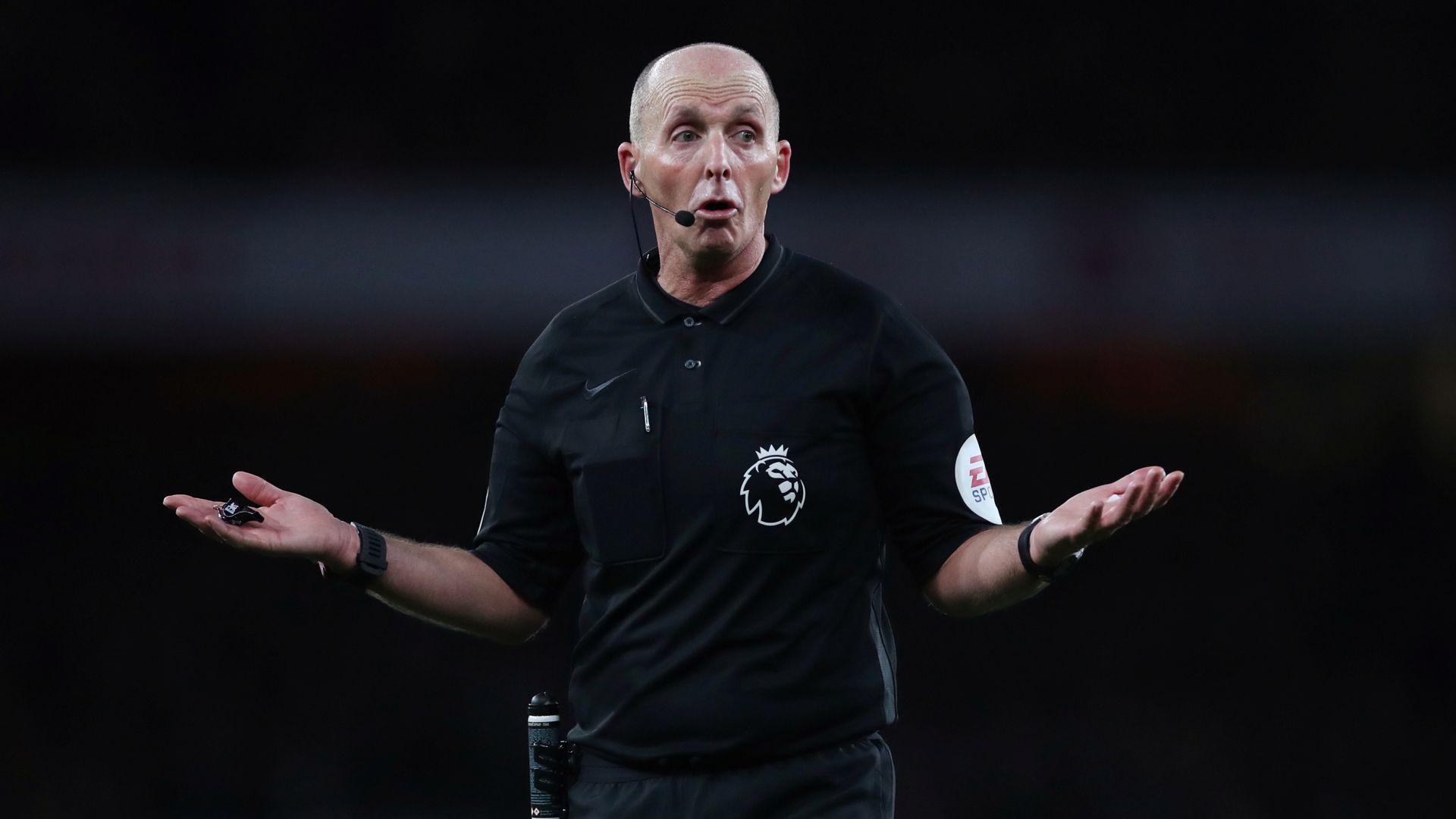
When a retired official casually boasts about treating Premier League fixtures as a personal playground, the fallout extends far beyond a momentary social media storm. Former referee Mike Dean recently triggered a widespread uproar by confessing on a podcast that he routinely played secret challenges during top-flight matches, seeing how long he could avoid blowing his whistle or how many minutes he could remain anchored inside the center circle. The subsequent defense, claiming the remarks were merely light-hearted banter meant to entertain, entirely misses the gravity of the institutional damage caused. Elite soccer officiating operates on a razor-thin margin of trust, and treating multi-million-pound matches as internal amusement challenges shatters that fragile credibility.
The modern Premier League referee is subjected to microscopic scrutiny. Every tactical foul, marginal offside, and penalty box tumble is dissected by thousands of cameras and millions of hyper-partisan supporters. When a veteran who presided over more than five hundred matches admits to staging internal endurance trials—such as letting play run unchecked for twenty-five minutes or refusing to leave the center circle for a quarter of an hour—it validates the worst fears of fans and managers alike. It feeds the cynical narrative that matches are managed by whim rather than strict adherence to the laws of the game.
The Illusion of Flow and the Reality of Neglect
Dean’s primary defense rests on the premise that he preferred a high threshold for contact, allowing matches to flow naturally to satisfy players and spectators. There is a distinct difference, however, between sensible game management and manufactured detachment.
Modern soccer relies on proactive positioning. An official cannot accurately evaluate high-speed challenges, suppress off-the-ball holding, or manage tactical fouling if they deliberately chain themselves to the center circle for fifteen minutes. The physical demands of the position require covering ground dynamically to maintain an optimal viewing angle. Choosing to remain stationary as a personal amusement challenge transforms refereeing from a rigorous athletic profession into a passive exercise in self-indulgence.
Former colleagues quickly rushed to distance themselves from the controversy. Some dismissed the claims as exaggerated boasts designed for audio entertainment, while others expressed sheer astonishment that any official would gamble with the integrity of their profession for a cheap laugh. Yet whether these micro-games occurred precisely as described or were embellished for comedic effect on a player-hosted podcast matters little. The admission itself reveals a casual attitude toward authority that filters down through the entire officiating ecosystem.
The Psychological Burden of Elite Officiating
To understand why an official might seek psychological escape during a ninety-minute fixture, one must examine the crushing pressure cooker of elite soccer. Referees absorb an immense volume of verbal abuse, toxic social media vitriol, and existential anxiety regarding professional demotion. Coping mechanisms are necessary, but they must align with the professional rigor demanded at the highest level.
When coping mechanisms morph into internal games that directly impact match control, the line of duty has been crossed. A referee who actively restrains their whistle to satisfy a personal milestone is altering the competitive landscape of a fixture. Professional athletes invest entire careers, millions in club revenues, and emotional well-being into every ninety-minute block. They deserve absolute focus from the neutral arbiters appointed to govern them.
The defense that players prefer a high-contact threshold fails to account for the grey areas where negligence masquerades as leniency. Allowing a match to run for extended stretches without intervention can invite escalating physicality, culminating in dangerous challenges that could have been prevented with early, authoritative yellow cards.
The Damage to Grassroots Respect
The shockwaves from this controversy do not stop at the top tier. Referee recruitment and retention across grassroots soccer face a persistent crisis, largely driven by rampant abuse from players and spectators. Grassroots officials are constantly told to respect the laws, maintain total concentration, and uphold the dignity of the uniform.
When a former Premier League poster boy casually trivializes the core duties of the job on a popular broadcast, it undermines every referee coordinator attempting to instill discipline on muddy local pitches on a Sunday morning. Teenage officials enduring verbal abuse from adult managers look toward the professional pinnacle for standards of excellence. Hearing that top-tier referees treated matches as personal amusement parks deals a severe blow to that aspiration.
Integrity is not merely about avoiding corruption or match-fixing; it is about absolute professional application. It means respecting the weight of the whistle every second it rests in the hand.
The institutional bodies overseeing officiating cannot afford to brush this off as harmless banter. While formal investigations may prove difficult given the retrospective nature of the comments, the cultural footprint remains corrosive. Rebuilding trust requires absolute transparency and an unequivocal reaffirmation that refereeing is an uncompromising test of duty, not an arena for private entertainment.
The whistle is an instrument of order, not a prop for a punchline. Until those at the summit of the sport fully grasp how deeply such casual confessions fracture public faith, the shadow of doubt will continue to loom over every disputed decision on the pitch.