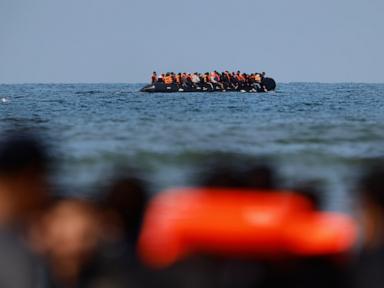
Migrants continue to trek north through Mexico after U.S. election results because political shifts in Washington trigger immediate rumors of softer enforcement, even when executive authority and border barriers on the ground remain firmly locked. Having covered migration corridors along the Rio Grande, Sonora desert, and southern Mexican rail lines for more than twenty years, I have seen election night headlines move human columns faster than any diplomatic memo ever could. Voters read ballot boxes one way. People walking two thousand miles through Chiapas and Oaxaca read them another.
A fresh wave of travelers moving north through Mexico after the November 2026 midterm elections illustrates that gap between ballot math and border reality. Democrats flipped all ten House districts bordering Mexico and took control of Congress, fueling speculation among migrants in southern towns like Tapachula and Mapastepec that entry rules or enforcement pressure might soon ease. Yet congressional committee chairs do not rewrite border patrols overnight, and executive enforcement machinery operates on its own statutory track.
How Election Signals Travel Down the Rail Lines
News travels along the migration corridor through word of mouth, social media clips, and smugglers' pitches long before policy analysts finish parsing precinct totals. When a migrant caravan forms in southern Mexico after an election, participants rarely hold a detailed briefing on U.S. bicameral power balances. Instead, a single rumor—that a new majority in Washington will slow deportations, reopen asylum lanes, or curb aggressive raids—turns hesitation into motion within hours.
Consider a hypothetical example of how that rumor spreads. A family waiting in a rented room in Tapachula sees a translated video clip celebrating Democratic wins along the border. A local guide tells them the window could crack open in January when the new Congress seats its members. Even if the family knows the road ahead is brutal, staying put feels like surrender while moving feels like agency.
- Political optics versus operational law: Winning a House or Senate majority gives lawmakers subpoena power and budget leverage, not unilateral control over ports of entry or active border patrols.
- Smuggler opportunistic pricing: Criminal networks routinely repackage political news from the United States to convince skeptical travelers that paying a fee right now beats waiting another year.
- Information lag in transit: Travelers walking hundreds of miles from the Guatemalan border often hear exaggerated versions of U.S. politics that omit court rulings, asylum restrictions, and interior enforcement sweeps.
Why Ballots Do Not Erase Hard Enforcement Realities
Any veteran correspondent knows that election night euphoria collides hard with physical and legal checkpoints once migrants reach northern Mexico. Throughout 2025 and 2026, federal enforcement in the United States leaned heavily on record deportation numbers, interior arrests, and tighter asylum restrictions at ports of entry. DHS data showed hundreds of thousands of arrests and deportations in fiscal year 2026 alone, a scale of enforcement that no midterm vote in November can reverse by morning.
At the same time, Washington's leverage over Mexico City relies on blunt economic threats as much as diplomatic coordination. Threats to double tariffs on Mexican goods if flows north are not checked put immense pressure on Mexican authorities to intercept travelers along highways and freight routes. Walking north in hopes of a softer welcome often meets checkpoints, bus transfers south, and interior flights back toward southern Mexico.
Election results change political narratives in hours, while border enforcement walls, detention capacity, and bilateral tariff pressure change over years.
| Driver of Movement | Immediate Effect on Migrants | Practical Limit on the Ground |
|---|---|---|
| U.S. midterm election shifts | Sparks hope of looser enforcement or policy pushback | Congress cannot unilaterally rewrite executive border rules |
| Tariff and trade pressure | Prompts tighter Mexican interception and containment efforts | Creates friction, exhaustion, and higher smuggling costs |
| Family separation and desperation | Drives parents and returnees to try again despite high odds | Physical danger, heat, hunger, and deportation risks remain severe |
The Overlooked Role of Border Voters and Cartel Economics
Coverage of migrants trekking north through Mexico often misses a sharp counter-argument happening right inside the border states themselves. In November 2026, border congressional districts swung heavily back toward Democrats after shifting toward Republicans in 2024, driven by voter pushback against aggressive raid tactics, economic strain, and heavy-handed enforcement. Border residents are not a monolith; many live in tight-knit cross-border communities where trade, family ties, and enforcement excesses all weigh on daily life.
Smuggling organizations watch both sides of that ledger with cold precision. When political headlines frame border enforcement as contested or unpopular in Washington, transnational criminal organizations use that noise to recruit clients and move merchandise across the same corridors. Yet when migrants arrive in large visible groups, they also face extortion, kidnapping risks, and fierce competition among rival smuggling factions controlling territory in northern states.
What Actually Moves People Beyond Politics
If you strip away cable-news spin, most migrants trekking north through Mexico are not acting as political analysts. They are reacting to immediate pressures back home—violence, poverty, fractured families, or prior deportations that left loved ones behind. A U.S. election result acts like a spark on dry brush, giving people who already want to leave a reason to step onto the road today rather than next month.
Real change in these flows never comes from election-week rumors alone. It requires steady alignment between Washington and Mexico City on lawful labor channels, credible asylum processing, and sustained pressure on smuggling networks—measures that demand patient governing rather than campaign slogans. Until policy matches what people on the ground actually encounter at the border, every election cycle will keep sending new walkers toward a harder wall than they expect.