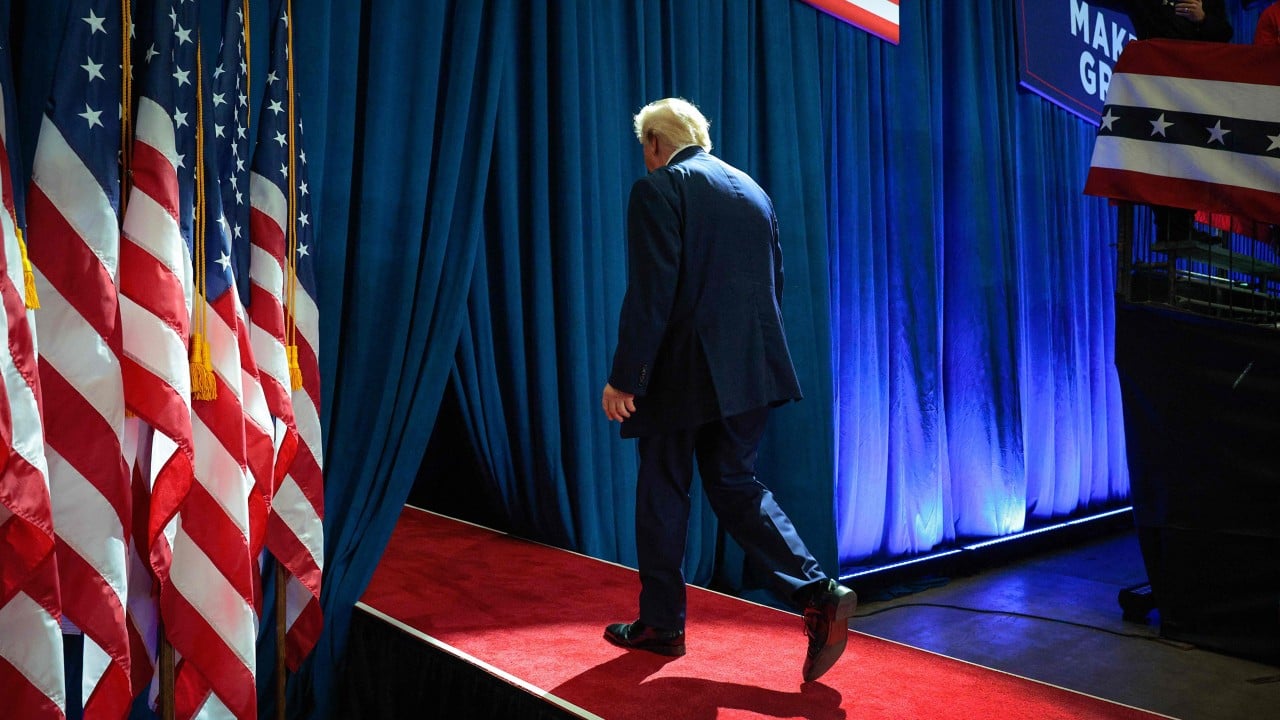
American voters delivered a historic rebuke to the White House in the November 2026 midterm elections, handing Democrats control of both the House of Representatives and the Senate in a sweeping wave. Yet if you look past the cable news celebrations in Washington and read the dispatches coming out of Beijing's top foreign policy think tanks, you find a starkly different consensus. A midterm defeat does not tame Donald Trump on foreign policy—it actually untethers him.
When a second-term president loses his legislative majority, domestic ambitions hit a brick wall. Tax bills stall. Judicial confirmations slow to a crawl. Subpoenas fly from newly empowered oversight committees. History shows that cornered presidents instinctively pivot toward the one arena where Congress cannot easily follow them: international affairs. For Chinese analysts, who have spent years mapping the structural mechanics of American executive power, the Democratic takeover is not a restraint on Trump. It is an accelerant.
The Imperial Presidency Meets a Lame Duck
To understand why Beijing refuses to celebrate the Republican rout, you have to look at the constitutional architecture of the American executive branch. Over the last eight decades, Congress has steadily surrendered its war-making, tariff-setting, and diplomatic authorities to the Oval Office. A hostile legislature can starve a president of domestic funding, but it struggles to stop a commander-in-chief determined to act unilaterally on the world stage.
Diao Daming, a prominent American studies scholar at Renmin University in Beijing, pointed out right as votes were being cast that losing Congress forces a president to become hyper-focused on his historical legacy. Denied legislative trophies at home, Trump has every incentive to chase dramatic, headline-grabbing deals abroad. He no longer faces another election. He does not need to worry about how a sudden diplomatic gamble affects down-ballot Republicans in swing districts.
This creates a dangerous paradox. Domestic political weakness translates directly into foreign policy volatility. When a president is hemmed in by congressional investigations and stalled domestic bills, the temptation to execute a sudden unilateral strike, tear up an existing treaty, or stage a high-stakes summit becomes overwhelming.
Why Beijing Sees Opportunity and Danger in Equal Measure
On Chinese social media platforms like Weibo, the hashtag translating to "Trump Total Defeat" racked up tens of millions of views within hours of the election results. Ordinary netizens cheered the chaos in Washington. Inside Zhongnanhai and the halls of the Chinese Academy of Social Sciences, however, the mood was clinical and deeply cautious.
Chinese strategists view Trump through a purely transactional lens. Unlike traditional Washington hawks who frame U.S.-China competition as an existential ideological struggle between democracy and autocracy, Trump treats geopolitics like a Manhattan real estate negotiation. He likes personal rapport with strongmen, dislikes multilateral alliances, and views security commitments as financial burdens.
That transactional nature was on full display during the November APEC summit in Shenzhen, just days after the midterm drubbing. While nursing the worst midterm losses for his party in half a century, Trump stood alongside Chinese President Xi Jinping and Russian President Vladimir Putin, basking in the pageantry and praising his personal ties with both leaders. For Beijing, a politically wounded Trump who craves international validation is far easier to flatter than a unified Washington establishment.
Yet Beijing also recognizes the limits of Trump's transactionalism. Even if Trump wants to strike a grand bargain on trade or pause friction over regional flashpoints, he cannot deliver permanent structural concessions without congressional buy-in. Any executive order he signs today can be starved of implementation funds tomorrow, or reversed entirely by his successor in 2029.
The Bipartisan Hawk Consensus
There is another reason Chinese experts downplay the significance of the Democratic wave. On the core strategic issues that matter most to Beijing, the two American political parties no longer disagree on the destination—only on the route.
Look at the mechanics of modern economic statecraft. Unilateral tariffs, semiconductor export controls, and supply chain decoupling have become permanent fixtures of Washington's toolkit. As Chinese analysts like Zhu Feng have noted, Democrats returning to power on Capitol Hill have zero political incentive to look soft on Beijing. If anything, a Democratic Congress will push for more systematic, rules-based containment.
Consider the difference in style:
- The Trump Approach: Relies on blunt-force unilateralism, sudden tariff threats, and personal leader-to-leader bargaining while demanding allies pay more for their own defense.
- The Democratic Congressional Approach: Focuses on legislative restrictions, tightening high-tech export loopholes, passing industrial subsidies, and rebuilding coordinated pressure alongside European and Asian partners.
When these two forces collide in a divided government, the result is rarely moderation. Instead, Beijing gets hit from both sides. Trump retains vast executive discretion to slap emergency tariffs or launch sudden trade probes, while Capitol Hill passes sweeping statutory restrictions that lock the executive branch out of lifting sanctions.
Flashpoints Beyond Congressional Control
The real blind spot in Western commentary is assuming that congressional oversight equals diplomatic restraint. In reality, several global flashpoints sit squarely inside the president's unilateral wheelhouse, completely insulated from House and Senate votes.
The Taiwan Tightrope
Nowhere is this dynamic sharper than in the Taiwan Strait. Under the Taiwan Relations Act, the executive branch holds decisive control over the timing and execution of weapons transfers. Prior to the midterms, the administration delayed a massive $14 billion arms package to Taipei to avoid derailing trade talks and summitry with Beijing.
While a Democratic-led Senate Foreign Relations Committee and House Foreign Affairs Committee will loudly demand tougher deterrence, they cannot force the White House to sign off on immediate deliveries. Conversely, if talks with Beijing sour, Trump can reverse course overnight without asking a single senator for permission. Chinese scholars warn that this makes the Taiwan Strait entering a far more unpredictable phase—caught between a president willing to use the island as a bargaining chip and a Congress eager to pass provocative symbolic legislation.
Middle East Quagmires and Transatlantic Splits
The same executive freedom applies to the ongoing military entanglement with Iran and the widening rift with European allies. Chinese researchers studying the post-election map have highlighted that Congress lacks the procedural speed to micromanage military deployments or force an administration to repair fractured alliances.
A divided government cannot compel a president to show warmth toward NATO, nor can it easily halt covert operations or sudden naval escalations in the Persian Gulf. In fact, when domestic approval ratings crater and impeachment talk bubbles up on Capitol Hill, the rally-around-the-flag temptation grows stronger. Meng Xiangqing, a professor at China's National Defense University, noted that areas where Trump believes he can achieve fast, visible results—such as pressure campaigns against smaller adversaries like Cuba or sudden coercive moves in the Middle East—carry a high degree of unpredictability precisely because they bypass slow legislative processes.
The Tariff Trap
Even on trade, where the Constitution explicitly grants Congress the power to regulate commerce, decades of statutory delegation have handed the president a loaded weapon. Through mechanisms like Section 301 of the Trade Act and the International Emergency Economic Powers Act, Trump can impose sweeping duties by declaring a national security or economic threat.
While lawmakers from agricultural and manufacturing states grumble about retaliatory tariffs hurting American exporters, overriding a presidential veto requires a two-thirds supermajority in both chambers. Even after a strong midterm showing, Democrats do not possess the numbers to strip away the White House's tariff powers unilaterally.
What Washington Misses About Trumpism's Staying Power
Perhaps the sharpest insight from Chinese observers has nothing to do with the next two years, and everything to do with what comes after 2028. Many in Washington treat the 2026 midterms as the beginning of the end for the populist movement that reshaped the Republican Party. Beijing does not buy it.
Chinese scholars tracking American domestic politics point out that a younger generation of Republican lawmakers and strategists has fully absorbed the core tenets of economic nationalism and skepticism toward foreign interventions. Even if Trump himself is a lame duck, the political coalition he built remains intact.
For foreign capitals—from Brussels to Tokyo to Beijing—this means there is no going back to the pre-2017 international order. A Democratic Congress can hold hearings, block domestic spending bills, and issue stern press releases condemning unilateralism. What it cannot do is convince foreign leaders that American foreign policy has suddenly become predictable again.
In Beijing, planners are operating under a clear, unsentimental assumption: the next twenty-four months will bring gridlock on Capitol Hill, relentless partisan warfare in Washington, and an American president who—stripped of his domestic legislative engine—has every reason to swing harder than ever on the global stage.