The glow of a smartphone screen at three in the morning has a specific, predatory quality. It does not merely illuminate a bedroom; it interrogates. For David, a forty-two-year-old software project manager and self-taught retail investor, that blue-white light was reflecting off the sweat on his forehead.
On his screen, the numbers were bleeding. Red arrows pointed straight down, shaving off thousands of dollars of his paper wealth in a matter of hours. The company at the center of his portfolio was a semiconductor giant whose processors practically ran the modern world. For eighteen months, that stock had been an escalator climbing straight to heaven. Every morning brought a new high. Every evening brought a intoxicating sense of validation. David had begun calculating early retirement. He had eyed a piece of land by the lake.
Then, the floor gave way.
It was not a catastrophic crash, not yet. It was a jagged, stuttering slide. A percent here, four percent there, a sudden morning plunge followed by a weak, gasping rally that fizzled out by closing bell. The financial commentators on television spoke in their usual clinical vocabulary. They used terms like "healthy correction," "support levels," and "valuation normalization."
But those words mean nothing when you are staring at your life savings shrinking while your family sleeps in the next room. David felt a hollow, fluttering sensation in his chest. It was the ancient, mammalian instinct of a creature realizing the herd has changed direction, but not knowing whether they are running toward water or away from a tiger.
He faced the ultimate, agonizing riddle of the modern market. Were the big institutional players merely pocketing their massive winnings to buy summer homes in the Hamptons, or did they smell smoke in the theater?
The Anatomy of the Green Euphoria
To understand how a few days of downward trading can trigger an existential crisis, you have to understand the sheer intoxication of the upward climb. For nearly two years, artificial intelligence ceased to be a technological frontier and became a secular religion. Wall Street was its cathedral.
The narrative was seductive because it was built on a foundation of undeniable truth. Microchips were the new oil. Large language models were the new electricity. Companies were spending tens of billions of dollars on hardware because they terrified of being left behind. If you owned the companies making those brains, you were a genius.
Consider a hypothetical investor we will call Sarah. She manages a mid-sized growth fund in Chicago. For months, Sarah’s daily routine was simple: buy more of the dominant tech infrastructure stocks. If she tried to be clever, if she diversified into boring things like consumer goods or utilities, her fund underperformed. The market punished caution and rewarded pure, unadulterated concentration.
"You would sit in investment committee meetings," Sarah told me, speaking on the condition of anonymity to protect her client relationships. "And anyone raising valuation concerns looked like an absolute dinosaur. The data showed that demand for these chips was outstripping supply by a factor of ten. How do you short an infinite future?"
The numbers justified the madness. Revenues doubled, then tripled. Profit margins looked like typos. It was a fundamental analyst's dream wrapped in a sci-fi wrapper. The sheer velocity of the ascent created a psychological feedback loop. When a stock doubles in a year, you feel smart. When it triples, you feel invincible. You stop looking at price-to-earnings ratios. You start looking at destiny.
Then reality, as it always does, sneaked into the room through the back door.
When the Invoices Arrive
The shift in sentiment did not begin with a catastrophic failure of the technology. It began with a simple, agonizingly boring question whispered by corporate chief financial officers: Where is the revenue?
For two years, the technology sector had been in a frantic building phase. Every Fortune 500 company rushed to buy computational power, terrified of looking obsolete to their boards of directors. They spent lavishly. They built massive data centers that consumed more electricity than small nations. They hired legions of engineers.
But building an engine is not the same thing as driving somewhere.
Imagine a gold rush where thousands of prospectors buy expensive, high-tech shovels from a single, dominant hardware store. The hardware store owner becomes a billionaire overnight. The store's stock skyrockets. Investors flock to buy a piece of the storefront.
But eventually, you have to look at the dirt. If the prospectors dig for months and only find regular rocks, they stop buying shovels. They run out of money. The hardware store’s inventory starts to sit on the shelves.
The broader market began to realize that while the shovel-makers were printing money, the diggers were bleeding it. Software companies integrating these advanced algorithms discovered that consumers were reluctant to pay premium subscription fees for tools that were often buggy, prone to hallucination, or merely offered marginal productivity gains. The return on investment was proving to be a long, slow crawl rather than an instant jackpot.
The realization hit the trading desks like a cold bucket of water. It was not that the technology was a fraud; it was that the timeline was wrong. Wall Street operates on a quarterly clock. The future was being promised in decades, but the bills were due in ninety days.
The Psychology of the Exit Door
This is the exact inflection point where profit-taking morphs into blind panic.
When a stock has risen by several hundred percent, almost every single person holding it is sitting on massive gains. This creates a highly volatile psychological environment. If you bought a stock at ten dollars and it is now worth one hundred, you are thrilled. But if it falls from one hundred to eighty, you haven't just lost twenty dollars of imaginary money. You feel like you have been robbed of twenty dollars of your money.
The urge to lock in those gains becomes a physical pressure.
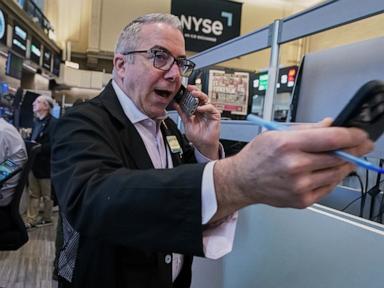
Look at what happens inside an institutional trading firm during a downturn. Algorithms are programmed with strict risk parameters. If a position grows too large relative to the rest of the portfolio, the software automatically triggers a sale to rebalance the risk. When several large funds hit those triggers simultaneously, a wave of selling hits the market.
To an outside observer like David, watching his screen at 3 AM, this looks like a vote of no confidence. He does not see the mechanical rebalancing of a quantitative fund in New York. He only sees the red line descending.
He asks himself: What do they know that I don't?
Fear is a far more efficient communicator than greed. Greed requires justification, analysis, and hope. Fear requires only a spark. The moment an investor begins to suspect that the person next to them is moving toward the exit, their priority shifts from maximizing profit to avoiding ruin. The exit door of the stock market is wide enough for a few people to walk through calmly, but it instantly jams when everyone tries to sprint at once.
The Friction of Certainty
The human cost of these financial swings is rarely captured in the percentages reported on evening news broadcasts. We talk about billions of dollars in market capitalization evaporating into thin air, but market capitalization is an abstraction. It is a collective hallucination based on the price of the very last share traded.
The real impact is measured in human anxiety, in delayed retirements, in canceled expansions, and in the quiet, corrosive loss of trust in the future.
Consider what happens next for people like David. The easy answer is to say he should just hold on for the long term. Historically, great technology companies recover from these cyclical drawdowns and go on to reach even higher valuations. The internet did not disappear when the dot-com bubble burst in 2000; it simply matured. The companies that survived became the titans of the modern economy.
But holding through a seventy percent drop requires iron nerves and an empty stomach. It requires you to look at your dwindling bank account every day and tell yourself that everyone else is wrong. Very few human beings are wired for that level of psychological isolation.
The current volatility is not a sign that the technological revolution has ended. It is a sign that the honeymoon is over. The market is transitioning from the poetry phase of technology—where everything is about potential, wonder, and infinite horizons—to the prose phase. The prose phase is boring. It involves balance sheets, customer acquisition costs, churn rates, and margin compression.
David ultimately did not sell his shares that night. He closed his phone, turned over, and stared at the dark ceiling until the birds began to chirp outside his window. He decided to wait for the opening bell, to see if the market would find its footing, to see if the collective mind of the investing public would regain its courage.
He is still waiting. The market, cold and indifferent to his sleepless night, continues its erratic dance, a chaotic composite of millions of human beings all trying to guess how much the future is actually worth, and whether they can afford to pay for it today.


