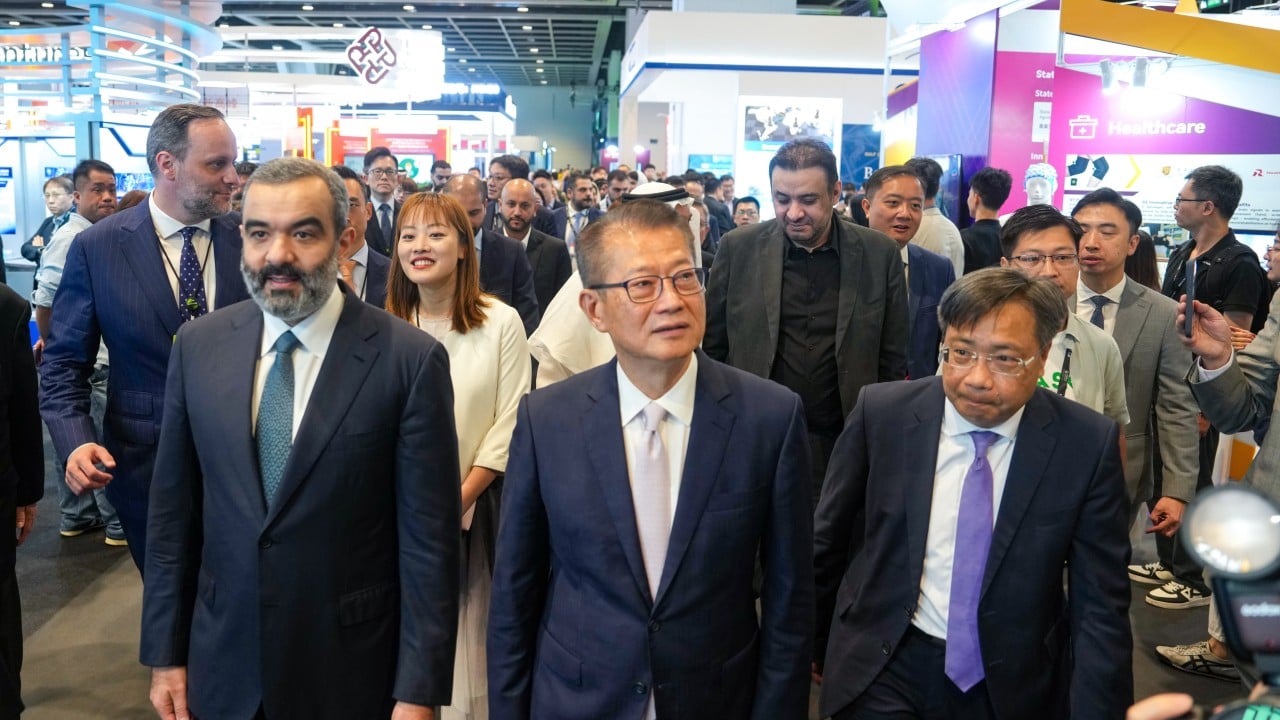
Capital flows rarely lie. Money moves toward security, yield, and long-term alignment, especially when global markets get volatile. That's exactly what's happening today between the Gulf region and East Asia.
Hong Kong Financial Secretary Paul Chan recently confirmed that trade and capital ties between Hong Kong and the Middle East have surged, with cross-border trade jumping 35 percent as sovereign wealth and private capital pivot toward Asian markets. Between high-profile tech summits like LEAP East bringing over 35,000 global investors to Hong Kong, and cross-listed ETFs connecting Riyadh directly to Central, the traditional financial axis is tilting east.
Western institutions spent years assuming Middle Eastern wealth would remain locked in American Treasuries or London real estate. That assumption is dead. Middle Eastern sovereign funds managing trillions of dollars are actively rebalancing their portfolios away from over-concentrated Western exposure, and Hong Kong is sitting right in the middle of that transition.
The Real Drivers Behind the 35 Percent Trade Surge
A 35 percent surge in trade isn't an accident. It's the result of targeted economic strategy from both sides.
For years, the Gulf Cooperation Council (GCC) economies relied almost entirely on oil exports and trade with traditional Western partners. But programs like Saudi Arabia's Vision 2030 changed everything. The Kingdom and its neighbors need advanced infrastructure, green technology, artificial intelligence, and renewable energy systems to diversify their domestic economies.
Where do those technologies exist at scale? China and East Asia.
Hong Kong serves as the primary gateway for this exchange. Goods re-exported through Hong Kong between mainland China and the GCC now total billions annually. Asian tech firms are supplying the hardware and software powering Middle Eastern smart cities, while Gulf energy and petrochemical giants are securing long-term supply chains across Asia.
The trade surge isn't just about moving physical goods across oceans. It's about deep financial integration:
- Dual-listed ETFs: Middle Eastern investors can now buy Asian index funds directly on the Saudi Stock Exchange (Tadawul), while Hong Kong investors trade Middle Eastern equities on the HKEX.
- Capital market access: Gulf firms are using Hong Kong's debt and equity markets to raise capital outside the Western banking system.
- Cross-border tech deployment: Asian renewable energy and AI companies are establishing regional bases in Riyadh and Abu Dhabi.
Why Gulf Investors Are Ditching Western Markets for Asian Assets
If you talk to fund managers in Dubai or Riyadh, a clear pattern emerges. They aren't abandoning Western markets entirely, but they're deeply uncomfortable with their existing concentration risks.
Geopolitical instability in Western Europe and the United States, combined with aggressive monetary policies and weaponized asset freezes, sent shockwaves through global sovereign wealth funds. Institutional investors realized that holding all their assets in Western jurisdictions carries political risk.
Hong Kong offers something distinct in this environment.
+-------------------------------------------------------------------+
|               THE DIVERSIFICATION ROTATION                       |
|                                                                   |
|   Traditional Allocation             New Asset Flow Strategy     |
|   - US Treasuries & Stocks    ===>   - Chinese & Asian Equities  |
|   - UK Commercial Property    ===>   - HK Tech & Green Energy    |
|   - European Government Bonds ===>   - Regional Infrastructure   |
+-------------------------------------------------------------------+
The city operates under a common law system, maintains a linked exchange rate with the US dollar, and guarantees the free flow of capital. It allows Middle Eastern investors to deploy capital into high-growth Asian markets without taking on foreign exchange convertibility risks or unvetted legal frameworks.
Asian stock valuations have remained far more reasonable compared to bloated Western tech equities. When you can buy high-yielding, profitable tech and industrial leaders in Asia at a fraction of Silicon Valley multiples, the math speaks for itself.
How Hong Kong Plays the Super Connector Between Riyadh and Beijing
Beijing wants capital and international validation. Riyadh and Abu Dhabi want high-tech transfer and portfolio growth. Hong Kong bridges the gap.
Paul Chan noted that European and American capital previously made up around 40 percent of market inflows during major Hong Kong stock rallies. Today, Southbound capital from mainland China accounts for nearly 30 percent, with the remaining balance rapidly filling up with funds from the Middle East, Southeast Asia, and regional institutions.
Hong Kong isn't just a passive booking center. The city actively structures complex cross-border deals that mainland Chinese cities can't easily replicate due to capital controls.
Strategic Capital Initiatives
- The HKIC Factor: The Hong Kong Investment Corporation has already invested in over 200 hard tech, life science, and new energy projects, creating a vetted pipeline of companies ready for Middle Eastern co-investment.
- Gold Clearing Hubs: Hong Kong launched trial operations for international gold clearing and settlement systems, giving Gulf investors an alternative physical asset settlement platform outside Western markets.
- Sukuk and Green Bonds: The SAR government is expanding Islamic finance mechanisms, making it easier for Gulf funds to deploy sharia-compliant capital into Asian infrastructure.
Honesty matters here: this transition hasn't been completely painless. Geopolitical tensions in the Middle East earlier this year temporarily delayed official trade delegations. But the underlying economic logic is too strong to stay paused for long. Official trips to Saudi Arabia have resumed, with delegation leaders focusing on concrete infrastructure and deep-tech partnerships.
Green Tech AI and Capital Markets Leading the Wave
What are these billions actually buying? Investors aren't throwing money into traditional real estate or passive government debt anymore. They want exposure to the infrastructure of the next fifty years.
AI and green technology are at the top of the shopping list.
Middle Eastern nations are building massive data centers to power their domestic AI ambitions. Hong Kong's digital infrastructure projects, such as the Sandy Ridge Data Facility Cluster designed to deliver 180,000 PFLOPS of computing power, match up with the computing needs of Middle Eastern tech ventures.
In return, Hong Kong's capital markets offer direct liquidity for companies operating in these sectors:
- Initial Public Offerings: Over 30 tech and green energy startups backed by regional funds are preparing for Hong Kong listings this year.
- Commercialization Funds: Government schemes totaling over $3.8 billion are accelerating research commercialization, giving foreign venture funds a safety net when backing early-stage firms.
- Private Equity Pools: Middle Eastern sovereign funds are launching joint private equity funds with Chinese institutions to buy directly into manufacturing supply chains.
How to Position Your Business or Portfolio for the Shift
This shift in capital flows isn't just high-level macroeconomics. It directly impacts asset allocations, corporate fundraising strategies, and expansion plans for businesses operating in Asia and the Middle East.
If you're managing money, running a company, or allocating resources, here is how you take advantage of this capital realignment immediately.
Action Steps for Executives and Investors
- Diversify Capital Sources: If you're a tech or industrial founder raising growth capital, stop relying solely on US venture capital. Set up meetings with Gulf-backed family offices and funds operating out of Hong Kong.
- Establish Dual Regional Holdings: Companies looking to scale should evaluate setting up a Hong Kong holding entity to manage Asian operations while utilizing Dubai or Riyadh for Middle Eastern expansion.
- Look at Cross-Listed Vehicles: Retail and institutional investors should research mutual listing ETFs on the HKEX and Tadawul to gain direct exposure to Gulf-Asia equity flows without complex foreign broker accounts.
- Track Infrastructure Spending: Keep a close eye on Hong Kong government tenders and private co-investments in the Northern Metropolis and Hetao tech hubs, where Middle Eastern sovereign wealth is actively seeking co-investment slots.
The financial bridge between the Middle East and East Asia is permanently built. The money is moving, the trade routes are expanding, and those who align their capital with this reality early stand to gain the most.