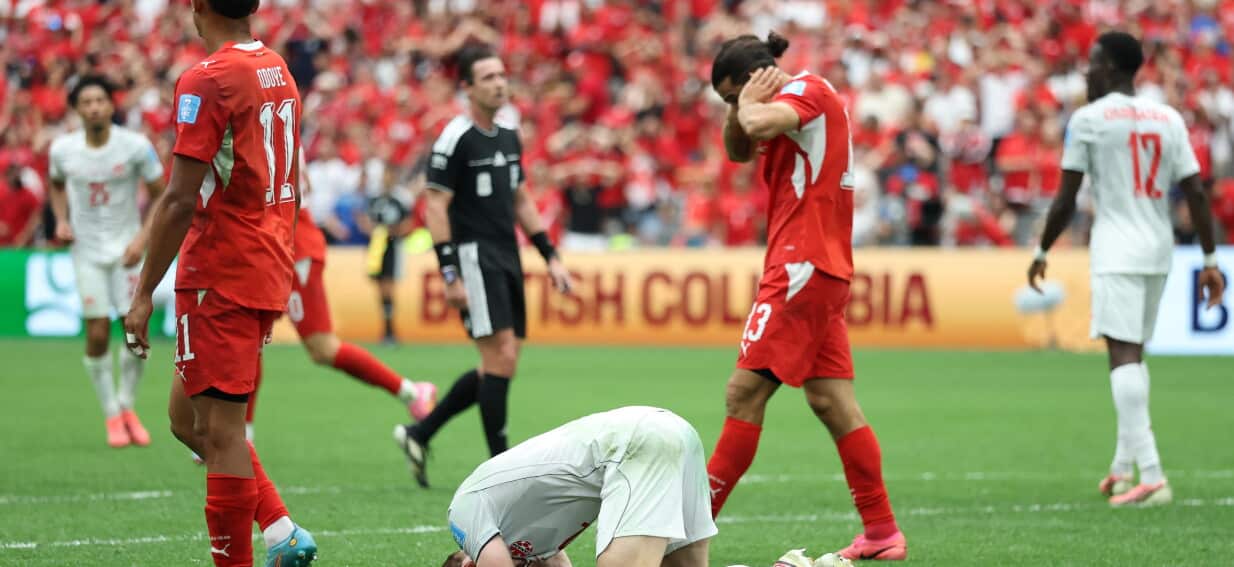
Andrés Guardado stood before the cameras and spun the same tired yarn that Mexican football has consumed for three decades. "México puede pasar a la historia," he claimed—Mexico can make history. It is a romantic, intoxicating sentiment designed to sell jerseys, fill stadiums in the United States, and whip a passionate fan base into a state of irrational euphoria.
It is also entirely detached from structural reality.
The obsession with "making history"—specifically clearing the psychological hurdle of the quinto partido (the fifth game, or the quarter-finals of a World Cup)—has become a toxic smoke screen. It allows executives, coaches, and players to treat deep-rooted systemic failures as a mere mental block. We are told that all Mexico needs is a collective surge of national pride, a tactical masterstroke from a rotating carousel of managers, or a bit of luck to finally break into the elite tier of global football.
This is a lie.
Mexico does not have a psychological problem. Mexico has an institutional design problem. Until the entire architecture of Liga MX and the Mexican Football Federation (FMF) is dismantled and rebuilt, chasing historical breakthroughs is a fool's errand.
The Myth of the Psychological Barrier
For decades, pundits have analyzed the Mexican national team through the lens of sports psychology. They treat the round-of-16 exit like a recurring nightmare that can be cured by a good therapist. When Guardado talks about making history, he is reinforcing the idea that the barrier is invisible, emotional, and ripe for shattering with enough grit.
Let's look at the cold, hard data.
To consistently reach the quarter-finals or semi-finals of a World Cup, a nation must produce players capable of competing at the highest tempo in modern sport. That speed of play is cultivated daily in Europe’s top five leagues—the English Premier League, Spain's La Liga, Italy's Serie A, Germany's Bundesliga, and France's Ligue 1.
Look at the rosters of nations that regularly feast in the knockout stages. The semi-finalists of recent World Cups are almost exclusively populated by players logging 3,000 minutes a season against elite European competition.
Now look at Mexico. The number of Mexican players starting consistently in Europe's top four leagues has actively shrunk over the last decade. When Guardado himself was in his prime alongside Javier "Chicharito" Hernández and Carlos Vela, Mexico had a core exposed to that elite crucible. Today, the national team relies heavily on Liga MX mainstays or players returning from Europe prematurely because domestic comfort is simply too lucrative.
You cannot play at a Liga MX pace for four years, step onto a pitch against France, Argentina, or England, and expect to match their physical and tactical intensity just because you feel patriotic. The deficit isn't in the mind; it's in the legs and the daily habits.
How Hyper-Commercialization Smothers Talent
The root cause of this talent stagnation is a domestic league that prioritizes short-term financial optimization over long-term sporting merit. Liga MX is one of the most profitable leagues in the Americas, but that financial success is precisely what paralyzes the development of world-class Mexican footballers.
Two structural pillars ensure this stagnation: the Pacto de Caballeros (the Gentlemen's Agreement) legacy of inflated domestic valuations, and the lack of genuine sporting jeopardy.
1. The Domestic Pricing Bubble
When an average Dutch or Belgian club wants to buy a young, promising 20-year-old winger from Argentina or Uruguay, they can often acquire them for $3 million to $5 million.
If that same club looks at a Mexican prospect of similar quality in Liga MX, the price tag is routinely inflated to $10 million or $12 million. Why? Because Mexican owners know they can sell that player internally to Monterrey, Tigres, or Club América for a massive premium.
Mexican players are trapped in a golden cage. They earn salaries in Liga MX that match or exceed what mid-table European clubs can offer, while their transfer fees are priced completely out of the international market. By remaining in a league with a slower tactical tempo and lower defensive intensity, their developmental ceiling is capped permanently.
2. The Death of Competition: No Relegation
In 2020, Liga MX suspended promotion and relegation. Ostensibly, this was done to stabilize the financial health of lower-division clubs. In practice, it removed the single greatest driver of competitive urgency in football: fear.
Without the threat of relegation, mid-and-lower-tier clubs have zero incentive to build elite academy systems or take risks on developing young domestic talent. They can field cheap, mediocre foreign imports, finish near the bottom of the table for consecutive tournaments, and suffer nothing more than a financial fine.
Compare this to the brutal, unforgiving ecosystems of South America or Western Europe, where dropping a division can bankrupt a club. That fear forces teams to scour their academies, optimize their scouting, and sell players to Europe early to survive. Mexico has insulated itself from this Darwinian reality, creating a soft, consequence-free domestic environment.
Dismantling the Fan Base Premise
If you look at internet search trends and fan forums, the questions being asked around the Mexican national team are fundamentally flawed.
People always ask: Who is the right manager to lead Mexico to the fifth game?
This question assumes that a manager is a magician who can cook a Michelin-star meal with ingredients bought from a gas station. It does not matter if you hire Pep Guardiola, Jürgen Klopp, or Carlo Ancelotti. A manager gets maybe two weeks of total training time with a squad before a major tournament. They cannot re-engineer a player's passing accuracy, spatial awareness, or physical conditioning in fourteen days. Those are institutional products.
Another common query is: Why can't Mexico replicate the success of its Under-17 and Under-23 youth teams on the senior stage?
Mexico has won two Under-17 World Cups (2005, 2011) and an Olympic Gold Medal (2012). The premise of the question assumes that youth success naturally translates to senior dominance. It doesn't.
At the U-17 level, physical maturity and organized collective pressing can win tournaments. But the transition from age-group football to the senior level requires a pathway where 18-to-21-year-olds play meaningful, high-pressure minutes against grown men. In Liga MX, because managers are under immense pressure to deliver immediate results in the short-tournament format (Apertura and Clausura), they refuse to trust youth. They choose instead to field veteran, often past-their-prime foreign players. The youth talent simply rots on the bench or gets loaned to the second division until their development stalls completely.
The Cost of the Counter-Intuitive Cure
If the FMF actually wanted to make history, they would have to execute a strategy that hurts their bank accounts in the short term. They won't do it, because the current model is too profitable to break.
To build a nation capable of reaching the elite tier, Mexico would need to:
- Mandate a strict cap on the number of foreign players registered per club, forcing teams to fill starting roles with domestic academy products.
- Reimpose immediate promotion and relegation to inject sporting jeopardy back into the league structure.
- Establish a hard cap on domestic transfer fees for players under 23 who have concrete offers from European leagues, actively subsidizing the export of talent.
The downside to this approach? Liga MX revenues would likely dip for a few years. The quality of the domestic television product might temporarily decline as raw, unpolished teenagers replace experienced foreign veterans. The flashy multi-million dollar signings that dominate the back pages would dry up.
But that is the precise trade-off required. You cannot have a hyper-commercialized, risk-averse domestic league and an elite, history-making national team. The two concepts are fundamentally incompatible.
The Illusion of Progress
Every four years, the narrative resets. The FMF schedules a slate of lucrative friendly matches in front of sold-out NFL stadiums in the United States—the infamous Moleros matches. These games are played against B-teams or unmotivated opponents, designed purely to generate ticket revenue and merchandise sales.
The fans show up. The sponsors write checks. The players give interviews about how this time, the mentality is different.
Then the tournament arrives, Mexico exits at their baseline reality, and the cycle repeats.
Stop looking at the tactics board. Stop listening to emotional manifestos about pride, history, and destiny from aging veterans who benefited from the very system that holds the country back. Mexican football isn't cursed, and it isn't unlucky. It is exactly what its architects designed it to be: a highly profitable machine that manufactures a world-class entertainment product, and a third-class football team.