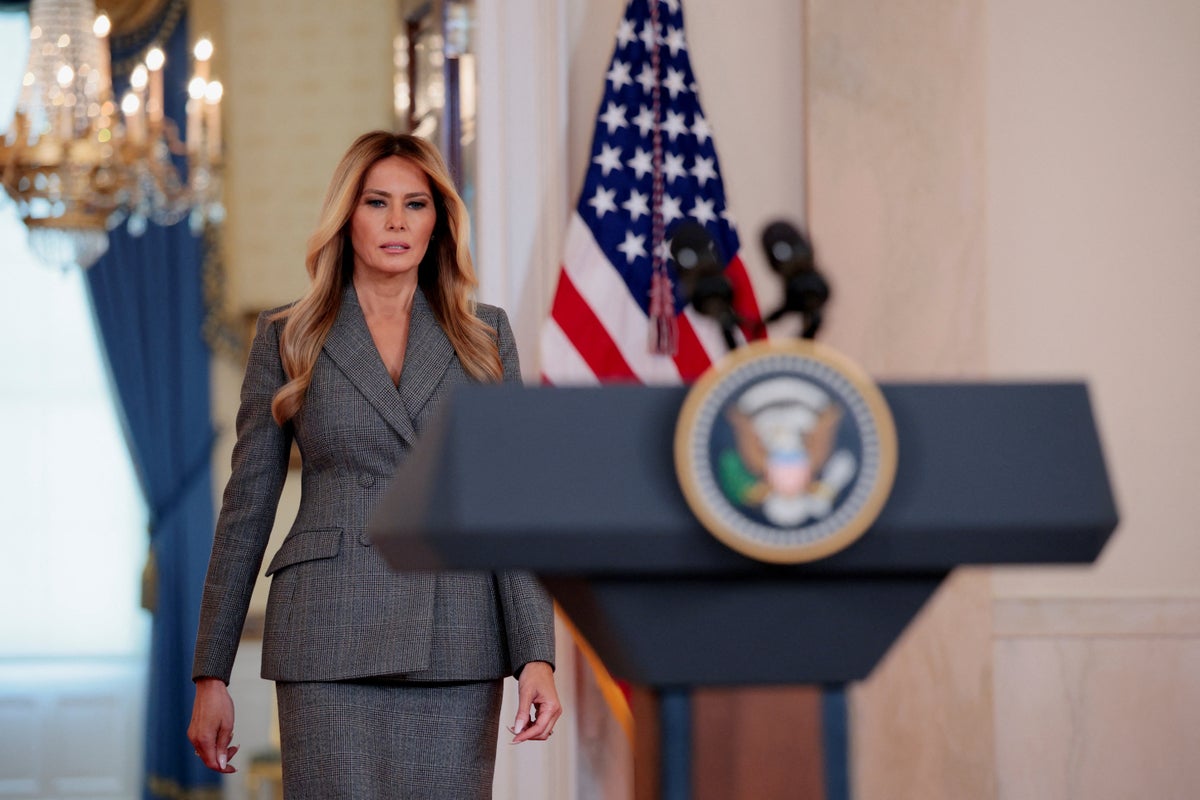
Melania Trump has broken her characteristic silence to issue a blunt denial of any personal or professional ties to Jeffrey Epstein. Using the visibility of the White House platform during her tenure and subsequent public statements, the former First Lady aims to sever a lingering association that has trailed her since her husband first entered the political arena. This move isn't just about optics. It is a calculated legal and reputational defense designed to insulate her brand from the radioactive fallout of the Epstein scandal. By addressing the rumors directly, she seeks to transform a persistent whisper campaign into a closed chapter of her public history.
The Geography of Social Proximity
The fundamental tension in this narrative lies in the geography of New York and Palm Beach high society during the late 1990s and early 2000s. To understand the gravity of the denial, one must look at the overlapping circles where the Trumps and Epstein operated. They lived in the same zip codes, attended the same charity galas, and shared the same elite air. In that specific social ecosystem, a handshake or a photograph was as common as a business card. Meanwhile, you can read related events here: The Pentagon Cannot Just Shut the Door on the Press.
For Melania Trump, the challenge is proving a negative in a world where everyone seemed to know everyone. The public record shows Donald Trump and Jeffrey Epstein were once friendly, with the former famously telling New York Magazine in 2002 that Epstein was a "terrific guy" who liked beautiful women "on the younger side." Melania entered this picture in 1998. Her defense rests on the premise that while her husband may have maintained a social acquaintance with Epstein, she remained an outsider to that specific dynamic.
Deconstructing the Photo Evidence
Critics often point to a handful of photographs from the early 2000s showing the Trumps and Epstein together. In the world of investigative journalism, a photo is a data point, not a conviction. These images typically feature the group at Mar-a-Lago or at parties in Manhattan. Melania’s team argues that these were incidental encounters typical of any high-profile socialite. To understand the full picture, we recommend the detailed analysis by USA Today.
The strategy here is to frame these moments as "background noise." In a bustling social club like Mar-a-Lago, a member hosting a guest (Epstein) might naturally cross paths with the owner and his partner. By categorizing these interactions as superficial, Melania Trump attempts to strip them of their conspiratorial weight. She is banking on the public's ability to distinguish between a shared room and a shared secret.
The Legal Necessity of the Podium
Why use a formal platform for a personal denial? The White House podium carries an inherent weight of authority that a social media post lacks. By injecting this denial into the official record, the First Lady’s office created a barrier against future litigation and media inquiries. It was a preemptive strike.
The legal implications of the Epstein investigation were vast. As federal prosecutors moved through his associates, anyone with even a tangential connection faced the risk of being drawn into the "victim discovery" phase. By stating unequivocally that she had no connection to his activities or his inner circle, Melania Trump established a firm boundary. It was an exercise in risk management.
Beyond the Denial
There is a psychological component to this defense that often gets overlooked. Melania Trump has long positioned herself as a woman of mystery and iron-clad privacy. Her "Be Best" initiative and her general distance from the day-to-day political mudslinging were parts of a larger effort to maintain a separate identity from her husband’s more volatile persona.
The Epstein rumors threatened that curated distance. If she were seen as an active participant in that specific social circle, her image as the poised, independent spouse would crumble. The denial is therefore as much about maintaining her personal brand as it is about avoiding legal scrutiny. She is protecting the "Melania" name from the sludge of the most toxic criminal case of the decade.
The Media’s Role in the Narrative
The press has a habit of conflating proximity with complicity. Throughout the 2016 and 2020 campaigns, journalists dug through flight logs and address books looking for "Melania Knauss." The results were largely empty. Unlike other figures who frequented "Little St. James," her name did not appear on the notorious flight manifests of the "Lolita Express."
This lack of physical evidence is the strongest pillar of her defense. While others are seen in grainy footage or listed in meticulous pilot logs, Melania remains absent from the hard data. Her denial is supported by the silence of the records. If there were a smoking gun, the hyper-accelerated news cycle of the last eight years would have likely found it.
The Strategy of Minimal Engagement
Melania’s communication style has always been "less is more." She does not engage in long-form interviews to explain her past. She issues a statement, draws a line in the sand, and moves on. This brevity is a powerful tool. It prevents the media from finding "hook" quotes to keep the story alive.
By refusing to provide details or engage with specific allegations, she forces the burden of proof back onto her detractors. It is a masterclass in controlled messaging. She isn't asking for the public's belief; she is stating her truth and daring anyone to find a document that says otherwise.
The Mar-a-Lago Filter
We must also consider the role of Mar-a-Lago as a buffer. The club served as a private stage where the Trumps could vet their surroundings. Donald Trump eventually banned Epstein from the club, reportedly over an incident involving a member's daughter. This ban is a crucial piece of the defense. It allows Melania to point to a moment where the bridge was burned, further distancing herself from the man and his crimes.
The timing of that ban—long before Epstein’s 2008 conviction—provides a useful timeline for Melania's defenders. It suggests that once the nature of Epstein's behavior became clear to the Trump household, the door was shut. This narrative arc transforms the Trumps from "associates" to "the people who kicked him out."
Reclaiming the Narrative
The former First Lady’s refusal to be "guilty by association" is a significant shift in how political figures handle legacy scandals. Typically, the move is to ignore and wait for the news cycle to reset. Melania chose the opposite path. She chose to hit the rumor head-on, using the most powerful podium in the world to do it.
This wasn't just a denial. It was a declaration of independence from a narrative that sought to swallow her whole. In the high-stakes game of reputation management, she played a high-card and walked away from the table. The silence that followed was exactly what she wanted.
Ensure all future inquiries regarding social ties in the late nineties are met with this singular, documented refutation.


