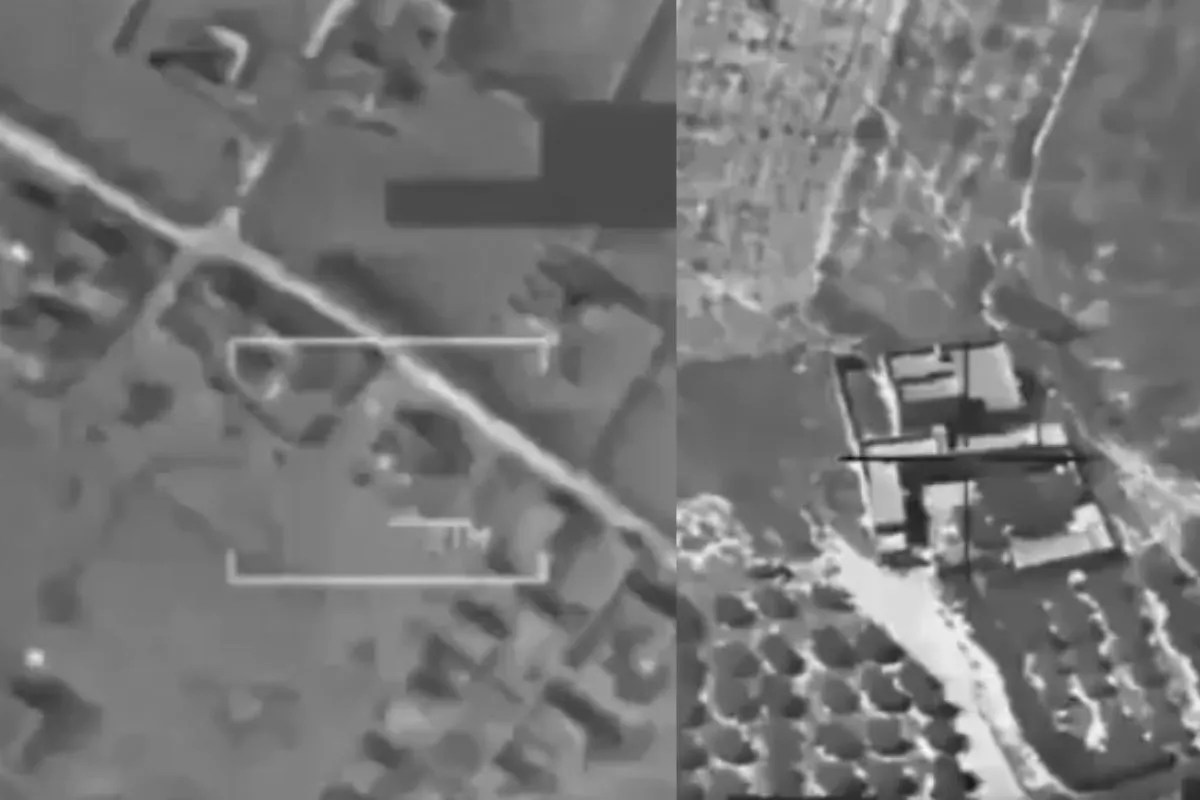
State-sanctioned kinetic operations following asymmetric urban attacks operate under a dual mandate: the restoration of domestic deterrence and the degradation of cross-border insurgent logistics. When assessing the execution of air and ground strikes along the Afghanistan-Pakistan border—specifically resulting in the reported neutralization of 29 militant assets following an intersectional breach in Karachi—the standard media narrative focuses on casualty counts. A rigorous strategic analysis must instead evaluate the operational efficacy, structural geography, and long-term geopolitical friction points governing these military actions.
The primary operational bottleneck in counter-insurgency warfare along the Durand Line is not a deficit of firepower, but an asymmetric information environment. Retaliatory strikes executed in immediate succession to urban terror events rely heavily on pre-planned target folders. This creates an analytical distinction between reactive tactical posturing and structural degradation of insurgent networks.
The Strategic Triad of Cross-Border Kinetic Interdiction
Military responses to cross-border terrorism can be deconstructed into three distinct operational vectors. Each vector contains specific resource allocations and failure modes that dictate the long-term viability of the campaign.
1. The Proximity Degradation Vector
Tactical operations targeting safe havens immediately adjacent to the border aim to sever the tactical continuity between forward staging areas and domestic execution cells. By deploying a mix of low-yield aerial munitions and localized ground sweeps, the military attempts to compress the geographic depth available to militant groups. The immediate objective is to force command structures deeper into sovereign territory where political constraints limit open intervention.
2. The Command Structure Disruption Variable
Decapitation strikes targeting mid-level operational commanders yield high immediate disruption but low long-term systemic utility. Insurgent networks operating in the rugged terrain of Khyber Pakhtunkhwa and Balochistan maintain highly decentralized command architectures. Striking 29 assets distributed across multiple nodes disrupts local tactical communication for approximately 14 to 21 days before redundant leadership pathways activate.
3. The Psychological Deterrence Coefficient
The visible deployment of airpower serves a domestic political imperative, signaling state capacity and resolve to an anxious populace. However, the deterrence coefficient possesses diminishing returns when applied to asymmetric non-state actors who view state escalation as a mechanism for radicalization and recruitment.
Geographic Asymmetry and the Failure of Border Fencing
The optimization of border security relies on the interaction between physical barriers and responsive interdiction forces. The construction of the Durand Line fence was designed to transform a fluid border into a binary security zone. Yet, tactical realities expose fundamental flaws in this architectural assumption.
The topography of the Afghan-Pakistani border region resists standardization. Mountainous corridors, subterranean cave networks, and historical smuggling routes render static fencing a secondary deterrent. Insurgent factions utilize a three-step infiltration methodology that capitalizes on these geographic realities:
- Phased Infiltration: Small units move across blind spots in surveillance coverage, avoiding mass concentrations that attract aerial reconnaissance.
- Localized Commandeering: Utilizing kinship networks across the border to secure safe houses within the immediate frontier zone.
- Urban Integration: Transitioning from rural guerrilla formations into decentralized urban cells, as observed in the precursor mechanisms to the Karachi attack.
This structural reality means that while kinetic operations can clear specific border quadrants temporarily, the structural density of the terrain ensures that re-infiltration occurs the moment state forces rotate back to primary bases.
The Cost-Function of Asymmetric Retaliation
Every kinetic strike introduces significant diplomatic, fiscal, and tactical costs that must be balanced against the degradation of the adversary. A strategic calculus reveals that a sustained aerial campaign along the frontier risks accelerating state vulnerabilities faster than it hollows out insurgent capacity.
[State Kinetic Input] -> (Geographic Friction & Intelligence Gaps) -> [Localized Attrition]
                                                                             |
                                                                             v
[Strategic Exhaustion] <- (Economic Strain & Diplomatic Rupture) <- [Insurgent Regeneration]
Diplomatic Friction and the Sovereignty Paradox
Executing airstrikes across or directly onto the friction points of an international border inevitably destabilizes bilateral relations with neighboring regimes. The current administration in Kabul views unilateral kinetic actions as violations of territorial integrity. This creates a political paradox: the actions required to secure the domestic perimeter systematically destroy the diplomatic mechanisms needed for long-term border management.
The Fiscal Asymmetry of Counter-Terrorism
The financial expenditure required to maintain flight hours, deploy precision-guided munitions, and sustain mobilized ground divisions outweighs the economic cost incurred by decentralized insurgent cells. Insurgent networks operate on low-overhead models funded by illicit narcotics trade, extortion, and external gray-market financing. The state faces an unsustainable cost-to-benefit ratio when multi-million dollar military assets are consistently deployed against low-cost, easily replaceable insurgent infrastructure.
Tactical Realignment and Systemic Recommendations
To move beyond reactive kinetic cycles, military strategy must pivot toward structural denial and intelligence-led disruption networks. Continuing down the path of periodic, post-incident bombardment guarantees a state of perpetual attrition without achieving decisive strategic closure.
The implementation of automated, sensor-fused surveillance corridors along high-risk transit sectors must take precedence over static physical barriers. Replacing permanent troop deployments with highly mobile, air-cavalry quick reaction forces reduces the target footprint of the military while maintaining a lethal intervention capability. Concurrently, the financial infrastructure feeding urban terror cells must be dismantled through forensic accounting units embedded within domestic intelligence agencies, cutting off the economic lifeblood that makes complex operations like the Karachi attack viable.
The success of future border containment depends on shifting the metrics of victory from body counts to network latency—measuring how long it takes an insurgent group to reconstitute its capability after an intervention. Until the state alters the structural environment that allows these groups to regenerate, kinetic actions will remain tactical successes embedded within a larger strategic stalemate.


:max_bytes(150000):strip_icc()/parts-of-a-swamp-cooler-2718628-a477e6f0787b4f8bb62ddf2def31d495.png)