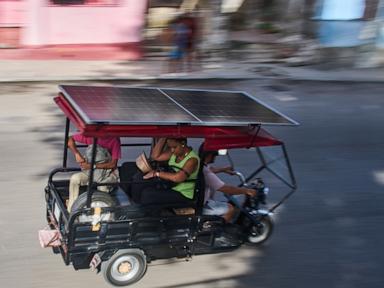
The collapse of localized centralized infrastructure forces economic actors to decentralize or face systemic failure. In Cuba, a compounding energy deficit driven by a near-total cessation of external fuel imports and structural grid failures has triggered an unprecedented infrastructural shift. As of early 2026, eight of the nation’s primary thermal generation plants are completely offline, and those remaining functional operate at approximately 34% of their rated capacity. The resulting daily power deficit frequently exceeds 1,500 megawatts, creating an environment where traditional combustion-engine transit and standard grid-dependent electric vehicles are economically unviable.
In response to this crisis, a highly optimized, decentralized micro-transit market has emerged in Havana. The transition from heavy internal combustion engine assets to light-duty, solar-retrofitted electric tricycles is not a consumer lifestyle shift, but an urgent adaptation to severe input constraints. This analysis deconstructs the economic models, operational metrics, and structural limitations governing this micro-transit architecture.
The Economic Drivers of Vehicle Displacement
The primary catalyst for the rapid displacement of classic combustion vehicles is the severe constriction of the fuel supply chain. Following threats of international tariffs on Cuba’s oil suppliers in January 2026, domestic oil imports dropped from an average of eight tankers per month to a single arrival by late March. Because Cuba generates only 40% of its baseline fuel requirements domestically, the transportation sector experienced immediate structural starvation.
The substitution effect can be modeled across three distinct capital sourcing channels:
- Asset Liquidation: Fleet operators and private owners are liquidating legacy internal combustion vehicles to capture residual capital and reinvesting the proceeds into imported Chinese three-wheeled electric vehicles (primarily manufactured by brands such as Zonsen and Jinpeng).
- Remittance Sourcing: Diaspora networks purchase vehicles in regional free-trade zones, such as Panama, and exploit direct import channels to deliver hardware to relatives on the island.
- Micro-Enterprise Reinvestment: Small, private business owners deploy retained earnings directly into these transport assets to insulate their supply chains from public transit failures.
The upfront capital cost of a standard electric tricycle ranges between $2,000 and $4,000. In an economy where state-sector monthly wages average approximately $10 and private-sector wages hover around $40, this capital requirement represents a massive barrier. However, the asset operates as a high-yield production tool. By serving fixed passenger routes previously managed by municipal bus fleets or transporting agricultural yield to private markets, a vehicle owner can generate consistent daily cash flow.
For example, a standard passenger fare on a fixed urban route is roughly 500 Cuban pesos (less than $1). While this represents a high marginal expense for state-employed commuters, the structural absence of public alternatives creates inelastic demand. The vehicle operator can achieve rapid capital recovery, provided the asset remains operational.
The Operational Cost Function of Mobile Solar Retros
The fatal bottleneck for standard electric vehicles in Cuba is the unreliability of the domestic electrical grid. In 2025, daily grid interruptions averaged 1,531 megawatts, and these outages routinely spiked above 2,000 megawatts during peak periods. An electric vehicle that relies entirely on wall-outlet charging is tethered to an unpredictable energy source; a blackout during designated charging windows translates directly to zero operating revenue the following day.
To decouple the asset from grid dependency, private workshops on the outskirts of Havana have developed mobile photovoltaic (PV) retrofits. This modification involves mounting a commercial solar panel onto a custom-fabricated iron frame above the vehicle, which simultaneously serves as a structural roof and driver sunshield.
[Solar Radiation: ~0.46 kWh/sq ft/day] -> [550W–650W Monocrystalline PV Panel] -> [Charge Controller] -> [Gel / Lithium Battery Bank] -> [DC Traction Motor]
The underlying thermodynamics and electrical engineering of these retrofits determine their financial viability:
Energy Input Dynamics
Cuba's geographic location yields strong solar resource characteristics, with the Ministry of Energy and Mines estimating average solar radiation at approximately 0.46 kilowatt-hours per square foot per day. Private fabricators utilize high-capacity monocrystalline or polycrystalline panels rated between 550 and 650 watts.
Generation Capacity vs. Consumption
Under optimal atmospheric conditions over a five-hour peak sunlight window, a 600-watt panel generates between 2.6 and 3.2 kilowatt-hours of usable electrical energy. A standard loaded electric tricycle operating in an urban environment consumes approximately 0.08 to 0.12 kilowatt-hours per kilometer. The daily solar yield therefore delivers between 21 and 40 kilometers of incremental operating range.
System Configuration
The solar array feeds into a localized charge controller that regulates voltage to match the vehicle’s primary battery chemistry, which generally consists of either legacy lead-gel cells or imported lithium-ion packs.
The integration architecture does not attempt to achieve complete grid independence. Instead, it alters the operational cost function by reducing battery strain during peak operating hours. While the vehicle is in motion, the solar array assists the battery bank by supplying current directly to the DC motor controller during acceleration phases. When the vehicle is stationary at passenger collection points, the system switches to pure battery replenishment.
This continuous supplemental charging structure yields two critical operational advantages. First, it mitigates the depth of discharge (DoD) experienced by the battery bank during a typical workday. Keeping the battery at a higher state of charge slows down chemical degradation, extending the operational life of the battery bank—a critical factor given the extreme difficulty of sourcing specialized replacement components under trade restrictions. Second, it reduces the operator’s exposure to afternoon grid blackouts, allowing for consistent daily schedules even when local charging infrastructure is completely offline.
The capital expenditure for the solar retrofit package—comprising the panel, structural steel framing, wiring, and charge controller—is approximately $500. For an operator generating multiple fares per hour, the payback period on this secondary investment is remarkably compressed, as it prevents the total revenue loss associated with a depleted, unchargeable battery bank.
Structural Bottlenecks and Systemic Risk Factors
While mobile solar integration provides an elegant workaround to infrastructure failure, the model faces clear scalability limits and severe operational risks. The decentralized micro-transit market is built on top of a highly fragile supply chain that remains vulnerable to external shocks.
The first critical vulnerability is component dependency. Although some assembly occurs locally through state-sanctioned joint ventures like the Vedca brand, the core technological components—specifically PV cells, semi-conductors for charge controllers, and advanced lithium cells—are entirely imported. China's solar exports to Cuba rose from $3 million in 2023 to $117 million in 2025, reflecting a massive macro-level shift toward renewable equipment. Yet, at the micro-level of a private workshop, there are no domestic manufacturing capabilities to replace a fractured panel or a blown inverter. If regional trade routes constrict or import costs rise, the maintenance cycle of these vehicles will stall.
The second limitation is mechanical and aerodynamic inefficiency. Affixing a large, heavy photovoltaic panel to a lightweight three-wheeled chassis alters the vehicle’s center of gravity and drastically increases its aerodynamic drag coefficient. At low urban operating speeds, aerodynamic drag is a secondary concern, but the structural load of the iron framing adds deadweight that counteracts a portion of the solar energy gains. Furthermore, the high structural profile increases the vehicle’s vulnerability to crosswinds, introducing safety risks when operating at maximum passenger capacity.
Finally, the localized nature of the modifications creates high variance in system quality. Retrofits are executed by independent technicians without standardized quality assurance protocols. Variations in wiring insulation, charge controller calibration, and structural welding create latent failure points, ranging from electrical shorts that ruin expensive battery packs to structural failures under continuous mechanical vibration.
Strategic Forecast for Distributed Energy Assets
The adoption of mobile solar retrofits in Cuba offers a clear blueprint for how populations adapt to severe grid degradation. Rather than waiting for long-term, grid-scale solutions—such as the centralized solar parks currently being constructed via bilateral international agreements—the private sector has successfully democratized the energy capture process at the individual asset level.
The data indicates that distributed, vehicle-mounted solar infrastructure will remain a permanent fixture of the urban landscape. As battery costs continue to decline globally and panel efficiencies improve, the power-to-weight ratio of these micro-transit options will naturally optimize. Fleet operators who transition early to this localized generation model will capture market share from traditional transit providers, establishing a resilient, self-sustaining transport network that operates entirely outside the constraints of centralized state infrastructure.
The optimal strategic play for regional importers and logistics managers is to move away from selling standalone electric vehicles and instead offer integrated, pre-engineered solar-electric transport kits designed specifically for high-stress, low-grid environments.