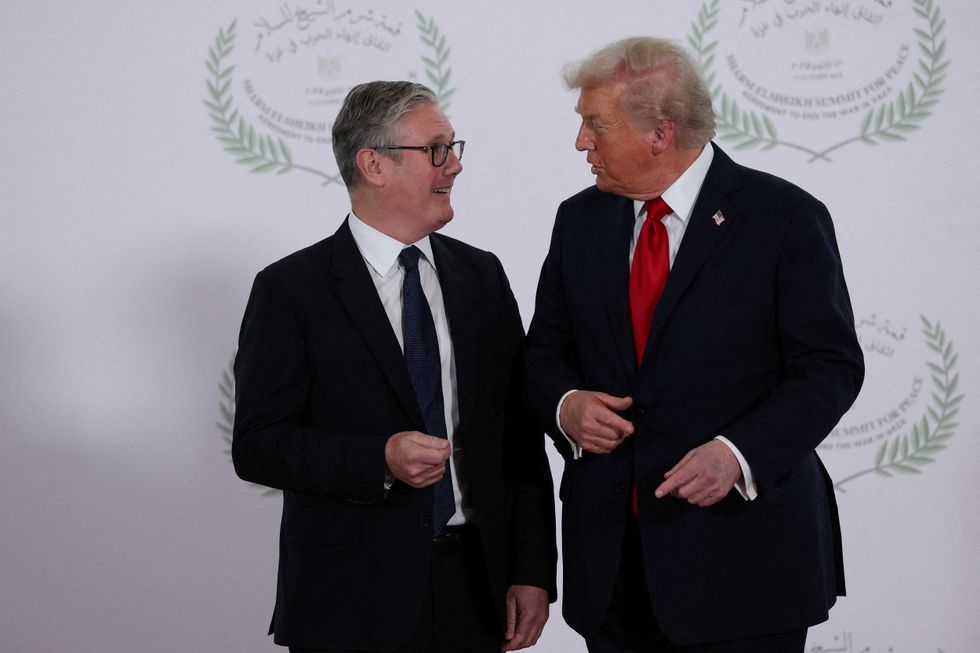
Domestic political narratives frequently misinterpret the performative elements of international summits as indicators of systemic diplomatic realignment. When international heads of state respond with overt amusement or calculated skepticism to declarations of singular authority, casual observers categorize the event as a failure of statecraft. This evaluation ignores the underlying strategic cost functions that govern multilateral negotiations. The interaction between centralized executive authority and distributed international coalitions operates not on shared ideological alignment, but on a rigid matrix of economic leverage, security dependencies, and domestic audience costs.
To analyze why world leaders display public irreverence during top-level proceedings requires shifting focus away from personal optics and toward the structural mechanics of international relations. The theatricality of modern summits serves a dual purpose: it allows foreign executives to satisfy domestic anti-imperialistic sentiment while simultaneously preserving the transactional concessions required to maintain critical security and trade architectures.
The Tripartite Matrix of Summit Signaling
Multilateral diplomacy functions within a three-part framework where every public action triggers a series of reactions across distinct political domains. Executives do not speak exclusively to the room; they optimize their rhetoric for a composite audience.
                  [ The Executive ]
                  /       |       \
                 /        |        \
                v         v         v
    [ Domestic Base ] [ Adversaries ] [ Allied Coalitions ]
1. Domestic Audience Maximization
For a populist executive, the primary objective of international interaction is the reinforcement of a domestic mandate. Rhetoric that emphasizes absolute dominance—such as explicit assertions of hierarchy—is calibrated to validate the electorate's desire for nationalism. The domestic utility of this signaling is entirely decoupled from its diplomatic efficacy. Even when a declaration produces immediate friction or open amusement among foreign peers, the domestic distribution channels translate the event as a uncompromising assertion of sovereignty against globalist institutions.
2. Strategic Ambiguity and Counter-Signaling
Foreign leaders operate under an identical constraint. When confronting an unconventional superpower executive, allied heads of state utilize non-verbal counter-signaling—such as shared amusement or performative disbelief—as a low-cost mechanism to signal autonomy to their home constituencies. This behavior provides a relief valve. It allows leaders from secondary powers to demonstrate that they are not subordinate, avoiding the political fallout of appearing overly compliant, without enacting substantive policy changes that would jeopardize their underlying security or trade agreements with the superpower.
3. The Institutional Substructure
Beneath the superficial layer of executive posturing lies a permanent bureaucratic apparatus that handles the actual distribution of goods, intelligence, and military coordination. This institutional layer is remarkably insulated from rhetorical volatility. The signing of a trade protocol, the execution of joint military exercises, or the enforcement of a maritime ceasefire agreement moves forward based on multi-year structural planning rather than the immediate emotional climate of a G7 or United Nations assembly.
The Cost Function of Transnational Realignment
To understand why world leaders frequently project an aura of detached amusement during bilateral or multilateral declarations, one must quantify the material costs of shifting away from a superpower's orbit. A foreign state's alignment strategy is governed by an optimization problem where the state minimizes security risks and trade barriers while maximizing autonomy.
Let the total cost of geopolitical realignment ($C_r$) for a secondary power be defined by the accumulation of three core variables:
$$C_r = S_c + T_f + D_p$$
Where:
- $S_c$ represents security replacement costs (the expenditure required to replace superpower military guarantees, intelligence sharing, and nuclear umbrellas).
- $T_f$ represents trade friction (the economic loss incurred by entering tariff disputes, supply chain fragmentation, or the loss of access to primary consumer markets).
- $D_p$ represents domestic political penalties (the risk of electoral defeat if the population perceives the executive as either too submissive to a foreign power or dangerously isolationist).
Because $S_c$ and $T_f$ are extraordinarily high for middle powers in Europe and the Asia-Pacific region, the rational strategy is to absorb rhetorical variance from a superpower executive while maintaining the status quo. Laughter or public dismissal of an executive's statement is a highly efficient tactical move: it satisfies the domestic political variable ($D_p$) without triggering the catastrophic economic and military costs associated with a true structural break ($S_c + T_f$).
Information Asymmetry and the Failure of Conventional Deterrence
The divergence in behavior at international summits highlights a fundamental breakdown in conventional deterrence theory. Classic deterrence relies on predictable, rational actors sending transparent signals regarding their red lines. When a state executive introduces high levels of volatility and hyperbole into the diplomatic ecosystem, the traditional transmission vectors of statecraft become distorted.
The first structural limitation of this volatility is the degradation of credibility. When every policy position is framed as a historic triumph or an absolute ultimatum, foreign intelligence services are forced to discount the literal text of the rhetoric. They shift their analytical models to focus exclusively on troop movements, treasury actions, and legislative appropriations. Consequently, public statements that would historically trigger an immediate diplomatic crisis are downgraded to mere performance art. Foreign leaders do not react with alarm because they no longer view the rhetoric as an index of imminent structural action.
This creates a dangerous communication bottleneck. If a state executive genuinely intends to signal a critical strategic shift, the signal may be ignored by adversaries who categorize it as another iteration of domestic theater. The amusement witnessed in international forums is not simply a reaction to an individual; it is an intellectual coping mechanism used by foreign state apparatuses to manage chronic informational noise.
The Asymmetric Leverage of Transactional Statecraft
The shift from institutional diplomacy to a purely transactional model alters the negotiation equilibrium between states. In a traditional institutional framework, minor states leverage multilateral rules to constrain the actions of a superpower. In a transactional framework, the superpower holds an overwhelming structural advantage due to market size and military reach.
- The Bilateral Isolation Tactic: By bypassing multilateral bodies like the European Union or NATO during key negotiations, a superpower executive can isolate individual states, stripping away the collective bargaining power of smaller coalitions.
- The Weaponization of Interdependence: Middle powers that rely on open supply chains are structurally vulnerable to targeted tariff threats. A superpower can impose localized economic pain to extract immediate political concessions, rendering long-term diplomatic strategy obsolete.
- The Credibility Deficit: Transactional agreements are inherently bound to the current executive's tenure. Foreign states recognize that any deal struck outside of formal treaty structures can be instantly dismantled by a succeeding administration, disincentivizing deep, long-term structural compromises.
This systemic reality explains the structural dichotomy of the modern summit: foreign leaders may indulge in collective amusement during a plenary session, but they return to the negotiating table to secure carve-outs, exemptions, and bilateral reassurances. The public theater is decoupled from the transactional reality.
Strategic Imperatives for Middle Powers
To navigate an era defined by volatile executive communication and shifting alliance reliability, middle powers must recalibrate their diplomatic strategies away from standard institutional reliance. Relying on historic precedent or rhetorical consistency is no longer a viable framework for state survival.
First, middle powers must rapidly accelerate the diversification of their security architectures. This involves building overlapping regional security pacts that do not explicitly exclude the superpower but are capable of autonomous function if the superpower suddenly withdraws its presence. These networks must focus on intelligence inter-operability, logistical standardization, and joint defense production capacities that can sustain localized deterrence without direct logistical support from a centralized global hegemon.
Second, states must insulate their critical infrastructure from targeted economic coercion. This requires a systemic decoupling of essential supply chains away from single-point-of-failure dependencies. Governments must incentivize domestic capacity in critical sectors—such as advanced semiconductor fabrication, energy distribution, and telecommunications—while establishing redundant trade corridors with politically stable secondary markets. This diversification directly lowers the trade friction variable ($T_f$) in the realignment cost equation, granting the middle power significantly greater leverage during high-stakes bilateral negotiations.
Finally, diplomatic corps must evolve past the traditional model of head-of-state engagement. Statecraft must be decentralized. Dictating policy through executive-to-executive interactions introduces unacceptable levels of volatility. Middle powers must focus their diplomatic capital on cultivating deep, institutional relationships with legislative bodies, state-level governments, and permanent bureaucratic agencies within the superpower nation. By anchoring alliances within the durable, lower-level strata of a foreign state's political system, middle powers can ensure that vital strategic partnerships survive the erratic shifts of executive turnover and the unpredictable theater of international summits.


