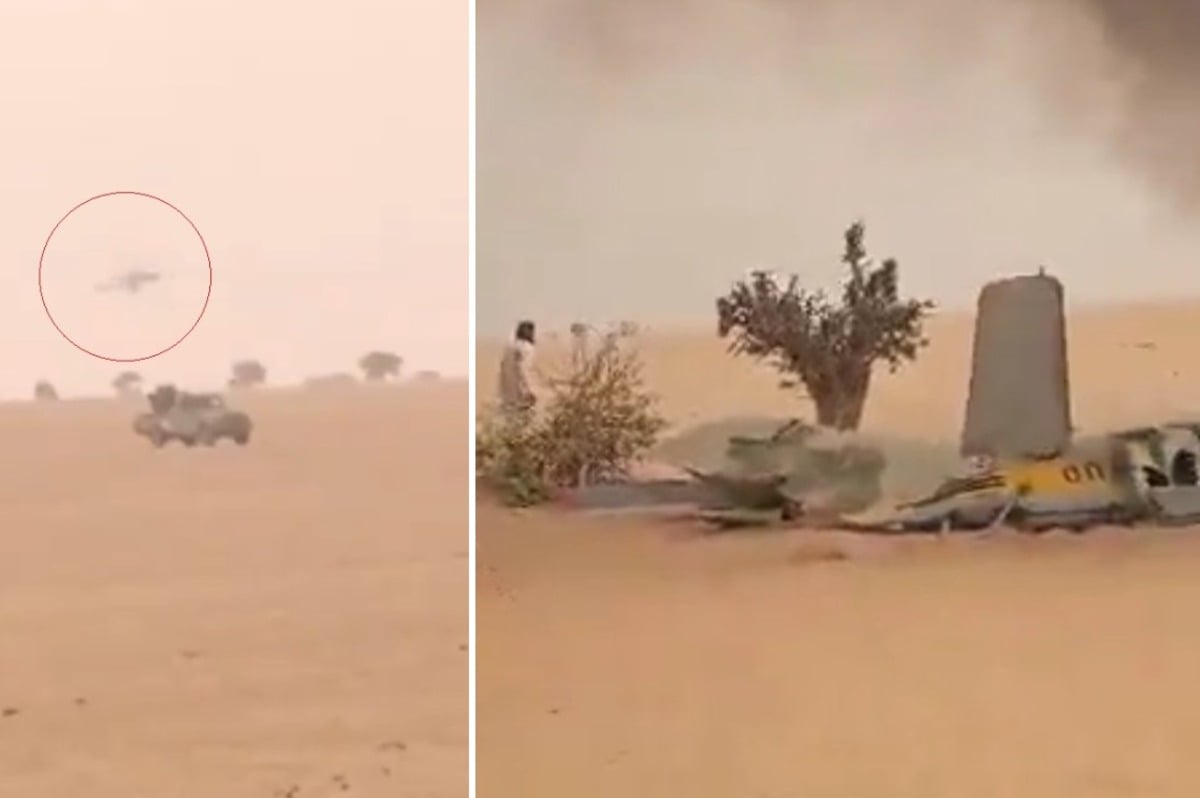
The downing of a Russian-manufactured rotary-wing asset by Tuareg insurgent forces in northern Mali establishes a definitive inflection point in the operational equilibrium of the Sahelian theater. This event exposes systemic vulnerabilities in the combined counter-insurgency framework executed by the Malian Armed Forces (FAMa) and their Russian state-backed private military contractors. The incident demonstrates that localized anti-access/area-denial (A2/AD) capabilities are no longer the exclusive domain of industrialized militaries, but have shifted down to non-state actors operating in austere environments. Understanding this shift requires decoupling the event from mere tactical fortune and analyzing the underlying structural variables across three specific vectors: logistical overextension, technical vulnerabilities of low-altitude aviation, and shifting geopolitical patronage networks.
The Triad of Operational Vulnerability
The engagement near the Algerian border highlights a recurring structural failure in modern counter-insurgency operations: the assumption of uncontested air supremacy. The coalition forces operating in northern Mali rely heavily on mobile, air-supported columns to project power across vast, under-governed geographic expanses. This operational model introduces distinct failure modes that insurgent forces have systematically exploited.
1. Geographic Isolation and the Friction of Distance
The northern Malian theater features extreme logistical dispersion. Supply lines stretching from the primary hub in Bamako to the northern fringes exceed 1,500 kilometers over unpaved, hostile terrain.
- Extended Turnaround Times: Ground columns require days to reinforce isolated outposts, forcing dependence on aerial resupply and close air support (CAS).
- Predictable Transit Corridors: Due to extreme heat and fuel consumption metrics, rotary-wing aircraft must adhere to specific, predictable flight paths dictated by known fueling stations and safe landing zones.
- The Infiltration Premium: Insurgent networks leverage high-mobility light tactical vehicles to position themselves along these predictable aerial vectors, turning geographic isolation into an ambush zone.
2. Information Asymmetry and Local Intelligence Domination
Non-state actors operating in their native geography possess a permanent intelligence advantage over foreign expeditionary forces. The Tuareg coalitions utilize decentralized human intelligence (HUMINT) networks that map government troop movements long before tactical engagement occurs.
- Early Warning Arrays: Standard cellular networks and satellite communication allow spotters near military airfields to transmit real-time takeoff data, giving insurgent cells downrange ample window to prepare low-altitude ambushes.
- Operational Security Fractures: The integration of foreign contractors alongside local forces creates friction points in communication security, facilitating data leaks regarding flight schedules, payloads, and mission objectives.
3. Material Decay and Maintenance Bottlenecks
The sustained deployment of airframes like the Mi-24 Hind or Mi-8/17 Hip series in desert conditions accelerates mechanical degradation.
- Particulate Ingestion: High concentrations of atmospheric sand erode compressor blades, reducing engine efficiency and thermal margins.
- Thermal Constraints: High ambient temperatures drastically reduce air density, lowering the maximum takeoff weight and decreasing the aircraft's power-available margin during evasive maneuvers.
- Supply Chain Constrictions: Global sanctions targeting the Russian defense industrial base impede the flow of critical components, leading to deferred maintenance cycles and increased susceptibility to catastrophic failure under fire.
Technical Mechanics of Low-Altitude Air Interdiction
The successful engagement of a military helicopter in a desert environment relies on exploiting the physical limitations of low-altitude flight profiles. Rotary-wing assets executing counter-insurgency missions generally operate within the low-altitude envelope to identify targets and maximize weapon accuracy. This exposes them to two primary categories of kinetic threats.
[Low-Altitude Engagement Envelope]
   |
   +-- Man-Portable Air Defense Systems (MANPADS) -> Infrared (IR) Seekers
   |
   +-- Concentrated Small Arms Fire / RPGs ---------> Unguided Kinetic Volleys
Man-Portable Air Defense Systems (MANPADS)
The proliferation of shoulder-fired, infrared-homing surface-to-air missiles across North Africa poses the most acute threat to air operations. The thermal signature emitted by the twin turboshaft engines of a Russian helicopter provides an ideal lock-on source for early-generation systems like the SA-7 or SA-14, as well as more modern iterations smuggled from regional conflict zones.
The physical terrain provides minimal clutter to break the line-of-sight required for an infrared seeker to track a target. When an aircraft operates within a low-altitude profile, the reaction window for deploying countermeasure flares is compressed to mere seconds, frequently rendering automated flare dispensers ineffective if the launch occurs from close range.
Concentrated Small Arms and Unguided Volleys
The absence of sophisticated anti-aircraft weaponry does not guarantee air safety. Insurgent tactics frequently utilize massed, unguided kinetic energy weapons. By structuring a crossfire zone using heavy machine guns (such as 12.7mm DShK variants) and rocket-propelled grenades (RPGs), ground forces create a dense wall of shrapnel and high-velocity projectiles along the aircraft’s expected flight path.
A single well-placed round can compromise critical hydraulic lines, damage the tail rotor drive shaft, or incapacitate the flight crew. Because these systems lack electronic signatures, the aircraft's internal radar warning receivers (RWR) or missile approach warning systems (MAWS) provide no alert to the pilots before impact.
Geopolitical Realignment and Force Multipliers
The operational shifts observed in northern Mali cannot be evaluated in a vacuum; they reflect a broader restructuring of international proxy competition. The withdrawal of European counter-terrorism forces created a security vacuum rapidly filled by private military structures operating under the Kremlin's strategic umbrella. This transition altered the tactical calculus on the ground.
Western doctrines historically emphasized extensive intelligence, surveillance, and reconnaissance (ISR) architecture alongside stringent rules of engagement designed to minimize collateral damage. The current doctrine prioritizes high-intensity kinetic sweeps and aggressive territorial reoccupation. While this approach yields short-term territorial disruption, it systematically alienates local populations, accelerating insurgent recruitment and enhancing willingness to share intelligence with rebel factions.
The external supply lines feeding the Tuareg insurgency have also evolved. Fluid border regions adjacent to Algeria and Libya serve as porous conduits for weapons, fuel, and dual-use technologies like commercial reconnaissance drones. This material flow ensures that losses sustained by insurgent forces are rapidly replaced, whereas the state's attrition of high-value military airframes represents a permanent reduction in strategic capacity.
Strategic Realignment Mandate
The current trajectory of the conflict indicates that the Malian state and its external partners are facing a negative return on investment regarding air power deployment. To arrest this degradation, a fundamental shift in operational design is required.
- Transition from Air-Centric to Segmented Ground Security: Continued reliance on vulnerable rotary-wing transport for power projection must be curtailed. Operations should shift toward fortified, self-sustaining ground hubs that utilize long-range artillery and unmanned aerial vehicles (UAVs) for defense rather than manned aircraft.
- Implementation of Decentralized Drone Reconnaissance: High-risk scouting missions currently assigned to manned helicopters must be fully migrated to low-cost, expendable reconnaissance drones. This preserves capital airframes for critical medical evacuations and high-probability tactical interventions.
- Prioritization of Localized Diplomatic Triage: The military apparatus must recognize that kinetic actions cannot solve deep-seated ethno-political grievances. Resources must be diverted from aggressive northern offensives into securing the economically vital central and southern belts, combined with back-channel negotiations aimed at fracturing the rebel coalitions.
Failure to execute these adjustments will result in a compounding attrition cycle. As airframes are lost and replacement parts become scarcer, the remaining fleet will face higher operational tempos, accelerating mechanical failure rates and leaving ground forces increasingly isolated in an unforgiving geography. The downing of a single helicopter is not merely a tactical loss; it is an early indicator of a systemic failure in the state's capacity to maintain territorial cohesion through force projection.