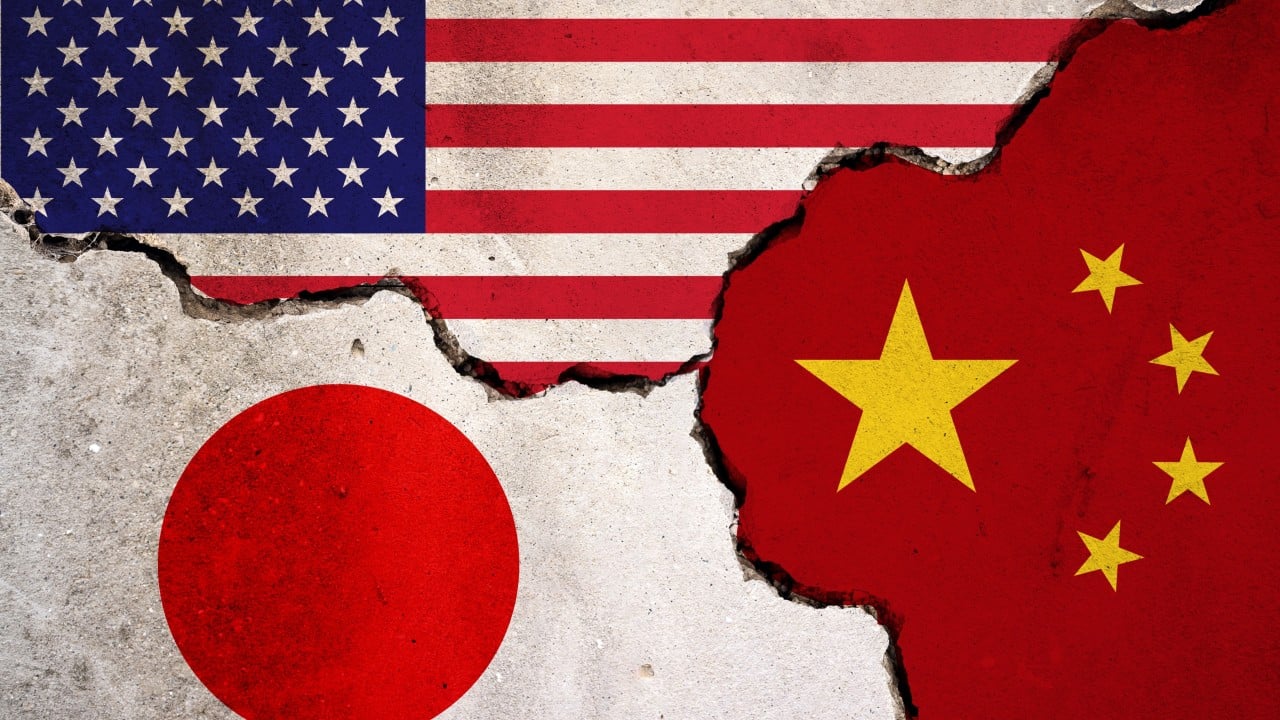
The current diplomatic crisis between Beijing and Tokyo exposes a fundamental miscalculation in contemporary security architectures: the assumption that bilateral defense treaties provide constant, immutable deterrence. Following Japanese Prime Minister Sanae Takaichi’s late 2025 declaration that a maritime blockade of Taiwan would constitute a survival-threatening situation for Japan, Beijing deployed a calculated multi-domain pressure campaign. This campaign operates precisely within the strategic gray zone created by a transactional US administration under Donald Trump. By imposing acute economic costs and escalating localized military friction, China is executing a calculated test of Washington’s willingness to underwrite allied security when the direct benefits to the American domestic economy are non-obvious.
To analyze the efficacy of this pressure campaign and the resilience of the US-Japan alliance, observers must discard rhetorical assurances and focus entirely on quantifiable operational mechanisms. This analysis deconstructs the crisis into three structural core frameworks: the components of China’s asymmetric coercion vector, the operational logic of the current American transactional alliance model, and Japan's structural response function as it accelerates toward strategic independence.
The Coercion Vector: Decoupling and Gray-Zone Friction
Beijing’s strategy does not seek to trigger an immediate kinetic conflict. Instead, it applies targeted pressure across vulnerable structural vectors to induce political fragmentation inside Tokyo and test the boundaries of the US security umbrella.
The Economic Asymmetry Function
Bilateral trade between China and Japan reached $322 billion in 2025. This deep integration serves as the primary mechanism for economic coercion. Beijing’s retaliatory protocol follows a clear input-output model designed to maximize pain in specific domestic sectors while minimizing self-inflicted disruption.
- Critical Input Restrictions: China’s embargo on the export of rare earth elements and dual-use items to Japan exploits asymmetric supply-chain dependencies. Japanese electronics and defense manufacturing firms rely heavily on these materials, creating an immediate inventory bottleneck.
- Demand-Side Suppression: The 45 percent drop in Chinese tourist arrivals to Japan during the early months of 2026 demonstrates how state-directed consumer boycotts function as policy instruments. By restricting tour groups and cancelling cultural events, Beijing targets Japan’s domestic service and hospitality revenues.
- Targeted Non-Tariff Barriers: Banning seafood imports and increasing regulatory scrutiny on Japanese nationals operating within Chinese borders increases the operational cost for Japanese firms trying to maintain a physical presence in the Chinese market.
Kinetic Escalation in the Non-Attribution Zone
Parallel to economic levers, the People's Liberation Army (PLA) systematically raises the baseline of military risk below the threshold of triggering Article 5 of the US-Japan Security Treaty.
The December 2025 incident, where Chinese fighter jets locked their missile targeting radars onto Japanese Self-Defense Forces (SDF) aircraft near Okinawa, illustrates the operational mechanics of gray-zone intimidation. A radar lock is a technical precursor to weapon release; by executing this maneuver during nominal training exercises, Beijing introduces an existential variable into routine airspace monitoring. The strategic intent is to force Japanese commanders into a defensive posture, draining operational readiness and testing whether US forces in the region respond with matching escalatory deployments.
The Transactional Security Matrix: Washington's Cost-Benefit Alliance Model
The efficacy of China's pressure campaign is fundamentally tied to the structural reorientation of American foreign policy. Under the current Trump administration, the traditional model of extended deterrence—where the United States maintains regional stability as a global public good—has been replaced by a strictly transactional cost-sharing model.
[US Security Commitments] <---> [Allied Cost-Sharing & Domestic Re-shoring]
                                       |
                                       v
                     [Geopolitical Arbitrage Opportunity]
                                       |
                                       v
                        [Targeted Regional Pressure]
The Burden-Shifting Mandate
Washington’s revised National Defense Strategy explicitly defines alliances not as permanent moral obligations, but as reciprocal security agreements. The administration’s public pressure on North Atlantic treaty partners to achieve a 5 percent defense spending floor has been mirrored in the Indo-Pacific.
Japan's acceleration of its own defense budget to 2 percent of GDP two years ahead of schedule is a direct response to this policy shift. Tokyo recognizes that under the current Washington framework, American military intervention is correlated with the ally's level of self-investment and domestic resource allocation.
The Arbitrage of Strategic Ambiguity
A critical vulnerability in the current alliance framework appeared when the Trump administration paused $14 billion in scheduled arms sales to Taiwan. The administration’s willingness to utilize military sales as a negotiating lever to secure bilateral trade advantages with Beijing introduced an destabilizing variable into Japanese strategic planning.
This transactional approach creates an arbitrage opportunity for Chinese statecraft. If Washington views its security guarantees as negotiable assets rather than fixed red lines, Beijing can infer that incremental pressure on Japan—particularly regarding its peripheral security interests like Taiwan—might not trigger an immediate or decisive American counter-response. The friction at the US-Japan-South Korea trilateral level, despite legislative efforts to codify cooperation, stems from this persistent fear of a unilateral American reassessment of its regional posture.
Weaponized Interdependence and Japan's Structural Response Function
Faced with a dual-sided challenge—an aggressive neighbor and an unpredictable security guarantor—Japan is transforming its post-war defense posture. This response is guided by the logic of strategic autonomy, moving away from total reliance on the United States toward a diversified, network-based regional security architecture.
The Revision of Strategic Fundamentals
Tokyo is systematically dismantling long-standing policy constraints that previously limited its defensive flexibility. The upcoming late-2026 revision of Japan’s three core security documents focuses directly on resolving structural operational gaps.
- Integrated Air and Missile Defense (IAMD): The SDF is reorienting its acquisition strategy to balance pre-launch attrition capability (targeting strike platforms before missile release) with layered interception networks. This includes deploying counter-strike cruise missiles to islands near Taiwan by the end of the decade.
- The Nuclear Question: Within the ruling Liberal Democratic Party, discussions are advancing regarding the modification of Japan’s 1967 "three non-nuclear principles" (not possessing, producing, or hosting nuclear weapons). While public sentiment remains restrictive, the political taboo has dissolved, signaling to both Beijing and Washington that Tokyo is willing to consider unconventional deterrence mechanisms if extended warranties fail.
- Supply Chain Re-engineering: Rather than attempting a wholesale decoupling from the Chinese market, which would destroy the $322 billion trade relationship, Japanese enterprises are adopting a "China Plus One" diversification strategy. Government subsidies are explicitly directed toward securing alternative sources for critical minerals and shifting semiconductor manufacturing lines into domestic facilities or politically aligned jurisdictions.
The Emergence of the Concert of Free Nations
The secondary effect of Washington’s transactional diplomacy is the unintended acceleration of horizontal alignment among middle powers. Recognizing that unconditional American guarantees are gone, Japan is building a decentralized network of security relationships that do not rely exclusively on US command structures.
Increased defense coordination with Australia, expanded maritime security assistance to the Philippines, and deepened technological and intelligence sharing with European partners represent a structural shift. This model does not replace the US alliance; instead, it surrounds it with a secondary layer of resilient partnerships. If the primary bilateral link experiences a temporary failure due to shifting political priorities in Washington, this distributed network preserves a baseline of regional deterrence.
Strategic Trajectory and Operational Realities
The confrontation between China and Japan is locked in an escalatory feedback loop with no immediate off-ramp. Prime Minister Takaichi cannot retract her statements regarding Taiwan without destroying her domestic political coalition and alienating the nationalist base that brought her to power. Conversely, President Xi Jinping cannot ease economic and military pressure without signaling that Beijing accepts Tokyo’s expanding definition of its security perimeter.
The resolution of this crisis will be determined by the interaction of three variables: the speed of Japan's domestic munitions procurement, the degree of disruption caused by China's rare earth export controls, and the financial terms demanded by Washington during upcoming bilateral defense treaty renegotiations.
The immediate operational priority for Tokyo is to sustain its maritime and aerospace defense posture in the East China Sea while avoiding a kinetic trigger. The administration in Washington will likely maintain its policy of calculated ambiguity, extracting financial and industrial concessions from Japan in exchange for high-end military hardware, while simultaneously avoiding direct confrontation with Beijing over non-territorial disputes. Consequently, the burden of maintaining stability along the First Island Chain will continue to shift directly onto the Japanese Self-Defense Forces, forcing an unprecedented level of operational self-reliance by the end of 2026.