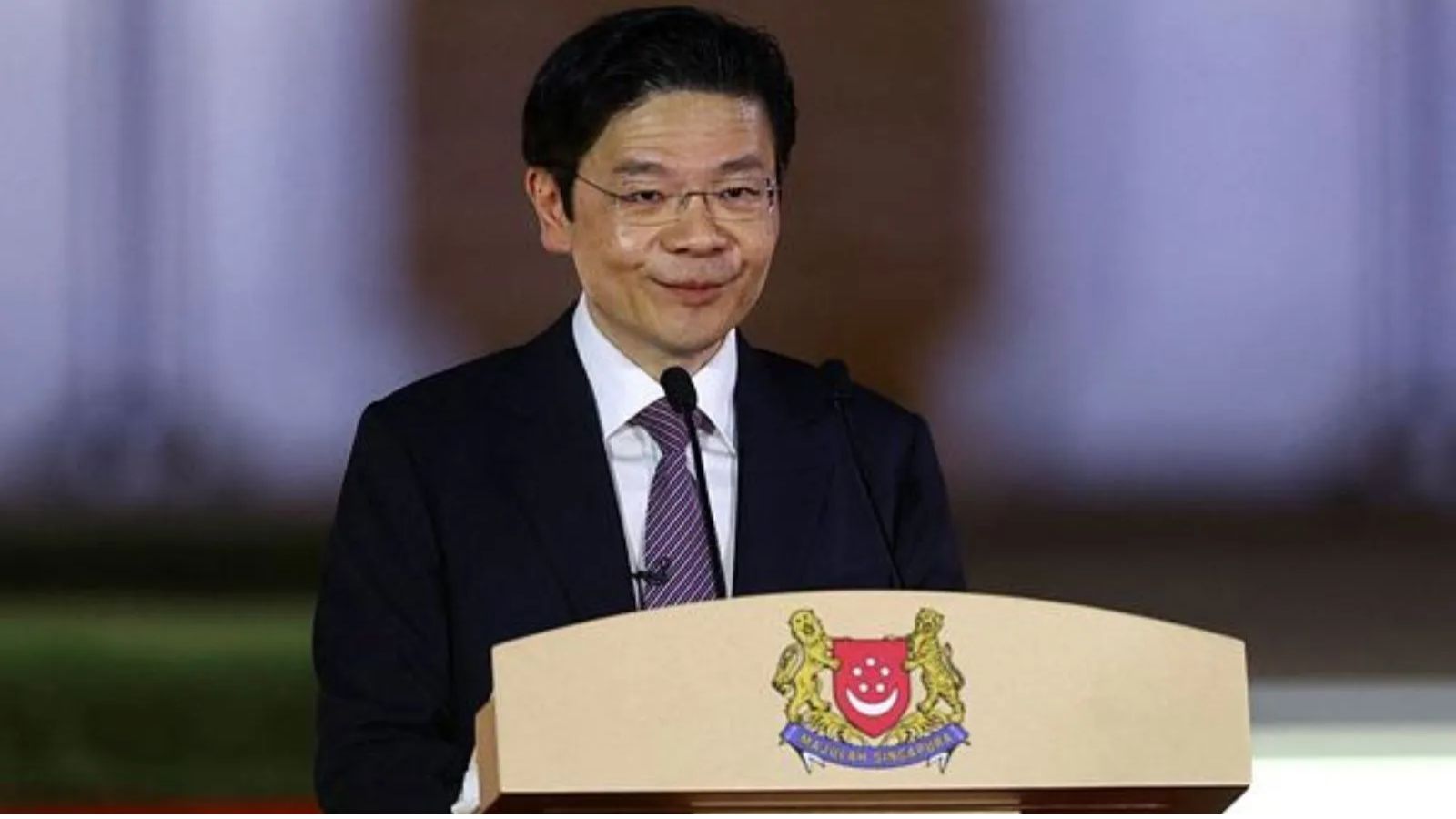
Singapore Prime Minister Lawrence Wong's scheduled compensation adjustment to S$3.6 million annually exposes the core friction point of public-sector remuneration design: how to price political executive talent without breaking the social contract. A 64 percent structural expansion from a baseline of S$2.2 million shifts the financial ceiling for heads of government into uncharted territory. Standard analyses treat this move as an isolated political anomaly or a simple adjustment to inflation. That interpretation ignores the quantitative mechanisms governing public administration efficiency, elite retention theory, and the economics of state capture prevention.
Evaluating this pay scale requires examining the structural architecture behind the decision. State compensation frameworks for high-office holders typically rely on historical precedent, modesty signaling, or direct parity with mid-level civil servants. Singapore rejects these heuristics in favor of a private-market indexing model. The mechanics of this framework reveal the explicit trade-offs nations face when managing top-tier executive talent.
The Economic Mechanics of the Clean Wage System
The primary driver behind Singapore's compensation structure is the prevention of rent-seeking behavior through market-rate alignment. Public administration theory posits that low official salaries combined with high discretionary authority create a massive structural incentive for graft. When the cost of corruption is bounded by low legal earnings, the expected utility of illicit rent extraction rises.
Singapore structures its ministerial pay around an explicit benchmark: the earnings of the top 1,000 earners who are citizens, drawn from the upper echelon of the private sector. This creates a direct feedback loop between national economic growth and political compensation.
- The Opportunity Cost Variable: Private sector CEOs managing balance sheets comparable to sovereign states command tens of millions of dollars. A fixed, sub-market salary introduces a severe adverse selection problem. Talented private executives face a massive financial penalty for entering public service.
- The Talent Attraction Function: By pricing the prime ministerial seat at S$3.6 million, the state reduces the opportunity cost for corporate leaders, senior technologists, and financial strategists considering a transition to governance.
- The Anti-Corruption Buffer: High nominal compensation removes financial desperation and reduces the marginal utility of accepting bribes, functioning as an economic insurance policy for institutional integrity.
This model treats governance as an executive enterprise. The assumption is that running a resource-scarce island nation requires top-tier corporate competence, which commands a market-clearing price.
The Cost Function of Public Legitimacy
While the economic logic of market alignment is internally consistent, it creates a severe political externality: the erosion of egalitarian legitimacy. Public administration does not operate in a pure market vacuum. It relies on citizens' subjective belief in the fairness of resource distribution.
A prime ministerial salary of S$3.6 million creates a vast distributional gap relative to median national incomes. This disparity triggers intense public scrutiny, making political remuneration a volatile variable.
- The Signaling Penalty: Large nominal increases widen the perceptual distance between the governed and the governing, even if the absolute fiscal impact on the national budget is negligible.
- The Performance Pressure Index: When executive compensation matches top-tier corporate standards, public tolerance for policy execution errors drops to zero. Citizens evaluate high-cost leaders through an ROI lens, demanding flawless infrastructure management, economic growth, and crisis response.
- The Mitigation Mechanism: Prime Minister Wong's decision to donate the entire salary increase to charity for a five-year duration serves as an immediate dampening mechanism against public backlash, decoupling personal enrichment from structural pay reform.
Comparative Governance Models
Different sovereign entities solve the executive compensation equation through distinct structural compromises. Contrast Singapore's explicit market-indexing approach with alternative frameworks globally.
- The Ideological Discount Model: Major economies like the United States fix executive pay via statutory limits, such as the US President’s static $400,000 salary. This model prioritizes egalitarian signaling and historic continuity over market alignment. The secondary effect is that leaders rely on post-office monetization, including book deals and speaking circuits, to capture their true market value.
- The Bureaucratic Parity Model: European parliamentary systems often tie ministerial pay to senior civil service grades or parliamentary votes. This approach minimizes public outrage over elite wealth accumulation but frequently deters high-earning private sector specialists from entering electoral politics.
Singapore stands alone in explicitly rejecting the ideological discount. By anchoring political salaries to private sector benchmarks, the state accepts the political friction of high numbers in exchange for systemic predictability and talent continuity.
Strategic Execution for Public Sector Remuneration Reform
Optimizing political compensation requires balancing market realities with public trust. Transitioning any administrative system toward a high-transparency, market-aligned framework demands specific structural steps.
- Establish Independent Benchmarking: Remove the legislature from the direct process of voting on its own pay. Delegate adjustments to an independent committee operating on formulaic, transparent economic indicators such as private sector wage growth indices.
- Implement Explicit Performance Tiers: Link baseline ministerial increases to multi-year macroeconomic metrics, ensuring that compensation shifts track national productivity rather than arbitrary timelines. The broader Singaporean framework reflects this by staggering adjustments, moving junior ministers incrementally toward target benchmarks based on demonstrated execution.
- Institutionalize Transparency and Fiduciary Controls: Pair high compensation with uncompromising enforcement mechanisms. High pay does not eliminate bad actors entirely; it must be coupled with rigorous asset disclosure and swift judicial prosecution for breaches of public trust.
The structural reality of governance is that competence has an economic price. Nations that refuse to pay it through official channels often pay a higher multiple through administrative failure, brain drain, or systemic corruption.