The receipt always looks like a confession.
It sits crumpled on the passenger seat of a sedan parked outside a Winnipeg big-box store, ink fading under the late August sun. Seventy-four dollars for four boxes of brand-name markers that a school supply list demands by color and count. Forty dollars for sneakers that will be outgrown by Thanksgiving. Two hundred more for the binders, the scientific calculator, the loose-leaf paper sold in packages that seem thinner than they were a year ago.
Multiply that by two children. Then three. Then look at the bank account.
For families across Winnipeg, late summer used to smell like fresh asphalt after a storm and newly sharpened pencils. Now, it smells like quiet panic. Back-to-school shopping has transformed from a rite of passage into an exercise in fiscal acrobatics. Every aisle is a test of math and compromise, where parents stand frozen in front of display bins, calculating whether generic glue sticks will survive a grade four backpack or dissolve into a sticky mess by October.
Prices are climbing. That is the dry fact. But numbers on a screen do not capture the weight of a parent swallowing hard at the checkout counter, wondering if they should put back the pack of colored pens because gym shoes cost thirty dollars more than they did last September.
Inflation has a rhythm. It hits the grocery store first, then the gas pump, and finally, it corners you in the stationery aisle.
Consider a hypothetical parent, let us call her Sarah, working an administrative job in St. Boniface. Her reality mirrors thousands across the city. Her rent went up four percent in the spring. Utility bills crept higher through the erratic Winnipeg winter and the humid summer. Her grocery budget, once flexible, is now a rigid wall. When August arrived, bringing with it the mandated school supply lists printed on crisp white paper from local schools, Sarah did not see an exciting checklist for a new grade. She saw a bill she could not entirely afford.
The lists are specific. They are demanding. They ask for particular brands of markers, specific dimensions of coiled notebooks, and specialized graph paper. Behind these requirements are well-meaning educators trying to ensure every child has what they need to learn. But when the baseline cost of those items surges, the system strains.
Families are forced to make choices. Do you buy the required notebooks or pay for the school bus pass? Do you purchase the new winter coat now while it is on the rack, or do you gamble that September’s paycheck will stretch far enough to cover both shoes and outerwear?
There is a particular kind of exhaustion that comes with stretching a dollar until it tears.
Economists talk about consumer price indices and year-over-year percentage shifts. They speak in abstractions. They chart curves on whiteboards and discuss supply chain bottlenecks that began oceans away and ended up on a shelf in Transcona. But economics is not abstract when you are standing in a crowded aisle with a plastic basket digging into your forearm. Economics is personal. It is tactile. It smells like damp cardboard and cheap plastic wrappers.
Winnipeg is a city built on resilience. Its winters demand a certain grit, a collective understanding that life here requires preparation and endurance. Yet, the current economic squeeze feels different. It is not a sudden blizzard that clears in a few days. It is a slow, grinding pressure that wears down the margins of working- and middle-class households.
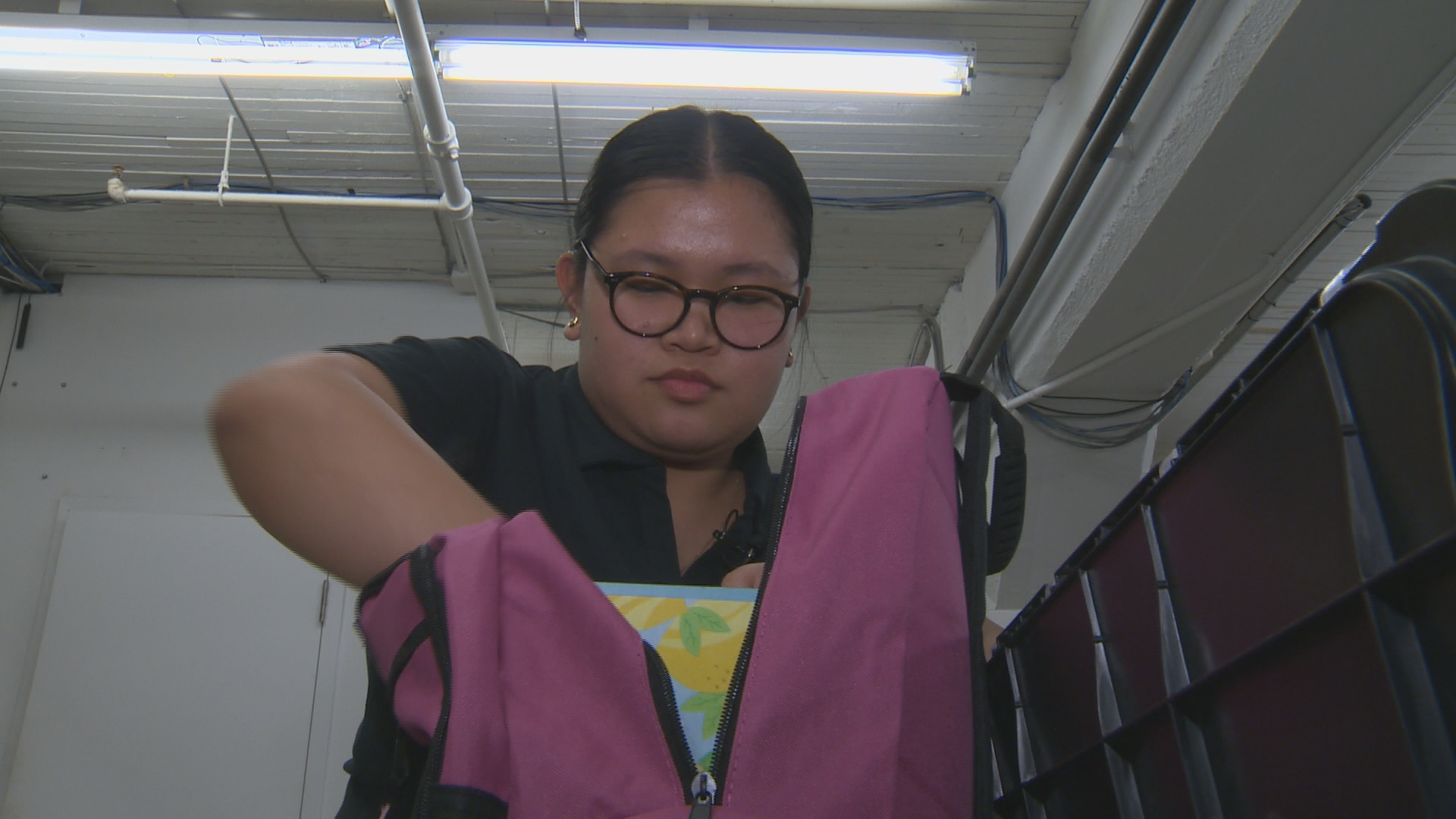
When back-to-school costs spike, the impact ripples outward. Local charities and community organizations in Winnipeg report surges in demand for donated backpacks and supplies weeks before the first bell rings. School principals quietly keep stashes of pens and notebooks in their office cupboards because they know which children will arrive on the first day with nothing. They become the shock absorbers for a system under strain.
We need to talk about the invisible items on those school supply lists. The ones nobody writes down.
Dignity is not sold in the stationery aisle, but it is easily lost there. Every child notices if their shoes are held together by duct tape. Every teenager feels the awkwardness of pulling out a frayed, hand-me-down binder when everyone else has the exact aesthetic trending on social media. Parents know this. They carry the psychological burden of those small, sharp social divisions, trying to shield their kids from the harsh arithmetic of household budgets.
To cope, Winnipeg families are changing how they shop. The traditional weekend blitz of buying everything in one glorious, expensive afternoon is dead. In its place is a fragmented strategy of survival.
Shopping starts in July now. It involves scanning thrift store shelves for gently used backpacks. It means tracking discount codes, driving across town to hit three different grocery and department stores for the best price on loose-leaf, and relying heavily on community buy-nothing groups. Neighbors trade last year’s slightly used geometry sets like currency. Parents share tips on which discount warehouse has the cheapest bulk boxes of pencils.
There is community in this struggle, a quiet solidarity forged in parking lots and online forums. People helping people because the math no longer adds up on its own.
Yet, resilience should not be a substitute for affordability. When the cost of educating a child rises faster than wages, the foundation begins to shake. Education is supposed to be the great equalizer, the mechanism by which any child, regardless of postal code or family income, can step into a classroom and find a future. But when the entry fee to that classroom—measured in binders, markers, indoor shoes, and class fees—becomes a financial crisis for the household, the promise wobbles.
The sun dips lower over the Winnipeg skyline, casting long shadows across the Red River. The window for summer is closing. The backpacks waiting by the front doors of homes across the city are packed with whatever could be managed, bought, or borrowed.
Tomorrow, the alarm will ring early. The streets will fill with yellow buses and hurried foot traffic. Children will run up school steps, eager to see friends, compare sneakers, and sharpen those brand-new pencils.
Back in the car, the crumpled receipt will slide off the passenger seat and fall to the floorboards, hidden beneath the edge of the mat. But the weight of it remains, folded neatly into the pocket of a parent who is already starting to calculate how to make next month work.